

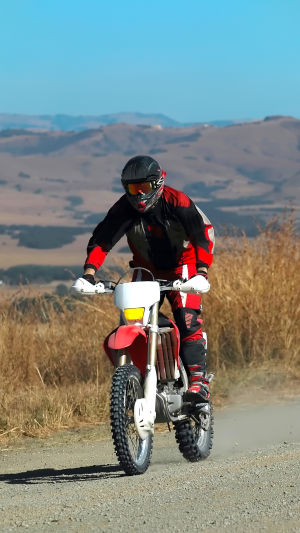
Imagine you're riding your motorcycle down an open highway, the wind in your hair, and the road stretching ahead of you.
Then, suddenly, a sharp turn approaches, or the road becomes slippery due to rain. Your first instinct is to grip the handlebars tightly, hoping your skills and reflexes will carry you through.
However, what if your bike could sense the danger and adjust its behavior to keep you safe? That's where Electronic Stability Control (ESC) steps in. This cutting-edge technology is reshaping the way motorcycles handle unstable conditions, giving riders an added layer of safety and confidence.
<h3>What is ESC and How Does It Work?</h3>
ESC, or Electronic Stability Control, is a technology designed to enhance a motorcycle's stability, especially during challenging conditions. It works by monitoring the vehicle's behavior through sensors that track wheel speed, steering angle, and the bike's trajectory.
When the system detects a loss of control—such as during oversteering or skidding—it automatically applies braking to individual wheels to restore stability. This can help prevent dangerous situations like the rear wheel locking up or the bike sliding out of control.
<b>Sensors and Real-time Data</b>: At the heart of ESC is a network of sensors placed around the motorcycle. These sensors constantly monitor factors like wheel speed, throttle position, and lean angle. The data is sent to an onboard computer that compares the rider's inputs with the actual motion of the bike. If a discrepancy occurs, like the bike drifting unexpectedly, ESC kicks in to adjust power delivery or apply brakes as needed.
<b>Braking to Correct Instability</b>: The system works by applying subtle, individual braking force to each wheel to counteract the skidding or loss of control. For example, if the rear wheel starts to slip while turning, ESC will apply a brake to that wheel, helping the rider regain traction and avoid a fall.
<h3>ESC's Role in Enhancing Motorcycle Safety</h3>
Motorcycling inherently involves a higher level of risk compared to driving a car, especially in high-speed or low-traction conditions. This is where ESC comes into play, reducing the chances of a crash or loss of control.
<b>Reducing Skidding in Wet or Icy Conditions</b>: Motorcycles are more prone to skidding than cars, especially in adverse conditions like wet or icy roads. ESC helps by adjusting the power to the wheels, reducing the likelihood of losing traction in slippery situations. For example, if you're riding on a wet road and suddenly need to make a quick maneuver, ESC can ensure the tires don't lose grip, keeping you stable and safe.
<b>Assisting in Emergency Maneuvers</b>: Even the most experienced riders can face unexpected situations. ESC acts as a backup during emergency maneuvers, such as quick lane changes or evasive swerves. When these rapid changes in direction happen, the system helps maintain the bike's stability, preventing a possible crash.
<h3>ESC and Its Impact on Rider Confidence</h3>
One of the major advantages of ESC is how it boosts rider confidence. For new riders, ESC provides peace of mind, helping them feel more secure when tackling challenging conditions or tight corners. For experienced riders, it's an extra layer of reassurance, knowing that technology is there to back them up if something goes wrong.
<b>Easier Learning Curve for Beginners</b>: Learning to ride a motorcycle can be intimidating for beginners, especially when it comes to handling unpredictable conditions. With ESC in place, new riders can practice their skills with more confidence, knowing that if they make a mistake, the bike will assist in regaining control. This can make the learning process smoother and less stressful.
<b>Confidence for Advanced Riders</b>: For seasoned riders, ESC is less about preventing mistakes and more about offering a safety net during high-performance riding. Whether riding on twisty mountain roads or tackling a slippery patch, knowing that ESC is in place allows experienced riders to push their limits while minimizing risk.
<h3>ESC in Modern Motorcycles: A Growing Trend</h3>
ESC is quickly becoming a standard feature in many high-performance and touring motorcycles. As safety regulations evolve and consumer demand for more advanced safety features rises, manufacturers are incorporating ESC into their bikes. In fact, some countries have made ESC mandatory in motorcycles, just as it is in cars.
<b>ESC in Touring and Adventure Motorcycles</b>: Touring motorcycles, often designed for long trips and diverse terrains, benefit greatly from ESC. With the added challenge of riding on different types of roads—ranging from highways to gravel paths—ESC ensures the bike remains stable, even when riders need to quickly react to unforeseen road conditions.
<b>High-Performance Bikes and Racing</b>: Even on high-performance motorcycles, where stability and precision are key, ESC plays a crucial role. For example, in sportbike racing, where split-second decisions are vital, ESC can make the difference between maintaining control or losing grip and crashing. It's this level of performance enhancement that's driving its adoption in both mainstream and racing motorcycles.
<h3>The Future of ESC: Integration with Other Safety Features</h3>
As motorcycle safety technology evolves, ESC is expected to become even more integrated with other systems like anti-lock braking (ABS), traction control, and advanced suspension systems. By working together, these technologies can provide a comprehensive safety net that enhances the overall riding experience.
<b>Combining ESC with ABS</b>: It offers a more robust system that can control both wheel slippage and braking force. This combined system is especially helpful in emergency situations, where rapid deceleration and handling are required.
<b>Advanced Traction Control</b>: ESC can also be paired with traction control systems that limit power delivery to the wheels when it detects loss of grip. This integration ensures that riders have better control over their bike's speed and traction, even in difficult riding conditions like rain or loose gravel.
In the world of motorcycles, safety has always been a priority. ESC represents a leap forward in keeping riders safe while maintaining the excitement of the ride. With its ability to enhance stability in various conditions and assist in emergency maneuvers, ESC is a game-changer for both novice and experienced riders.
As technology continues to advance, we can expect even more sophisticated versions of ESC, making motorcycling safer and more accessible for everyone.


