

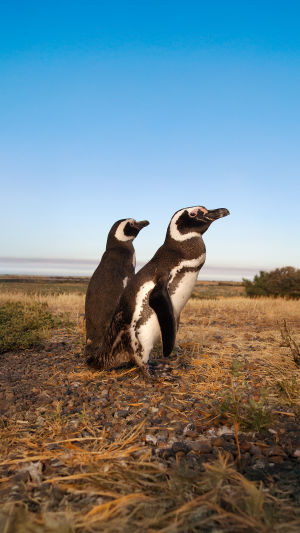
Lykkers, when we talk about penguins, we often picture endless ice and snow. However, today we are looking at a species that tells a different story.
We are exploring the Magellanic penguin, a remarkable sea bird that lives along the coasts of South America.
Together, we will walk through its home, appearance, daily habits, and the reasons why it continues to draw attention from nature lovers around the world.
<h3>Where the Magellanic Penguin Lives</h3>
We mainly find the Magellanic penguin along the shores of Patagonia. These coastal areas stretch across southern Argentina and Chile and also include nearby island groups such as the Falkland Islands. During certain seasons, some individuals travel north following ocean currents.
A few have been recorded along the coasts of Brazil and Uruguay. On very rare occasions, wandering birds have appeared even farther away, showing us how powerful the ocean can be in shaping their movement.
<h3>The Origin of Its Name</h3>
We can trace the name of this penguin back to early exploration history. It was named after Ferdinand Magellan, a famous explorer who encountered these birds during his journey in the early 16th century. For us, this connection adds a historical layer to the species, linking ocean travel, discovery, and wildlife in one story that has lasted for centuries.
<h3>Body Size and Overall Shape</h3>
When we observe the Magellanic penguin closely, we see that it is a medium-sized penguin. Most individuals reach a height between 61 and 76 centimeters. Their body weight changes throughout the year, especially during the breeding season when parents invest a great deal of energy in caring for their young. This seasonal change reminds us how demanding life along the coast can be.
<h3>Clear Markings and Color Patterns</h3>
We can easily recognize the Magellanic penguin by its bold and tidy markings. Its back is dark, while the front is light, creating strong contrast. Two dark bands cross the chest area, with the lower one forming a shape similar to an upside-down horseshoe. The head appears dark, framed by a wide white line that curves from behind the eyes and connects under the throat. These patterns help us distinguish this species from other striped penguins.
<h3>Young Penguins and Their Growth</h3>
When we look at younger birds, we notice softer colors. Their backs often appear gray-blue, and their chest areas are lighter than those of fully grown birds. As they grow, their colors become clearer and more defined. The feet also change over time. Young individuals often show spotted patterns on their feet, which slowly fade as they mature, becoming darker with age.
<h3>Life Span and Longevity</h3>
We know that Magellanic penguins can live up to about 25 years in natural conditions. When they are cared for in protected environments, some individuals live even longer. These long lives allow scientists to observe behavior, movement, and social patterns over many years, giving us deeper insight into how this species adapts to changing surroundings.
<h3>Built for Swimming, Not Flying</h3>
Like all penguins, we see that the Magellanic penguin is designed for life in the water. Its wings are stiff and powerful, helping it move smoothly through the sea rather than through the air. Underwater, it uses these wings like paddles, allowing it to travel long distances and catch small sea creatures. This swimming ability is essential for survival along wide and often windy coastlines.
<h3>Population Status and Ongoing Attention</h3>
From a global perspective, we are relieved to know that the Magellanic penguin is currently listed as a species of low concern. This means its overall numbers remain stable. However, we also understand that changes in ocean conditions, weather patterns, and coastal activity can influence nesting areas. Continued observation helps ensure that future generations will still see these birds along the shore.
<h3>Why the Magellanic Penguin Matters to Us</h3>
Lykkers, as we reach the end of this journey, we can see that the Magellanic penguin is more than just a familiar sea bird. It represents a balance between ocean life, coastal landscapes, and human history. By learning about its lifestyle and appearance, we deepen our appreciation for the natural world. Let’s keep sharing these stories, staying curious, and protecting the beauty around us—because when we understand nature better, we grow closer to it together.
Magellanic Penguins (With Narration)
Video by James Wolfe


