

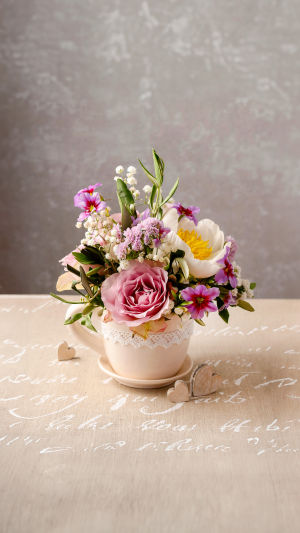
You don't need a studio, fancy tools, or years of practice to make flowers look good at home. Most people already have what they need sitting on a kitchen counter or shelf.
The real shift happens when you stop trying to make flowers look “perfect” and start letting them look natural. Simple arrangements work because they feel relaxed, lived-in, and human.
<h3>Start with one container you already own</h3>
<b>Simplicity</b>, <b>Confidence</b>, <b>Ease</b>
Forget special vases for now. Everyday containers often work better because they remove pressure.
1. Look for something stable with a narrow opening, like a mug, jar, or water bottle.
2. Make sure it's clean and filled with fresh water.
3. Choose flowers that don't overwhelm the container's size.
Actionable example: A coffee mug with a small bunch of short-stem flowers makes a calm bedside arrangement without needing any design skills.
<h3>Choose one main flower and stick with it</h3>
<b>Focus</b>, <b>Clarity</b>, <b>Balance</b>
Using one flower type instantly makes an arrangement look intentional.
1. Pick flowers with similar size and shape.
2. Avoid mixing too many colors at first.
3. Let repetition do the visual work for you.
Actionable example: Place five to seven stems of the same flower into a small container, adjusting heights slightly so they don't line up evenly.
<h3>Add greenery to shape the arrangement</h3>
<b>Structure</b>, <b>Flow</b>, <b>Softness</b>
Greenery gives flowers space to breathe and helps define the overall shape.
1. Start by placing greenery around the edges.
2. Let some stems lean outward naturally.
3. Avoid stuffing everything tightly together.
Actionable example: Add two or three leafy stems first, then tuck flowers into the gaps. This creates an open, relaxed look.
<h3>Use odd numbers for a natural feel</h3>
<b>Movement</b>, <b>Rhythm</b>, <b>Visual ease</b>
Odd numbers tend to look less rigid and more organic.
1. Use three, five, or seven flower stems instead of even counts.
2. Place one stem slightly off-center.
3. Vary heights so the arrangement doesn't feel flat.
Actionable example: Try three flowers in a small container, one taller in the center and two lower on each side.
<h3>Keep colors within one family</h3>
<b>Harmony</b>, <b>Calm</b>, <b>Consistency</b>
Color choices don't need to be bold to be effective.
1. Choose flowers in similar shades.
2. Add white or green to soften transitions.
3. Avoid pairing colors that fight for attention.
Actionable example: Combine soft pink flowers with pale cream tones and green leaves for an arrangement that works in almost any room.
<h3>Trim stems with intention</h3>
<b>Proportion</b>, <b>Control</b>, <b>Longevity</b>
Stem length changes everything about how flowers sit.
1. Cut stems at an angle so they absorb water better.
2. Shorten stems more than you think you need.
3. Re-trim every few days to refresh the arrangement.
Actionable example: Hold the flowers next to the container before cutting. Aim for stems that are about one and a half times the container's height.
<h3>Let imperfections stay</h3>
<b>Character</b>, <b>Warmth</b>, <b>Authenticity</b>
Perfect symmetry can make arrangements feel stiff.
1. Allow one stem to lean a little farther.
2. Leave small gaps between flowers.
3. Avoid constant adjusting once it feels balanced.
Actionable example: Step back after arranging and resist fixing tiny details. What feels imperfect up close often looks charming from across the room.
<h3>Refresh instead of replacing</h3>
<b>Care</b>, <b>Sustainability</b>, <b>Value</b>
Simple care keeps arrangements looking good longer.
1. Change water every two days.
2. Remove any fading flowers right away.
3. Rearrange remaining stems instead of starting over.
Actionable example: When one flower fades, take it out and re-space the others. The arrangement often looks lighter and better than before.
Simple flower arrangements don't try to impress. They quietly fit into daily life, catching your eye when you pass by without demanding attention. Once you realize how little it takes to make flowers feel at home, arranging becomes less about rules and more about enjoying the process. Pick up a few stems, trust your instincts, and let the flowers do what they're already good at doing.


