

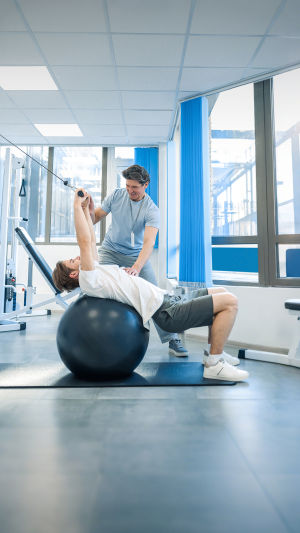
Sports injuries place unique demands on rehabilitation because recovery must restore both safety and performance.
Physical therapy plays a central role in this process by guiding structured movement, rebuilding control, and reducing the risk of reinjury.
<h3>Understanding Sports Injury Mechanics</h3>
Sports injuries often result from repeated overload, poor movement patterns, or sudden force beyond tissue tolerance. These events disrupt strength balance, joint stability, and neuromuscular timing. Physical therapy begins with a detailed evaluation of movement quality rather than focusing only on the site of pain. Gait, posture, landing mechanics, and sport-specific actions are analyzed to identify faulty patterns that increase injury risk.
<h3>Early Phase: Protecting Function While Restoring Motion</h3>
The initial phase of physical therapy emphasizes controlled motion and pain management without overloading healing tissues. Gentle mobility exercises prevent stiffness and maintain joint range while respecting tissue tolerance. Manual techniques may be applied to reduce tension and improve movement quality.
During this stage, therapists focus on restoring normal movement sequencing. Poor compensation patterns, if left uncorrected, may delay recovery or shift stress to other areas. Education plays a vital role, ensuring safe participation in daily activity while avoiding unnecessary strain.
<h3>Strength Development and Load Progression</h3>
As recovery advances, structured strengthening becomes the foundation of rehabilitation. Rather than isolated exercises, modern sports physical therapy emphasizes integrated movement patterns that reflect athletic demands. Strength is developed through controlled resistance, emphasizing alignment, tempo, and stability.
Load progression follows precise criteria. Resistance increases only when movement quality remains consistent. This approach prevents reinjury while preparing tissues for sport-specific forces. Balance between opposing muscle groups receives close attention, as imbalances often contribute to recurring injury.
<h3>Neuromuscular Control and Coordination</h3>
Many sports injuries involve delayed muscle activation rather than weakness alone. Physical therapy addresses this through neuromuscular training, which improves timing, coordination, and reaction. Exercises may include dynamic balance tasks, agility drills, and controlled directional changes.
<h3>Sport-Specific Conditioning and Return-to-Play Preparation</h3>
The later stages of physical therapy focus on replicating sport demands in a controlled environment. Rehabilitation drills mimic game situations, gradually increasing speed, resistance, and complexity. This phase bridges the gap between clinical recovery and real-world performance.
Objective testing often guides return-to-play decisions. Strength ratios, movement symmetry, and endurance capacity are evaluated to confirm readiness. This evidence-based approach reduces reliance on time-based recovery estimates, which often fail to reflect individual healing rates.
<h3>Injury Prevention Through Movement Education</h3>
Physical therapy extends beyond recovery by addressing injury prevention. Movement education teaches efficient mechanics that reduce unnecessary stress. Warm-up routines, recovery strategies, and workload management plans are commonly introduced during therapy.
Athletes who complete structured physical therapy programs demonstrate lower reinjury rates, particularly when prevention strategies are maintained after discharge. Education transforms rehabilitation into a long-term performance investment rather than a short-term solution.
According to Susan Sterling, former Director of Education at the Cooper Institute, exercise strengthens the muscles, ligaments, and tendons surrounding the joints, and when these tissues are strong they act like a brace to protect the joint and reduce pressure on weakened areas.
Physical therapy for sports injuries combines movement science, progressive loading, and neuromuscular training to restore both safety and performance. Strength development, coordination training, and movement education work together to support durable recovery. When guided by evidence-based principles and expert insight, physical therapy becomes an essential component of athletic resilience and long-term participation.


