

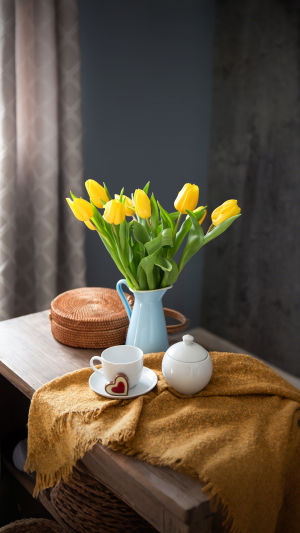
You bring home a fresh tulip bouquet, place it on the table, and within two days the stems are bending dramatically and the petals are opening wide.
It feels like they're fading just as you start enjoying them.
The truth is, tulips aren't short-lived flowers—they just need very specific care. With a few intentional steps, you can extend their beauty well beyond the usual few days.
<h3>Trim the Stems the Right Way</h3>
The moment tulips come home, their stems need attention. Proper trimming improves water absorption and keeps them upright longer.
<b>1. Cut stems straight across</b> – Tulips respond better to a flat cut rather than an angled one.
<b>2. Remove about 1 inch</b> – Even if they were trimmed at the store, a fresh cut reopens the stem.
<b>3. Trim under water if possible</b> – This prevents air bubbles from blocking hydration.
Here's a practical example: fill a bowl or sink with cool water, submerge the bottom of the stems, and cut them straight across using sharp, clean scissors. Immediately place them into a vase with fresh water. This small action supports maximum water intake from day one.
Tulips continue growing after they're cut, so strong hydration from the beginning sets the tone for their lifespan.
<h3>Use Cold Water and Keep It Clean</h3>
Tulips prefer cooler conditions compared to many other cut flowers. Warm water speeds up their aging process.
<b>1. Fill the vase halfway</b> – Tulips don't need deep water; too much can soften the stems.
<b>2. Use cold tap water</b> – Cool temperatures slow blooming.
<b>3. Change water daily</b> – Fresh water reduces bacteria that weaken stems.
For example, each morning, pour out the old water, rinse the vase quickly, and refill it with fresh cold water. It takes less than a minute but can extend the bouquet by several days.
Cloudy water is a sign of bacterial growth. If you notice it, clean the vase thoroughly with dish soap and warm water before refilling.
<h3>Keep Them Cool and Out of Direct Light</h3>
Location plays a bigger role than most people expect. Heat and strong light cause tulips to open fully and drop petals faster.
<b>1. Avoid sunny windowsills</b> – Direct sunlight accelerates blooming.
<b>2. Keep away from appliances</b> – Ovens, televisions, and heaters give off subtle heat.
<b>3. Move them to a cooler room at night</b> – Lower nighttime temperatures slow the aging process.
Actionable tip: if your dining area gets warm in the afternoon, move the tulips to a shaded coffee table or hallway. Even a few degrees cooler can noticeably slow down how fast they open.
Tulips naturally respond to light, often bending toward it. A stable, cool location helps control both leaning and over-blooming.
<h3>Control Natural Bending</h3>
Tulips are famous for their graceful curves. While charming, excessive bending can make a bouquet look messy.
<b>1. Rotate the vase daily</b> – Turn it slightly so stems grow evenly toward light.
<b>2. Use a tall, supportive vase</b> – This prevents dramatic leaning.
<b>3. Reset drooping stems with paper wrapping</b> – A simple trick that really works.
If your tulips start drooping, wrap the entire bouquet snugly in paper, keeping the stems straight. Stand them upright in fresh water for two to three hours. Once unwrapped, they'll often appear firmer and more structured.
Understanding that tulips keep growing—even after being cut—helps you work with their movement instead of fighting it.
<h3>Remove Fading Blooms Promptly</h3>
A single wilting flower can affect the entire arrangement.
<b>1. Check daily for soft petals</b> – Remove any bloom that feels limp.
<b>2. Re-trim remaining stems</b> – After removing one flower, refresh the others.
<b>3. Avoid overcrowding</b> – Give each stem enough space for airflow.
For example, if one tulip opens fully and starts shedding petals, trim it out immediately. This keeps the remaining bouquet looking intentional and fresh rather than tired.
Also, keep tulips away from ripening fruit. Fruits release ethylene gas, which speeds up the aging process of flowers. Even placing them a few feet away from a fruit bowl can make a difference.
Tulips reward attentive care. A quick trim, daily fresh water, a cooler spot, and small adjustments along the way can transform a short-lived bouquet into a week-long display. They may look delicate, but with the right routine, they're surprisingly resilient.
When you treat tulips as living stems that continue to grow and respond to their surroundings, you'll notice how much longer they stay vibrant. A few mindful minutes each day is all it takes to keep that soft splash of color bright and graceful in your home.


