

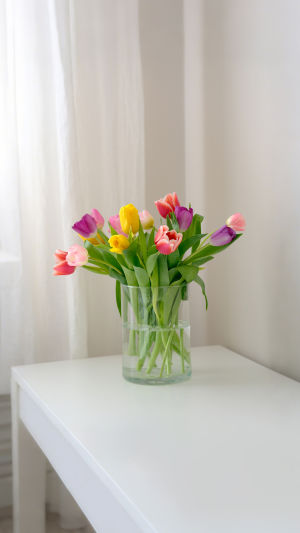
Tulips have a way of changing the mood of a room the second they arrive.
Their smooth stems and cup-shaped blooms feel clean, modern, and full of life.
But anyone who has brought home a tulip bouquet knows the challenge: by day three, they start drooping, bending, or opening too wide. The good news is that tulips aren't fragile—they just need the right care from the very beginning.
<h3>Start with Proper Trimming</h3>
The first hour after you bring tulips home matters more than most people realize.
<b>1. Cut stems straight across</b> – Unlike roses, tulips do best with a straight cut. Trim about 1 inch from the bottom.
<b>2. Use sharp scissors</b> – A clean cut helps the stems absorb water more efficiently.
<b>3. Remove lower leaves</b> – Any leaves that sit below the waterline should be taken off to prevent rot.
Here's an actionable example: fill your sink with cool water, then trim the stems while they’re submerged. This can help reduce air entering the stem ends, which may interfere with water uptake. Immediately place them in fresh, cold water after trimming.
This simple step alone can add several days to your bouquet's life.
<h3>Use Cold, Fresh Water</h3>
Tulips prefer cooler conditions compared to many other flowers.
<b>1. Choose cold water</b> – Cool tap water helps slow down blooming and keeps stems firm.
<b>2. Fill the vase halfway</b> – Tulips don't need deep water; too much can soften the stems.
<b>3. Change water daily</b> – Fresh water reduces bacteria that shorten bloom time.
For example, make it a habit to refresh the water every morning while making coffee. Rinse the vase quickly and refill it with cold water before placing the tulips back inside. This small daily routine keeps the stems crisp and upright.
Tulips continue to grow even after being cut, sometimes up to an inch. Clean water supports that growth without weakening the structure.
<h3>Control Light and Temperature</h3>
Where you place your bouquet makes a noticeable difference.
<b>1. Avoid direct sunlight</b> – Bright sun speeds up blooming and causes petals to fade.
<b>2. Keep away from heat sources</b> – Don't place tulips near ovens, radiators, or electronics that give off warmth.
<b>3. Move them overnight</b> – A cooler room at night helps extend their lifespan.
Actionable tip: if your kitchen gets warm during the day, move the vase to a shaded dining table or hallway. At night, placing the bouquet in a slightly cooler room can slow the opening process and keep the flowers looking fresh longer.
Tulips are sensitive to temperature swings. Consistency keeps them steady and upright.
<h3>Manage Natural Bending</h3>
Tulips are famous for their elegant curves. Sometimes they lean dramatically toward light, which surprises many people.
<b>1. Rotate the vase daily</b> – Turning the vase a quarter turn each day helps stems grow evenly.
<b>2. Use a taller vase</b> – Proper support reduces excessive bending.
<b>3. Wrap and reset</b> – If stems droop, wrap them tightly in paper and stand them in water for a few hours.
For example, if your tulips start leaning heavily to one side, wrap the entire bouquet in newspaper so the stems stay straight. Place them upright in water for 2–3 hours. When you remove the paper, they’ll often stand much straighter.
Understanding that tulips naturally move toward light helps you work with them instead of fighting their shape.
<h3>Extend Bloom Time</h3>
Keeping tulips looking vibrant isn't just about stems—it's also about slowing their full bloom.
<b>1. Avoid mixing with certain fruits</b> – Ripening fruit releases ethylene gas, which can cause flowers to age faster.
<b>2. Remove fading blooms quickly</b> – This prevents decay from affecting the rest of the bouquet.
<b>3. Don't overcrowd the vase</b> – Give stems space to breathe and absorb water properly.
Here's a simple example: keep your tulip bouquet away from the fruit bowl on your counter. Even something as common as apples can speed up petal drop. Moving the vase just a few feet away can make a visible difference over several days.
Also, if one flower opens fully and begins to wilt, trim and remove it. This keeps the remaining blooms looking intentional and fresh.
Tulips may look effortless, but they respond beautifully to small, thoughtful care habits. Trim them properly, keep their water cold and clean, protect them from heat, and guide their natural movement. When you treat them with attention from day one, they reward you with graceful curves and bright color that linger longer than you expected.
A well-cared-for tulip bouquet doesn't just decorate a space—it brings a gentle rhythm of daily care and quiet beauty into your home.


