

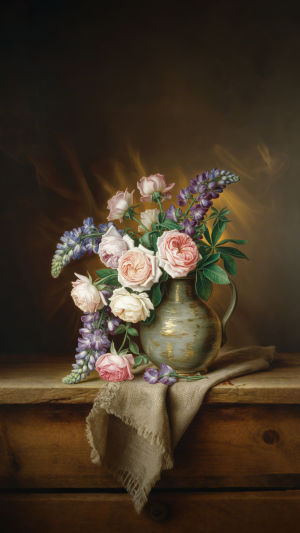
There's something captivating about watching sunlight filter through a window, casting shapes and reflections across a room.
In oil painting, mastering light and shadow allows artists to recreate that sense of transformation on canvas.
Light doesn't just illuminate—it defines space, suggests form, and evokes mood, making scenes appear vivid and three-dimensional.
<h3>Understanding Light and Shadow</h3>
<b>- Highlights as focal points</b>
Highlights are the brightest areas where light directly touches a surface. In oil painting, applying pure or lightly diluted pigment can make objects seem closer and more tangible. For example, a carefully placed highlight on a ceramic vase emphasizes its rounded form, instantly giving it dimension.
<b>- Midtones for smooth transitions</b>
Midtones bridge highlights and darker areas, creating gentle transitions that prevent harsh or unnatural contrasts. Layering thin washes of color allows smooth gradients, simulating how light softly falls across skin, fabric, or landscape features.
<b>- Shadows for depth</b>
Shadows define volume and spatial relationships. Deep shadows beneath furniture or along folds of cloth suggest three-dimensionality. Mixing complementary tones into shadow areas rather than relying on pure black keeps the scene vibrant while maintaining realism.
<h3>Techniques to Enhance Drama</h3>
<b>- Chiaroscuro for intensity</b>
This technique, famous from Renaissance art, exaggerates contrasts between light and dark to create theatrical effects. Strategic use of chiaroscuro draws attention to key areas, adding mood and emotional impact.
<b>- Gradation and layering</b>
Gradual layers of thin paint help mimic the natural dispersion of light. Smooth transitions make forms appear rounder and more lifelike. Many portrait artists rely on subtle gradations to render the curvature of faces convincingly.
<b>- Reflected and ambient light</b>
Light rarely comes from one source alone. Reflections and scattered illumination reveal textures and enrich scenes. Observing how sunlight bounces off walls, water, or surfaces and incorporating these subtle reflections adds realism to landscapes or interiors.
<h3>Practical Tips for Oil Painters</h3>
<b>- Observe real-world lighting</b>
Study how light changes throughout the day and affects objects. Quick sketches of everyday scenes, like a cup in morning sunlight, improve your ability to capture light effects accurately.
<b>- Use contrast intentionally</b>
Decide which areas should stand out and which should recede. Strong contrast draws the eye, while subtle transitions guide the viewer through the composition, creating rhythm and focus.
<b>- Match technique to subject</b>
Crisp shadows and bright highlights suit still life, while softer edges and blended tones work for misty landscapes. Choosing the right approach ensures the lighting enhances the story in your painting.
Throughout art history, masters have demonstrated the transformative power of light and shadow. Caravaggio used dramatic chiaroscuro to heighten tension and emotion, immersing figures in deep darkness pierced by striking beams of light. Rembrandt created warm, glowing portraits where soft illumination emerges from rich shadows, giving his subjects psychological depth and humanity.
In contrast, Claude Monet focused on capturing the fleeting effects of natural light, showing how color and atmosphere shift from moment to moment. Studying how these artists handled illumination can inspire painters to experiment boldly and develop a more intentional approach to contrast, mood, and atmosphere.
Mastering light and shadow in oil painting is more than a technical skill—it's a way to bring life and emotion into your artwork. By observing how illumination interacts with forms, experimenting with contrasts, and layering colors thoughtfully, artists can create scenes that feel vivid, dramatic, and deeply engaging. Every canvas becomes a stage where light performs, inviting viewers to pause, explore, and experience its subtle magic.


