

Have you ever stood at the edge of a canyon and felt your breath catch at the sight of layered rock walls towering above a winding river?
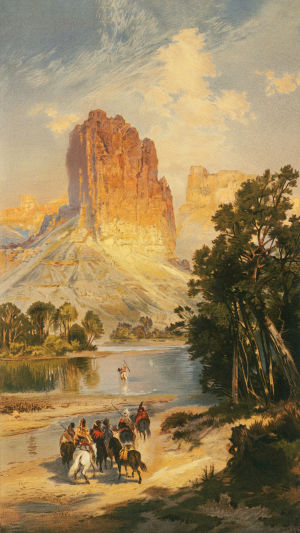
Thomas Moran's Cliffs of the Upper Colorado River, Wyoming Territory evokes exactly that sensation—even on a wall in a gallery.
The painting draws you in with its dramatic scale and color, inviting you to feel both the vastness of the landscape and the smallness of human presence alongside it.
<h3>Artist and Artistic Context</h3>
<b>1. Thomas Moran's Background</b>
Thomas Moran (1837–1926) was a landscape painter associated with the Hudson River School and the broader movement of 19th century American landscape painting. He traveled extensively in the American West, creating works that captured the rugged scenery and contributed to national interest in protecting natural wonders. Cliffs of the Upper Colorado River was painted in 1882, during a period when Moran produced many evocative Western landscapes.
<b>2. Romanticism in Landscape Art</b>
This work reflects Romantic sensibilities—nature is depicted as sublime and powerful. Rather than a documentary record of a specific site, Moran reimagined the landscape in its reputed untouched state, omitting the nearby settlement of Green River in favor of a small group of figures on horseback.
<b>3. Historical Role of the Painting</b>
Though created after railroads had already begun to connect the region, Moran chose to focus on its dramatic natural features. The painting helped fuel popular fascination with Western scenery among Eastern audiences, similar to his other works that inspired interest in landscapes like Yellowstone.
<h3>Visual and Compositional Qualities</h3>
<b>1. Use of Color and Light</b>
Moran's palette is rich with warm earth tones—burnt oranges, reds, and yellows—that convey the stratified sandstone cliffs rising above the river. These vibrant hues stand out against the cooler tones of sky and water, creating a vivid contrast that emphasizes the terrain's textures and depth.
<b>2. Dramatic Sky and Atmosphere</b>
The sky in this painting is not just background; it sets the mood. Clouds and dramatic light suggest changing weather, adding a sense of movement and tension to the scene. This atmospheric treatment enhances the emotional impact of the rugged landscape.
<b>3. Human Figures for Scale</b>
In the foreground, a small group of Native Americans on horseback travels along the riverbank. Their diminutive scale relative to the towering cliffs visually reinforces the vastness and grandeur of nature. This compositional choice was a common device in Romantic landscape painting to evoke awe.
<h3>Interpretation and Meaning</h3>
<b>1. Wilderness Idealized</b>
Although the real Upper Colorado River region was already being settled by 1882 due to railroad expansion, Moran's depiction imagines it as pristine wilderness. By excluding signs of industrial settlement, he highlights a nostalgic vision of the West that resonated with audiences longing for untouched landscapes.
<b>2. Symbol of Exploration</b>
This painting captures a moment of exploration and movement. The riders, the river's flow, and the open sky together suggest journey and discovery—central themes in American art of the period.
<b>3. Emotional Resonance</b>
For many viewers today, the painting continues to evoke a sense of awe and connection to unspoiled land. It's not just a scenic view but a visual reminder of places where nature's scale and power dwarf human activity.
<h3>Final Reflections</h3>
Cliffs of the Upper Colorado River, Wyoming Territory is more than a beautiful landscape; it's a work that invites you to imagine standing beside Moran as he witnessed—or imagined—the grandeur of the West. Its sweeping composition, masterful use of color, and thoughtful inclusion of human figures make it a compelling example of how art can communicate not just appearance but atmosphere and emotion.
Next time you pause before a landscape painting, take a moment to consider what the artist chose to include—and what they left out—as much of the story resides in those choices. This piece reminds us that art can shape not just what we see, but how we feel about the world.


