

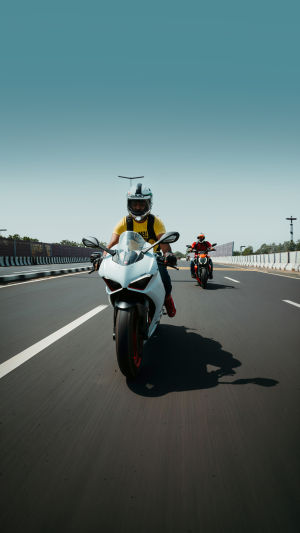
City streets are alive with movement: pedestrians crossing unpredictably, cyclists weaving between cars, and motorcyclists darting through gaps.
For a rider, every moment requires attention—not just to vehicles, but to the human and two-wheeled traffic around them.
Understanding how to interact safely with pedestrians and non-motorized vehicles is essential for avoiding collisions and keeping urban streets flowing smoothly.
<h3>Observing Pedestrian Behavior</h3>
Pedestrians can be unpredictable, and anticipating their actions is key to preventing accidents.
<b>Eye contact:</b> Riders can make brief eye contact with pedestrians at crosswalks to confirm they've been seen. For example, when approaching a busy intersection, a rider slows and nods to a pedestrian waiting to cross, ensuring both parties understand the intent to yield.
<b>Predicting movement:</b> Watch body language—someone stepping off the curb or glancing at their phone may not notice traffic. Adjust speed and lane position accordingly. Maintaining a moderate speed near crowded sidewalks allows time to react to sudden steps into the road.
<b>Respecting crossings:</b> Yielding at crosswalks isn't just lawful—it reduces surprises. Riders who stop a few meters before a marked crossing give pedestrians space to cross safely and signal responsible behavior to other drivers.
Being aware of pedestrian patterns helps riders anticipate hazards and make smooth, predictable adjustments.
<h3>Interacting with Cyclists</h3>
Non-motorized vehicles like bicycles share lanes and often maneuver differently than cars, requiring additional vigilance.
<b>Maintain safe distance:</b> Passing too close can startle cyclists. Keep at least a one-meter lateral gap when overtaking, particularly at intersections or on narrow streets. A rider approaching a cyclist at a traffic light should wait until there's sufficient space before moving past.
<b>Predict turns and stops:</b> Cyclists may stop suddenly to avoid obstacles or turn without signaling. Observing handlebars and posture can indicate intent. For example, leaning slightly left may signal a turn or lane change, allowing riders to adjust their trajectory.
<b>Communicate intent:</b> Using turn signals and hand gestures ensures cyclists know your movements. Riders can signal lane changes early, reducing confusion and minimizing risky maneuvers in tight spaces.
Respectful interaction with cyclists ensures both parties remain visible and predictable, reducing potential conflicts.
<h3>Adjusting Speed and Lane Position</h3>
Urban traffic demands constant adaptation, especially when pedestrians and cyclists are present.
<b>Slower speeds in high-density areas:</b> Reducing speed near schools, parks, or crowded streets increases reaction time. A rider approaching a busy market street can drop to 20–25 km/h, allowing safe braking for sudden pedestrian crossings.
<b>Lane positioning for visibility:</b> Stay slightly to the left or right of lane center to remain visible to both cyclists and pedestrians. Avoid blind spots where a pedestrian or cyclist might step or swerve unexpectedly.
<b>Buffer zones:</b> Leave space not just behind cars, but around yourself. A cushion on all sides allows evasive action if a cyclist swerves or a pedestrian steps out.
Dynamic speed and lane adjustments help riders navigate complex city environments without startling others or compromising safety.
<h3>Using Gear to Enhance Safety</h3>
Appropriate clothing and protective equipment improve both visibility and rider response time.
<b>Reflective accents:</b> Bright colors and reflective strips make riders noticeable to pedestrians and cyclists, especially during dusk or rain. A rider wearing a neon jacket is more easily seen crossing a busy intersection than one in dark clothing.
<b>Gloves and boots:</b> Proper gloves allow quick braking and clutch control, while sturdy boots help stabilize the bike during sudden stops. Quick access to controls reduces reaction time around unpredictable road users.
<b>Helmet visibility:</b> A helmet with reflective panels or bright color enhances presence in low-light conditions, signaling your location to both cyclists and pedestrians.
Well-chosen gear increases awareness and provides extra time to react, complementing good riding habits.
<h3>Developing a Mindful Riding Approach</h3>
Riding in urban environments isn't just about maneuvering the bike—it's about cultivating a mindset that anticipates and respects the behavior of others.
<b>Constant scanning:</b> Keep eyes moving between traffic, pedestrians, and cyclists. Monitoring sidewalks and bike lanes helps catch potential hazards early.
<b>Patience and courtesy:</b> Yielding to a pedestrian, waiting for a cyclist to pass, or avoiding tight squeezes fosters safer streets. Even small gestures reduce accidents and encourage predictable behavior from others.
<b>Reflect and learn:</b> After each ride, consider moments where you had to react quickly. Identifying near misses and adjusting habits improves judgment in future rides.
Urban riding success comes from combining awareness, proper lane use, considerate interactions, and well-chosen gear. A rider who anticipates pedestrians and cyclists while staying visible and patient creates safer streets for everyone—and enjoys a smoother, less stressful commute.


