

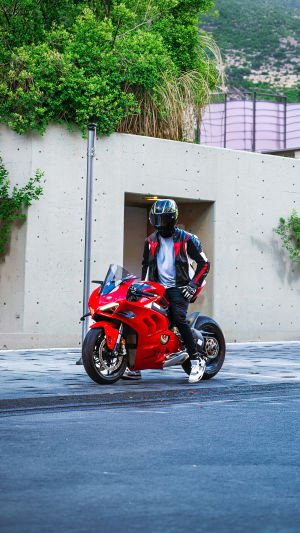
This guide is written for Lykkers who ride and sense that control feels smoother on some days than others.
Many riders focus on hands, throttle feel, and steering input, yet real control often begins earlier. Vision leads balance, timing, and confidence long before muscles respond.
When eyes guide attention correctly, the motorcycle tends to follow with less effort. This guide explores why vision shapes control so strongly, and how simple shifts in where and how you look can transform riding into something calmer, safer, and more connected.
<h3>Why Vision Leads Control</h3>
Motorcycle control starts with perception. The brain uses visual information to plan movement, predict change, and keep balance steady.
<b>Eyes set direction before movement</b>
Where you look quietly determines where the motorcycle goes. When attention rests on a clear path, the body makes small, accurate adjustments without conscious effort. You may notice that tight corners feel easier when your gaze moves smoothly through them. Vision gives the brain a destination, and the body organizes itself to reach it. Control begins as intention, not force.
<b>Balance depends on visual stability</b>
Riding requires constant balance corrections. Eyes provide reference points that help the inner ear and muscles coordinate. When vision is steady and far-reaching, balance feels natural. When gaze jumps or fixes on nearby objects, balance can feel tense. Looking ahead allows the brain to smooth out motion, reducing the urge to overcorrect with the hands.
<b>Why fixation causes trouble</b>
Fixating on hazards or obstacles often leads toward them. This happens because the brain steers the body toward what it studies most closely. When attention narrows, options feel limited. By widening vision and focusing on open space, choices expand. The motorcycle responds with smoother lines and fewer abrupt inputs.
<h3>Training Your Eyes for Better Riding</h3>
Once the role of vision feels clear, riding becomes less about effort and more about awareness. Small visual habits bring noticeable improvement.
<b>Looking through, not at, turns</b>
Corners feel more stable when your gaze moves through the turn instead of stopping at the entrance. Looking toward the exit gives the brain time to plan a clean arc. You may notice that steering feels lighter and corrections become minimal. The motorcycle naturally aligns with the direction your eyes choose.
<b>Using distance to reduce stress</b>
Farther vision creates time. When eyes scan ahead, changes feel slower and easier to manage. Close focus shortens reaction time and increases tension. By lifting your gaze, you allow more information to enter awareness without overload. This habit supports calm responses instead of rushed reactions.
<b>Keeping vision active, not rigid</b>
Effective riding vision is flexible. Eyes move smoothly between near and far, checking mirrors, road surface, and direction of travel. This flow keeps the brain informed without locking attention in one place. You may find that active scanning makes rides feel more engaging and less tiring.
<b>Hands relax when eyes lead</b>
When eyes provide clear guidance, hands often soften naturally. Steering inputs become subtle rather than forceful. The motorcycle feels cooperative instead of demanding. This relaxation improves precision and reduces fatigue. Control shifts from muscle tension to coordinated movement.
<b>Confidence grows with visual trust</b>
Trusting vision builds confidence. As you notice smoother lines and steadier balance, self-assurance increases. Confidence does not come from gripping harder or reacting faster. It comes from understanding what is happening ahead. Vision provides that understanding quietly and reliably.
These changes do not require speed or advanced skill. They work during everyday riding. Even slow maneuvers feel easier when eyes guide the process. Parking lot turns, traffic flow, and open roads all benefit from intentional vision.
Most motorcycle control begins with vision rather than hands. Where and how you look shapes balance, direction, and confidence long before physical inputs occur. By looking ahead, through turns, and toward open space, riding becomes smoother and more intuitive. For Lykkers, this approach removes tension and builds trust in natural coordination. When eyes guide the ride, control feels lighter, calmer, and deeply connected to the road ahead.


