

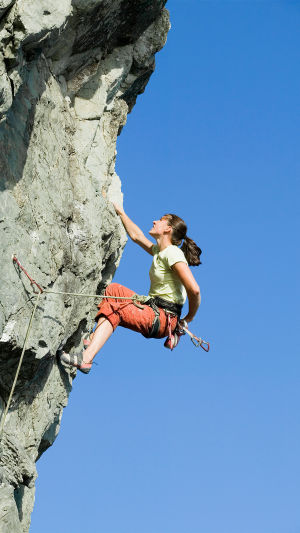
Climbing is not just a sport—it’s a way to challenge ourselves, improve focus, and feel our strength.
Before we even think about reaching the top, understanding how to use our hands, feet, and maintain body balance is key. Let’s break it down step by step so we can climb efficiently and safely.
<h3>Hand Techniques: Save Energy and Stay Strong</h3>
When we grip a hold on the rock, our arms should stay as straight as possible. Why? Straight arms let our bones bear the weight, so our muscles can relax and save energy. If our forearms start to feel pumped, we can drop our arms slightly and shake our hands to let the blood flow and muscles recover.
Avoid excessive bending of your arms—it quickly drains energy. When climbing, the goal of using our hands is to move the body upward while staying close to the rock. Rocks come in many shapes, so we need to know how to grab each hold: pinch, pull, push, grab, or hook, depending on the shape. Flexibility is key, as there is often more than one way to hold the same point.
Finger strength matters. We can train it with exercises like pull-ups, hanging, or fingerboard exercises. Advanced climbers may perform pull-ups on one or two fingers, but this is extremely advanced and should be approached with caution. On longer climbs, it helps to pick easier sections where we can rest our hands alternately.
<h3>Footwork: Your Secret Power</h3>
Our feet carry most of our weight, so using them correctly is critical. Always use the tips of your toes, not the flat of your feet. Keep your heel slightly higher than your toes to push efficiently. Footwork can be straightforward (used on vertical walls) or sideways (used on sloped surfaces or traverses).
Switching feet smoothly is also important. For example, to move from right to left: lift the left foot over the right, rotate the right foot around the hold to clear space, then place the left foot securely. This keeps the weight balanced and avoids extra strain on our hands.
<h3>Body Balance: Stay Close to the Wall</h3>
Our center of gravity should stay close to the rock, around the hips. This reduces the load on our arms and transfers it to our legs. If the handholds are low, we can squat slightly and turn our body sideways while keeping arms straight.
A good tip: always maintain three points of contact—two hands and one foot, or two feet and one hand—before moving the fourth. This ensures stability and efficiency.
<h3>Leg Techniques: The Rock Ballet</h3>
Climbing is sometimes called “ballet on the rock” because our legs do so much work. A simple bend in the knee or a precise foot hook can help us overcome difficult spots effortlessly. Legs are our main engines; when we rely on them, our arms can relax and save strength.
<h3>Basic Climbing Moves</h3>
- Grab: Hold the rock’s protrusions firmly.
- Pinch: Grip edges, cracks, and corners.
- Pull: With a secure hold above, press the forearm against the rock and pull the body upward or sideways.
- Push: Use side or bottom surfaces to push the body along.
- Open & Hook: Slide hands into cracks, open fingers, and create leverage.
- Step: Push with the front of the foot to reduce arm strain.
- Swing: Use flexibility to reach better holds.
- Hook & Balance: Use toes or heel hooks to maintain stability.
<h3>Five Small but Powerful Tips</h3>
1. Stick close to the rock—it’s safer and more energy-efficient.
2. Thighs are stronger than arms, so push with your legs whenever possible.
3. Lifting one foot at a time helps save arm strength.
4. Plan your next move carefully before shifting hands or feet.
5. Even when resting, stay close to the rock to keep balance.
<h3>Climbing Smarter Every Step</h3>
By following these techniques, we climb not just higher, but smarter. Rock climbing is about control, balance, and energy management. Paying attention to handholds, footwork, and body position makes every climb feel smoother and more enjoyable.
Remember, climbers, climbing isn’t just about reaching the top—it’s about moving confidently, learning from every step, and enjoying the journey.


