

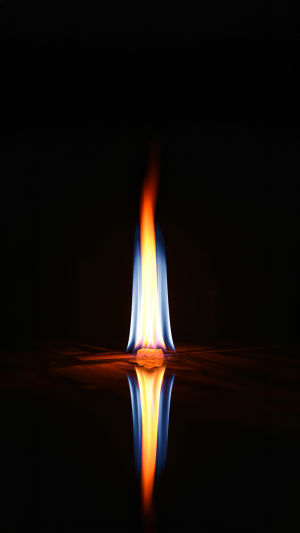
Flames have fascinated humans for centuries, from the warmth of a cozy campfire to the fiery glow of a Bunsen burner. But have you ever wondered what color flame is the hottest?
The answer isn't as obvious as you might think, and understanding it can give us insight into the science of combustion and temperature.
Let's explore the colors of flames, explore why they differ, and reveal which one burns the hottest.
<h3>What Color Produces the Hottest Temperature?</h3>
When it comes to flames, color reveals much more than just beauty. The hottest flames burn in shades of blue, violet, or even ultraviolet. These cooler hues are the result of a more efficient combustion process, burning at higher temperatures than the typical red or yellow flames often seen in campfires.
Blue flames, in particular, indicate a near-perfect mixture of fuel and oxygen, producing a complete and efficient combustion. This is why you'll often see blue flames in controlled environments like laboratory Bunsen burners or high-efficiency gas stoves.
<h3>How Hot Is a Blue-Violet Flame?</h3>
Blue flames are intense. They can reach temperatures anywhere from 2,552 to 2,912 degrees Fahrenheit (1,400 to 1,600 degrees Celsius), making them among the hottest of any visible flames. Violet flames are even hotter, sometimes burning above 3,000 degrees Fahrenheit (1,650 degrees Celsius).
These flames signify the highest heat output, and are typically seen in the core of the flame where the color is most vibrant, signifying maximum combustion efficiency.
<h3>What Causes the Different Colors in Flames?</h3>
The color of a flame is a direct result of the chemical elements involved in combustion. When these elements are heated, their electrons absorb energy, jump to a higher level, and then release light as they return to their original state. The wavelength of the emitted light corresponds to a specific color.
For example, sodium burns with a bright yellow flame, copper produces green flames, and potassium burns violet. The specific chemical makeup of the burning material determines the flame's color, helping scientists and chemists identify elements based on their flame hues.
<h3>What Colors Are Found in Fires?</h3>
Flames come in a variety of colors, each indicating a different temperature range or chemical reaction. Here's what common flame colors reveal:
<b>Blue Flames:</b> These indicate a hotter, more oxygen-rich fire, where the fuel is burning completely. Blue flames are commonly found in gas stoves and laboratory burners.
<b>Orange and Yellow Flames:</b> These are typical in wood or candle fires. The orange-yellow hue indicates moderate temperatures and incomplete combustion.
<b>Red Flames:</b> Red signals a cooler fire, typically occurring when there's limited oxygen or when the fuel burns more slowly. Red flames are often seen in dying coals or smoldering logs.
<h3>Flame Temperature by Color</h3>
The temperature of a flame varies depending on its color. Here's a quick guide to understanding flame temperatures based on their color:
<b>Red Flames:</b> These are the coolest, ranging from 1,112 to 1,472 degrees Fahrenheit (600 to 800 degrees Celsius). Red flames are common in smoldering fires or when there's a lack of oxygen.
<b>Orange Flames:</b> These flames burn at around 2,012 to 2,192 degrees Fahrenheit (1,100 to 1,200 degrees Celsius). They're common in wood fires or candles, where combustion is not as complete.
<b>White Flames:</b> White flames burn at incredibly high temperatures, ranging from 2,732 to 2,912 degrees Fahrenheit (1,500 to 1,600 degrees Celsius). These are usually seen in highly efficient or intense combustion processes, like in a well-calibrated gas burner.
<b>Green Flames:</b> Green flames are more about the material being burned than the heat level itself. Copper compounds, for instance, burn green. The temperature can vary depending on oxygen levels and the chemical composition of the material.
<h3>Other Fire Temperatures to Know</h3>
Different fire types have their own typical temperatures. Here are some common ones:
<b>Candle Flame:</b> A typical candle flame burns at around 1,832 to 2,552 degrees Fahrenheit (1,000 to 1,400 degrees Celsius), with the hottest part being the blue section.
<b>Gas Stove Flame:</b> Natural gas stoves burn with a blue flame, reaching temperatures between 3,542 and 3,632 degrees Fahrenheit (1,950 to 2,000 degrees Celsius). This makes gas stoves ideal for precise cooking and efficient heating.
<b>Gas Burning Fires:</b> Gas fires, whether in home heating or outdoor fire pits, burn at similar temperatures to those of a gas stove, reaching over 3,500 degrees Fahrenheit (1,950 degrees Celsius).
<h3>Fire Safety Tips Everyone Should Know</h3>
While flames may look beautiful and mesmerizing, fire safety is essential. Here are some key tips to help ensure your safety when dealing with fire:
<b>Store Gas Tanks Properly:</b> Always store gas tanks in well-ventilated areas, away from potential ignition sources. Regularly inspect them for leaks or damage.
<b>Handle Wood Safely:</b> Store wood in dry areas away from your home and only burn seasoned wood to reduce fumes and prevent chimney fires.
<b>Install Fire Alarms:</b> Fire alarms save lives. Install them in every room and test them monthly.
<b>Practice Escape Plans:</b> Develop a fire escape plan and rehearse it with your family regularly.
<b>Keep Fire Extinguishers Handy:</b> Keep fire extinguishers in key areas, especially the kitchen, and ensure everyone knows how to use them.
<b>Never Leave Fires Unattended:</b> Always monitor open flames and ensure they are fully extinguished before leaving the room or going to bed.
<h3>Conclusion: Understanding Flames and Fire Safety</h3>
Flame colors aren't just beautiful to look at — they're a window into the temperature and efficiency of a fire. Whether you're cooking with a gas stove, working in a lab, or just enjoying a campfire, the color of the flame can tell you a lot about the heat and the combustion process.
Understanding flame temperatures and the colors associated with them gives us a better appreciation for the science behind fire. And remember, as mesmerizing as flames can be, fire safety is essential to prevent accidents and ensure the well-being of everyone involved. Stay safe, stay informed, and respect the power of fire.


