

Walking through a woodland trail, you might notice a flock of birds swoop together or ants marching in perfect lines carrying food.
At first glance, it seems like chaos—but there's an invisible thread tying these creatures together. Cooperation is often the difference between life and death in the animal kingdom.
By working together, animals find food, defend themselves, and ensure the survival of the group. Let's explore the fascinating ways they pull it off.
<h3>Hunting in Packs</h3>
Some of the most dramatic examples of cooperation happen during hunting. Animals form teams to corner prey, improving the chance of a successful catch.
<b>1. Wolves and African Wild Dogs</b>
Wolves coordinate their movements, flanking prey and taking turns chasing. African wild dogs are even more tactical: they spread out, confuse prey, and communicate with vocal signals to adjust the strategy in real time. This allows them to catch animals much larger or faster than themselves.
<b>2. Actionable Example</b>
When observing animals at a wildlife sanctuary, note how group dynamics affect hunting. Seeing wolves split roles—some as chasers, others as blockers—can teach us how teamwork increases efficiency in nature.
<h3>Shared Protection and Alarm Systems</h3>
Safety in numbers is not just a cliché. Many species cooperate to reduce the risk of being eaten.
<b>1. Meerkats and Prairie Dogs</b>
Meerkats take turns standing guard while others forage. If danger approaches, the lookout emits distinct alarm calls to signal the type of threat. Prairie dogs use a similar system with complex calls that describe not just the predator, but its size and speed.
<b>2. Actionable Example</b>
While birdwatching, notice how species like starlings or pigeons react when one spots a predator. Understanding these natural alarm systems can help you anticipate wildlife behavior without disturbing them.
<h3>Food Gathering and Sharing</h3>
In many species, gathering and sharing resources strengthens survival. Cooperation isn't limited to hunting—it extends to storing and distributing food.
<b>1. Ants and Honeybees</b>
Ant colonies work like living factories. Workers find food, communicate its location via pheromones, and distribute it efficiently to feed the queen and larvae. Honeybees perform a “waggle dance” to indicate the direction and distance of flowers to their hive mates.
<b>2. Actionable Example</b>
Try observing ants around a picnic area or garden. You can see them coordinate, avoid obstacles, and share food routes—a miniature model of teamwork in action.
<h3>Parenting and Communal Care</h3>
Cooperation isn't just about hunting or defense—it also appears in raising the next generation.
<b>1. Dolphins and Elephants</b>
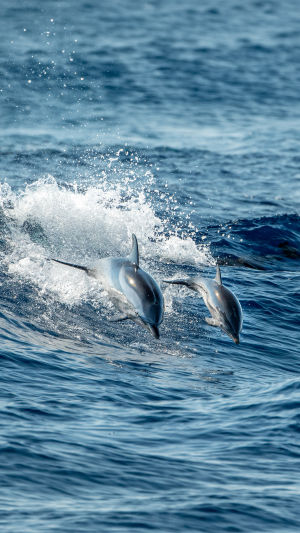
Dolphin pods often watch over calves collectively, creating a protective circle around them. Elephant herds have “allomothers,” females that assist in caring for the young that aren't their own. This shared responsibility increases the survival rate of the offspring.
<b>2. Actionable Example</b>
Visiting a wildlife reserve, pay attention to how animals interact with the young. Spotting communal care—like birds taking turns feeding chicks—shows how cooperation extends beyond survival into nurturing.
<h3>Symbiotic Partnerships</h3>
Some cooperation crosses species lines, forming mutually beneficial relationships.
<b>1. Cleaner Fish and Host Fish</b>
Small cleaner fish remove parasites from larger fish, benefiting both. The host fish gets cleaned while the cleaner gains a meal. Similarly, oxpeckers eat ticks off large mammals, improving health and safety for both.
<b>2. Actionable Example</b>
In aquariums or marine reserves, observe how these partnerships work. Understanding interspecies cooperation highlights how survival strategies can include collaboration beyond one's own species.
Cooperation in the animal world isn't random—it's finely tuned by evolution. Whether it's hunting, guarding, feeding, or nurturing, working together gives animals an edge in survival. Watching these interactions reminds us that teamwork isn't just a human concept; it's a natural strategy woven into the fabric of life. Next time you see a flock, a herd, or a colony, take a moment to appreciate the silent coordination happening all around.


