

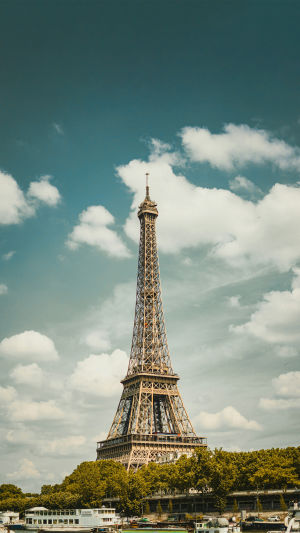
Seven million people visit the Eiffel Tower every year, making it the most visited paid monument on the planet.
Most of them photograph it, ride the elevators, take in the view from the upper platform, and leave with an experience that feels complete.
Very few of them know that the structure they just visited was supposed to be demolished, grows taller in summer, was once the world's tallest structure by a significant margin, and contains an apartment that its creator used to entertain some of the most prominent scientists of the late 19th century. The Eiffel Tower rewards curiosity in ways that a single visit rarely exhausts.
Eiffel Tower Viewing Deck
<h3>It Was Designed to Be Temporary</h3>
The Eiffel Tower was built as the entrance arch for the Exposition Universelle (1889) in Paris — a temporary structure intended to stand for twenty years and then be dismantled. Gustave Eiffel's original contract specified that the tower would be torn down in 1909 and its iron sold for scrap.
The structure was not universally admired when it was built. A group of prominent French artists and intellectuals signed a petition calling it an eyesore — a useless and monstrous column of iron that disgraced the Parisian skyline.
What saved it was technology. In 1898, the tower was fitted with a radio transmission antenna, which proved enormously valuable for early wireless communication and scientific experimentation. This practical use made the structure far too valuable to dismantle, and the twenty-year deadline passed without incident.
<h3>The Tower Is Taller in Summer Than in Winter</h3>
The Eiffel Tower is made of iron, and iron expands when heated and contracts when cooled. This is not a negligible effect at the tower's scale. On hot summer days, the tower can grow up to 15 centimeters (about 6 inches) taller than its winter height as the iron lattice expands in the heat.
The top of the tower also tilts very slightly away from the sun on hot days as the sun-facing side expands faster than the shaded side.
The tower's official height is 330 meters (including antennas, updated measurement). When Gustave Eiffel completed the original structure in 1889 without the antenna, it stood at 300 meters — making it the tallest human-made structure in the world by a considerable margin. It held that record for 41 years until the Chrysler Building surpassed it in 1930.
<h3>Practical Information for Visitors</h3>
The Eiffel Tower is located on the Champ de Mars in the 7th arrondissement of Paris, easily accessible by public transport.
Getting there — The nearest metro stations are Bir-Hakeim on Line 6 and Trocadéro on Lines 6 and 9, both within a ten-minute walk. The RER C train stops at Champ de Mars–Tour Eiffel, approximately five minutes on foot from the entrance. A single metro or RER ticket within Paris zones costs approximately €2.10 (≈ $2.30, varies slightly).
Opening hours — The tower is open daily. During peak season the tower operates from 9 a.m. to midnight. During off-peak periods hours are slightly reduced, typically 9:30 a.m. to 11:30 p.m. The light show that illuminates the tower every hour after dark runs until midnight in winter and 1 a.m. in summer.
1. Ticket prices — Tickets vary by level and access type (prices fluctuate; below are approximate ranges as of recent years):
2. Stairs to the second floor — approximately €11–€14.
3. Elevator to the second floor — approximately €18–€22.
4. Elevator to the summit — approximately €28–€32.
Children under 4 enter free. Children aged 4 to 11 receive reduced rates across all ticket categories.
Advance online booking is strongly recommended, particularly between April and September when queues without reservations can exceed two hours.
<h3>The Secret Apartment at the Top</h3>
Gustave Eiffel built a private apartment for himself at the top of the tower — a modest but fully equipped space furnished with wooden furniture, a piano, and scientific instruments. He used it to conduct meteorological and aerodynamic experiments and to entertain distinguished guests, including the American inventor Thomas Edison, who visited in 1889.
Many wealthy Parisians reportedly offered substantial sums to rent the apartment for even a single evening. Eiffel declined all offers. The apartment has been preserved and is visible from the summit platform, now furnished with period wax figures depicting Eiffel receiving Edison — a scene that gives the summit visit a dimension that the view alone does not provide.
<h3>Where to Stay Nearby</h3>
Several excellent hotels within walking distance of the tower offer convenient access without requiring transport.
Pullman Paris Tour Eiffel sits directly adjacent to the tower with rooms offering direct views of the structure from approximately €300–€400 per night.
Shangri-La Paris, a ten-minute walk away in a converted 19th-century mansion, offers some of the most celebrated tower-view rooms in the city from approximately €600+ per night.
For more modest budgets, Hotel Eiffel Blomet offers clean, comfortable rooms within a 20-minute walk from approximately €150–€200 per night.
The Eiffel Tower has been seen so many times, in so many photographs, films, and postcards, that it risks becoming invisible through familiarity. Yet understanding its history — from near-demolition to scientific innovation and hidden personal spaces — transforms it from a simple landmark into a story of creativity and progress. Knowing these details before visiting ensures that the experience is not just visual, but deeply meaningful.


