

You settle in for an evening of reading and within forty minutes your eyes are tired, your neck is stiff, and the page seems harder to focus on than it did when you started.
You blame the book, or the hour, or the fact that you have been staring at screens all day. The actual culprit is often sitting on your side table, casting light in exactly the wrong way — too dim, too harsh, too warm, or positioned at an angle that creates glare across every page you turn.
A reading lamp is one of those purchases that most people make quickly and regret slowly. The right one makes long reading sessions genuinely comfortable. The wrong one quietly degrades every hour you spend with a book. Knowing what to look for before buying changes the outcome entirely.
<h3>Brightness Is the Starting Point</h3>
The single most common mistake in reading lamp selection is choosing a lamp that is either too dim to read comfortably or so bright that it creates harsh contrast between the lit page and the darker room around it. Both extremes cause eye fatigue — just through different mechanisms.
For comfortable reading, a lamp should produce between 450 and 800 lumens at the reading surface. Lumens measure actual light output, which is more useful than wattage as a guide — wattage measures energy consumption, not brightness, and the relationship between the two varies significantly depending on the bulb type.
The ability to adjust brightness — a dimmer function — is worth prioritizing over a fixed output. Reading in a bright afternoon room requires less supplemental light than reading in a dark bedroom at night. A lamp that can be adjusted to match the ambient conditions of the room reduces the contrast between the lit page and the surrounding space, which is one of the primary causes of reading-related eye strain.
<h3>Color Temperature Matters More Than Most People Realize</h3>
Color temperature — measured in Kelvin — determines whether a lamp's light appears warm or cool, and it has a direct effect on both reading comfort and the body's sleep-wake cycle.
1. Warm white light, rated between 2700K and 3000K, produces a yellowish tone similar to traditional incandescent bulbs. It is comfortable for evening reading and does not significantly interfere with the body's melatonin production, making it the better choice for lamps used before sleep.
2. Neutral white light, rated between 3500K and 4000K, produces a cleaner, more balanced tone that renders text with good contrast without feeling clinical. It suits reading at any time of day and is the most versatile option for a general-purpose reading lamp.
3. Cool white or daylight-rated light, above 5000K, produces a blue-toned light that feels bright and alert. It is effective for focused daytime reading but suppresses melatonin production and can make it harder to wind down if used in the evening.
For most reading lamps used primarily in the evening, a color temperature between 2700K and 4000K produces the most comfortable results.
<h3>Light Direction and Glare Control</h3>
Where the light falls on the page matters as much as how much light is produced. A lamp positioned directly above or behind the reader casts an even, shadow-free light across the page — the ideal configuration. A lamp positioned to the side, particularly on the dominant hand side, can cast the shadow of the hand and book across the reading surface as pages are turned.
Glare is the other directional concern. A bare bulb or a lamp with a highly reflective shade creates specular glare — reflected light that bounces directly off the page surface into the reader's eyes. This is most noticeable on glossy paper but affects matte surfaces as well. Shades that diffuse light rather than direct it in a concentrated beam reduce glare significantly. Frosted or fabric shades produce softer, more even illumination than metal or glass shades with a polished interior.
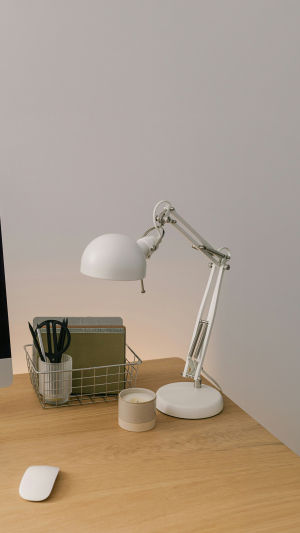
Adjustable arm lamps — those with a jointed or flexible arm that allows the light source to be repositioned — offer the most control over light direction and are particularly useful for reading in bed or in chairs where the optimal lamp position varies depending on posture.
<h3>Practical Features Worth Paying Attention To</h3>
Beyond the core optical considerations, several practical features separate a lamp that works well from one that causes daily frustration.
1. Switch placement — a switch located on the base or cord is more convenient than one on the shade, particularly for lamps used in bed where reaching upward to operate a switch is awkward in the dark.
2. Stability — a lamp that tips easily when a book or object brushes against it is a persistent irritation. A weighted base or a clamp-style lamp that attaches directly to a shelf or headboard eliminates this problem entirely.
3. Bulb accessibility — LED bulbs in quality lamps now last 15,000 hours or more, but when replacement eventually becomes necessary, a lamp that requires proprietary bulbs or complex disassembly adds unnecessary inconvenience.
4. Cord length — particularly relevant for lamps used beside a bed or reading chair that may sit at some distance from the nearest outlet.
A reading lamp is not a decorative object that happens to produce light. It is a tool, and like any tool, its value is determined entirely by how well it does its specific job. The right lamp makes the page easier to see, the session more comfortable to sustain, and the experience of reading itself more rewarding. That outcome is worth thinking carefully about before the purchase — because unlike a bad book, a bad lamp is present at every reading session until you replace it.


