

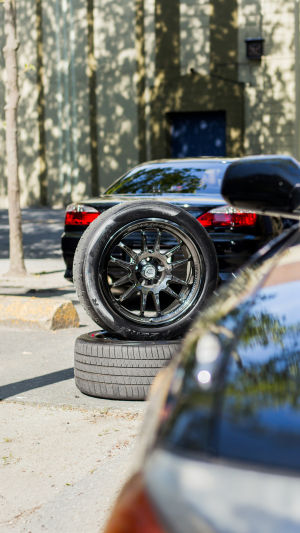
Imagine cruising on the highway, smooth and relaxed, when suddenly the steering wheel shudders violently.
A loud pop echoes, and a trail of tire shreds flies behind the car. The front end veers sharply to one side. Your heart races—this is the moment every driver fears: a tire blowout.
Every instinct might scream to slam the brakes, but the key is staying calm. Ease off the accelerator slowly, grip the steering wheel firmly, and keep the car steady. Your goal is to maintain control and gradually move toward a safe emergency lane. Once stopped safely, turn on your hazard lights and place a warning triangle or reflective marker at a proper distance behind the car, ensuring the safety of yourself and other drivers.
<h3>What Exactly Is a Tire Blowout?</h3>
A tire blowout happens when a tire loses a large amount of air in a very short time. The tire’s sidewall collapses rapidly, almost to the level of the rim. On highways, this sudden loss of control can be extremely dangerous, affecting the car’s stability and steering almost immediately.
<h3>Common Causes of Highway Blowouts</h3>
There are three main reasons a blowout might occur at high speed:
1. Sharp Objects on the Road: Hitting hard or sharp debris can puncture a tire instantly, causing it to burst.
2. Worn or Damaged Tires: Tires that are old, cracked, or excessively worn are far more likely to fail if not replaced in time.
3. Overinflation: High speeds generate heat inside the tire, increasing pressure. If the tire cannot handle the stress, it may burst.
<h3>Preventive Measures</h3>
Preventing a blowout is always safer than reacting to one. We need to take proactive steps:
- Replace tires every 2–3 years or after 60,000–100,000 kilometers (depending on manufacturer recommendations).
- Inspect tires before trips for wear, cracks, or bulges.
- Maintain tire pressure according to the vehicle manual, checking monthly.
- Rotate tires every 5,000 kilometers to avoid uneven wear.
- Install a tire pressure monitoring system (TPMS). These devices alert drivers to abnormal pressure or temperature changes.
- Optional extra protection: Some drivers apply a 3–5 mm inner-wall protective layer to reduce punctures from sharp objects under 6 mm.
<h3>Safe Driving Habits</h3>
How we drive matters as much as tire condition:
- Avoid leaving the car under direct sunlight for long periods, which accelerates tire aging.
- Start, brake, and corner smoothly—avoid sudden maneuvers.
- Control speed and avoid overloading the vehicle.
- Keep hands at the 3 o’clock and 9 o’clock positions on the steering wheel.
<h3>What To Do During a Blowout</h3>
If a tire bursts, staying calm is essential:
- Front Tire: Grip the wheel firmly, avoid sudden steering, gently brake, and gradually stop in a safe lane.
- Rear Tire: The car may pull toward the side of the blown tire. Ease off the accelerator, lightly brake, and shift down gradually.
On highways, follow the rule: "Move the vehicle to a safe area, evacuate passengers, and call emergency services." If the vehicle is drivable and no one is injured, move to the nearest exit, rest area, or emergency lane, and contact local road assistance or emergency services (for example, 911 in the U.S., 112 in Europe).
If the car cannot move, turn on hazard lights, place a warning triangle or reflective marker at least 100–150 meters (330–500 feet) behind the vehicle, move everyone to a safe area away from traffic, and contact emergency services. Never attempt to repair a tire on a busy highway.
<h3>Handling Multi-Vehicle Accidents</h3>
In incidents involving multiple vehicles, safety comes first. Take photos or videos, exchange driver’s license and vehicle registration details, then move to the nearest safe area before contacting authorities. Avoid lingering on the highway to prevent further accidents or congestion.
<h3>Drive Smart, Stay Safe</h3>
Blowouts are sudden, but preparation makes all the difference. Regular tire checks, cautious driving, and knowing emergency protocols can save lives. Calm, control, and caution are your best tools on the highway.
Tire Blowout at Highway Speed?! Stay Safe with These Crucial Steps
Video by Next Level Survival


