

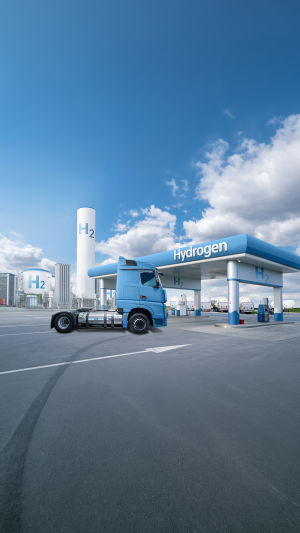
You're cruising along a quiet road and wonder what the next generation of cars will feel like.
Will it be the silent efficiency of a battery electric vehicle (EV) or the futuristic promise of a hydrogen fuel cell vehicle (FCEV)? Both technologies aim to reduce emissions and redefine mobility, but they do it in very different ways.
Understanding their strengths and limitations helps envision the future of clean transportation.
<h3>How Hydrogen Fuel Cells Work</h3>
Hydrogen fuel cells generate electricity through a chemical reaction between hydrogen and oxygen, with water vapor as the only direct emission.
<b>Energy conversion process</b>
Hydrogen enters the fuel cell where it splits into protons and electrons. The electrons flow through an external circuit, creating electricity to power the motor. This process is silent, smooth, and free from tailpipe pollutants.
<b>Refueling speed</b>
Unlike EVs that may require hours to recharge at home, hydrogen vehicles can be refueled in 3–5 minutes, similar to conventional gas cars. This makes them appealing for long-distance travel or commercial use.
<b>Efficiency and range</b>
FCEVs can achieve ranges of 500–700 km per tank, depending on tank size and driving style. While slightly less efficient than EVs in converting energy from source to wheels, the fast refueling and high range make them practical for highway use.
If considering hydrogen vehicles, check local refueling infrastructure. Planning routes around available stations ensures smooth trips without unexpected stops.
<h3>Battery Electric Vehicles: Efficiency and Convenience</h3>
Battery electric vehicles store energy directly in batteries and use electric motors for propulsion.
<b>Instant torque and smooth driving</b>
EVs deliver full torque immediately, making acceleration responsive and intuitive. City driving becomes effortless, with regenerative braking extending range by recapturing energy during deceleration.
<b>Charging considerations</b>
Home chargers allow overnight recharging, and public fast chargers can restore 80% battery in 20–40 minutes. However, long trips require planning around charging stations, which can be less convenient than quick hydrogen refills.
<b>Energy efficiency</b>
EVs convert more than 85% of stored electricity into motion, compared to roughly 60% for hydrogen vehicles when considering production, storage, and conversion losses. This makes EVs more cost-effective in daily commuting.
For daily city commuting, an EV is often the most practical choice. Combine home charging with occasional public fast charging to maintain flexibility.
<h3>Infrastructure Challenges</h3>
The success of both technologies depends on practical refueling or recharging networks.
<b>Hydrogen stations</b>
Hydrogen refueling networks are limited and require specialized infrastructure for safe storage and handling. Expanding access remains a major challenge for widespread adoption.
<b>EV charging networks</b>
While home charging is convenient, high-speed chargers must be strategically located for long-distance travel. Network density affects trip planning and convenience.
<b>Maintenance and service</b>
Both technologies require trained personnel and specialized service equipment. EVs benefit from fewer moving parts, making maintenance simpler, while hydrogen vehicles need periodic checks for fuel cells and pressurized tanks.
When evaluating a vehicle type, map your typical routes against available infrastructure. This helps avoid inconvenient refueling or charging stops and ensures reliable daily use.
<h3>Environmental and Energy Considerations</h3>
Both systems reduce tailpipe emissions, but energy sourcing matters.
<b>Hydrogen production</b>
Most hydrogen today is produced from natural gas, which emits CO2. Green hydrogen, produced from renewable electricity through electrolysis, offers a truly clean option but is currently limited and costly.
<b>Electricity sources for EVs</b>
EVs are cleaner when charged with renewable energy, but if the electricity comes from fossil fuels, the environmental benefit decreases.
<b>Lifecycle emissions</b>
EV batteries require energy-intensive production and recycling, while hydrogen fuel cells involve precious metals and pressurized storage. Both industries are working to reduce environmental impact through innovation and sustainable practices.
Consider the source of your vehicle's energy. Charging EVs with renewable energy or using green hydrogen significantly improves environmental performance.
<h3>Choosing Between Hydrogen and Electric</h3>
The choice depends on your driving needs, infrastructure access, and priorities.
<b>Urban commuting</b>
EVs dominate for city use, offering quiet, efficient, and low-cost daily driving with minimal infrastructure reliance.
<b>Long-distance travel</b>
Hydrogen vehicles shine in applications requiring quick refueling and extended range, such as intercity travel or fleet logistics.
<b>Future-proofing</b>
Both technologies are evolving rapidly. Staying informed about local infrastructure, energy sourcing, and technological improvements helps make a choice that aligns with long-term needs.
Test drive both vehicle types if possible. Real-world experience helps weigh acceleration, convenience, refueling times, and comfort before committing.
Hydrogen and battery electric vehicles are shaping a dual-track future for mobility. Each has unique advantages, and the ultimate choice depends on how, where, and how far you drive. Understanding their strengths lets you make smarter decisions while riding into a cleaner, more efficient future.


