

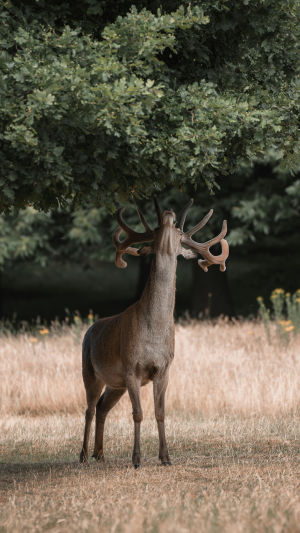
You hear it before you see it. A faint rustle through the tall grass, then a sudden pause in the stillness of the forest.
When a red deer finally steps into view, it doesn't feel like an ordinary animal passing by—it feels like something that belongs entirely to the landscape, as if the forest shaped itself around its presence.
There's a calmness in the way it moves, but also a quiet alertness. Every step is measured, every pause intentional.
<h3>Antlers That Tell a Story</h3>
One of the most striking features of male red deer is their antlers. These are not permanent structures—they grow and change every year.
In the early stages, they appear as soft, growing tissue covered in a velvet layer. Over time, they harden into branching structures that can become quite large. The size and shape depend on the deer’s age, nutrition, and overall condition.
During certain seasons, males may clash antlers in controlled contests. It's not random aggression—it's a way of establishing presence and hierarchy. These encounters can be intense, but they are usually about display rather than lasting conflict.
<h3>A Life Built Around Seasons</h3>
Red deer adjust their behavior strongly based on seasonal change. In warmer months, they spread out across open feeding areas, spending long hours grazing on grasses, leaves, and shoots.
When colder conditions arrive, their movement patterns shift. They begin forming groups in more sheltered environments where food is harder to access but safety is higher.
1. Spring and summer focus on feeding and growth
2. Cooler periods emphasize energy conservation
3. Movement patterns shift according to available resources
This rhythm is deeply tied to the environment, almost like a natural calendar guiding their actions.
<h3>The Power of the Herd</h3>
Red deer are rarely alone for long. Females and younger individuals often form groups, which provide protection and better awareness of surroundings.
Within these groups, communication is subtle. A sudden head lift, a shift in direction, or a brief pause can signal awareness of potential disturbance. The entire group responds almost instantly, moving as one coordinated unit.
This collective behavior increases survival chances and reduces individual risk, especially in open landscapes where visibility is high.
<h3>Listening More Than Speaking</h3>
Unlike many animals that rely heavily on sound, red deer often depend on body language and stillness. Their ears rotate constantly to pick up faint noises. Eyes scan wide areas, and posture changes quickly when something feels different.
Even the smallest shift in behavior can carry meaning:
- A raised head often signals alertness
- A sudden freeze indicates uncertainty
- A slow step forward suggests cautious exploration
Much of their communication happens without sound, relying instead on awareness and timing.
<h3>A Quiet Presence in Wild Spaces</h3>
What makes red deer memorable is not just their size or appearance, but the way they exist within their environment. They don't dominate the landscape—they move with it.
Their presence often feels temporary, even when they are nearby for a while. One moment they are visible in open light, and the next they are gone, blending back into trees and distance.
In the end, red deer are not just forest inhabitants. They are part of a larger rhythm that connects movement, season, and survival. Watching them is less about observing an animal and more about noticing how quietly life can adapt and flow through space without ever needing attention.
Observing red deer reminds us how life can thrive quietly, in harmony with nature’s cycles.


