

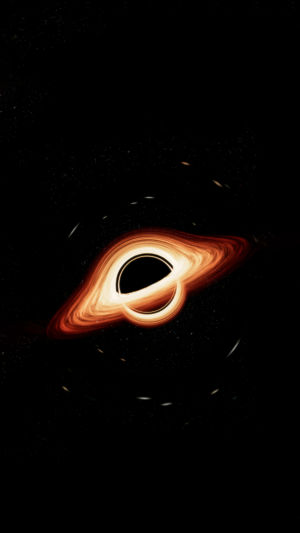
For the first time ever, astronomers have been able to measure the full power of black hole jets, and the results are astonishing.
These jets, emanating from the black hole Cygnus X-1, were found to carry an energy equivalent to 10,000 Suns.
Researchers achieved this breakthrough by using a planet-sized network of radio telescopes, providing unprecedented insights into one of the universe's most powerful phenomena.
The discovery not only helps validate theories about black holes but also reveals the complex ways these cosmic giants influence their surroundings.
<h3>Stellar Winds Reveal Jet Strength</h3>
The study focused on Cygnus X-1, one of the earliest discovered black holes, and its companion star, a supergiant. Researchers employed a global array of radio telescopes, allowing them to study how the black hole's jets interact with the powerful winds from the nearby star. These interactions, described as "dancing jets" due to the jets' constant shifts in direction, have provided key data on the jets' true power. By examining how much the jets were deflected by the star's winds, the researchers could measure their energy with accuracy.
<h3>First Measurement of Instantaneous Jet Power</h3>
What makes this study groundbreaking is the ability to measure the instantaneous power of the jets. Previous studies were limited to long-term averages, often spanning thousands or millions of years. This new approach allows scientists to assess the power of the jets at specific moments in time, providing a more precise picture of how black holes release energy.
The research also revealed that the jets travel at about half the speed of light—roughly 150,000 kilometers per second—making them one of the fastest phenomena observed in space.
<h3>Jets and the Role of Black Holes</h3>
Lead author Dr. Steve Prabu from Curtin University explained that the study of "dancing jets" is significant because it shows how black holes release energy into their environments, influencing their cosmic surroundings. The research uncovered that around 10 percent of the energy generated by matter falling into the black hole is carried away by the jets.
"This was a long-standing assumption in theoretical models, but it had never been confirmed until now," Dr. Prabu said. "These findings validate existing theories and set the stage for more refined models."
<h3>Confirming Black Hole Theories</h3>
Professor James Miller-Jones, co-author of the study, emphasized the importance of this breakthrough in the context of black hole physics. Prior to this study, scientists could only estimate jet power over long periods, making it difficult to compare it to other phenomena like X-ray emissions from black holes.
"By measuring the energy of jets in real-time, we've established a new baseline for understanding how black holes interact with their surroundings," Professor Miller-Jones explained. "With upcoming projects like the Square Kilometre Array Observatory, we'll be able to expand these measurements to black holes in millions of distant galaxies."
<h3>Implications for Galaxy Formation</h3>
The study also sheds light on the role black hole jets play in the evolution of galaxies. These jets are a crucial factor in regulating star formation and the growth of galaxies. The ability to measure jet power directly provides new insights into how black holes shape their environments on a cosmic scale.
"This discovery opens doors for new approaches in understanding galaxy formation and the role black holes play in the universe," Dr. Prabu added. "The findings will be instrumental in future research that focuses on the role of black holes across the cosmos."
<h3>Future Research Directions</h3>
With the data collected from Cygnus X-1, astronomers now have a foundation for understanding the broader impact of black hole jets. As the field advances, this measurement will help calibrate observations from other black holes, including those in galaxies far beyond our own.
The results from this study will continue to influence the direction of future space research, especially in the understanding of how black hole jets contribute to the formation and evolution of galaxies across the universe.
These findings represent a major leap forward in the study of black holes, opening up new possibilities for understanding the cosmos. With more observations to come, black holes and their jets remain one of the most intriguing subjects in modern astrophysics.


