

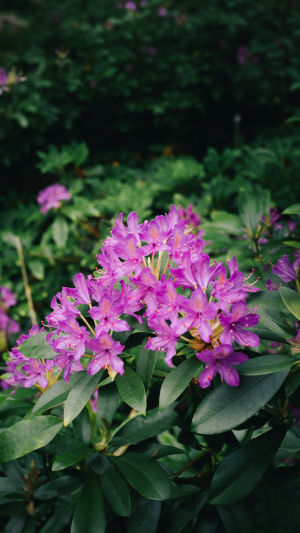
If you've ever walked through misty hills or damp woodland trails in spring, you may have noticed bold purple blooms lighting up the greenery like something out of a dream.
It looks beautiful at first glance—almost harmless, even welcome. But behind that striking appearance lies a plant with a far more aggressive story than its flowers suggest.
<h3>Victorian Beauty Turned Threat</h3>
Rhododendron ponticum is an evergreen shrub originally native to parts of southern Europe and western Asia. It became popular in Victorian gardens due to its dramatic flowers and year-round green foliage. Gardeners planted it widely in estates and parks, where it was admired as an ornamental highlight.
Over time, abandoned estates and unmanaged plantings allowed it to escape into surrounding landscapes. Once outside controlled gardens, it found conditions that closely matched its native environment: damp soils, acidic woodlands, and high rainfall. In these settings, it didn't just survive—it thrived.
Its ability to adapt so well turned what was once a decorative feature into one of the most aggressive invasive plants in many regions.
<h3>Why It Spreads So Fast</h3>
The success of Rhododendron ponticum comes from its remarkable reproductive power. A single mature plant can produce millions of tiny seeds, which spread easily through wind and water. Even broken branches can take root when they touch the soil, creating new growth points without needing traditional seed germination.
Once established, it forms dense evergreen thickets. These thick layers of leaves block sunlight almost completely, preventing other plants from growing beneath it. Over time, native vegetation is gradually replaced, leaving large areas dominated by a single species.
Another factor behind its spread is its resilience. It tolerates harsh conditions, recovers quickly after cutting, and can survive repeated disturbance. In some regions, it was also unintentionally strengthened through hybridisation, which improved its ability to withstand colder climates.
This combination of fast growth, high seed output, and strong survival ability makes it extremely difficult to control once it has taken hold.
<h3>Hidden Damage to Wildlife</h3>
Although its flowers attract pollinators, Rhododendron ponticum carries hidden risks for ecosystems. Its nectar contains toxins that can affect insects such as bees. While some pollinators can tolerate or avoid harmful effects when other food sources are available, dense stands of the plant can overwhelm local ecosystems.
In areas where it dominates, native plants disappear beneath its canopy. This loss of plant diversity affects insects, birds, and other wildlife that depend on a variety of species for food and habitat. Entire woodland systems can become simplified and less resilient over time.
It is also associated with plant diseases that can spread to surrounding vegetation, further increasing ecological pressure. In sensitive habitats such as temperate rainforests, its impact can be especially severe, reducing biodiversity and altering natural regeneration processes.
The result is not just a change in scenery, but a shift in how entire ecosystems function.
<h3>Fighting Back and Better Choices</h3>
Controlling Rhododendron ponticum is challenging once it becomes established. Management often requires repeated cutting, removal of roots, and careful use of targeted treatments. Even after removal, follow-up monitoring is essential to prevent regrowth from overlooked fragments or seeds in the soil.
Because of its persistence, prevention is just as important as removal. Many conservation groups now encourage replacing it with non-invasive alternatives that provide similar visual appeal without ecological harm. Options such as ornamental azalea varieties and carefully selected rhododendrons can still bring colour to gardens while supporting local wildlife.
Proper disposal is also crucial. Plant material should never be composted or left in natural areas, as it can regrow or spread. Instead, it should be handled through approved disposal routes to prevent accidental spread.
More broadly, this plant has become a reminder of how easily human choices can reshape landscapes. What began as an admired garden introduction has become a widespread ecological challenge.
When you see those vivid purple blooms again, it might be worth asking: are we looking at a garden treasure—or a quiet takeover of the wild spaces we value most?


