

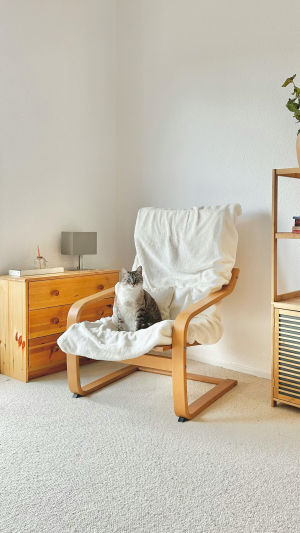
Hello Lykkers, if we share life with cats, we have probably noticed one common scene at home: soft fur everywhere. On clothes, sofas, and even floating in the air. It can feel like our cats are constantly “leaving a trail,” especially during warmer months. But this situation is more normal than it seems.
In fact, shedding is part of how a cat’s body naturally works. To understand it better, we need to look at how fur grows, how the environment affects it, and when it may signal something deeper.
<h3>Natural hair cycle</h3>
We can think of a cat’s fur like a living system that keeps renewing itself. Each hair goes through a cycle: growth, transition, rest, and finally falling out. When a strand reaches its final stage, it naturally drops so a new one can take its place.
This process happens continuously, which means some level of shedding is always present. It is not random loss but a planned refresh cycle inside the skin. Even when we do nothing, the body is already working on replacing old fur with new layers.
<h3>Seasonal light influence</h3>
Light changes across the year also play a big role. As daylight becomes longer, the body receives signals through internal hormones that influence fur renewal. During brighter months, more hair follicles enter a resting phase at the same time, leading to a visible increase in loose fur.
When daylight becomes shorter, the process shifts again. The body prepares a thicker coat by encouraging new growth. This pattern originally helped cats adapt to changing seasons outdoors.
For cats living indoors, however, artificial lighting can blur these natural signals. As a result, shedding may not follow a clear seasonal rhythm anymore, appearing more evenly spread across the year.
<h3>Temperature response</h3>
Temperature is another important factor. Fur works like a flexible layer that helps manage warmth. When the environment becomes warmer, the body reduces dense undercoat layers to improve heat release.
When it becomes cooler, the opposite happens. Thicker layers grow in to help hold warmth closer to the skin.
We can think of light as the “timing signal,” while temperature decides the “intensity” of shedding. Together, they shape how much fur is released and when new layers appear.
<h3>Indoor lifestyle impact</h3>
Modern indoor living has changed this natural rhythm quite a bit. Air conditioning, heating, and stable room conditions reduce the clear environmental signals cats once relied on. Because of this, fur renewal becomes more continuous instead of clearly seasonal.
Artificial lighting also extends daily exposure, which can confuse internal cycles. Even irregular sleep habits in households may indirectly affect how cats respond to light changes.
At the same time, balanced diets in modern pet care support faster fur growth. When growth speeds up, older strands are replaced more frequently, which can also increase visible shedding.
All these small influences combine, making indoor cats appear to shed steadily throughout the year.
<h3>Health-related shedding signals</h3>
While most shedding is normal, there are times when we should pay closer attention. Certain health conditions can increase fur loss or change its pattern.
One example is skin fungal imbalance, which may weaken hair structure and cause patches where fur breaks or falls out unevenly. These areas often look clearly defined.
Sensitivity reactions to food or environment can also play a role. When irritation occurs, the skin may feel uncomfortable, leading to more frequent grooming and increased fur loss.
Nutrient imbalance is another factor. Elements like zinc and B vitamins support healthy fur formation. When intake is not balanced, the coat may become weaker and shed more easily.
Emotional tension can also influence grooming habits. Some cats may repeatedly lick themselves as a calming behavior, which can gradually increase visible fur loss over time.
<h3>Wrapping up</h3>
When we look at all these factors together, we can see that shedding is not a single cause issue. It is shaped by natural cycles, environmental signals, daily living conditions, and overall well-being.
Most of the time, it is simply part of how a cat’s body maintains itself. However, observing patterns carefully helps us understand when everything is normal and when extra attention might be helpful.


