

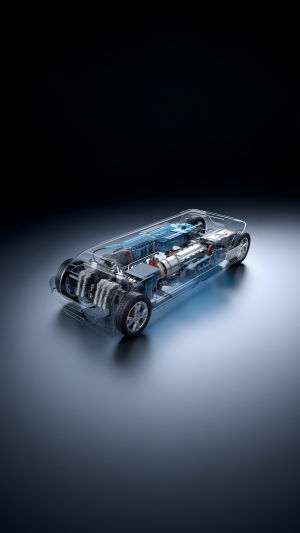
Imagine driving a car that doesn't rely on gasoline but instead runs on hydrogen. It sounds futuristic, right?
Fuel cell vehicles (FCVs) are at the forefront of the clean energy revolution, but with new technology comes new challenges.
One of the most talked-about concerns is the safety of hydrogen storage and the potential risks of leaks. Hydrogen, while a promising alternative fuel, is highly flammable. But how safe are these cars really?
Let's dive into the safety mechanisms in place and explore how automakers address these concerns.
<h3>Hydrogen Storage: The Heart of the FCV</h3>
At the core of any fuel cell vehicle is its hydrogen storage system. Hydrogen is stored in high-pressure tanks, typically at pressures ranging from 5,000 to 10,000 psi (pounds per square inch). These tanks are made from advanced composite materials designed to withstand extreme conditions. But why such high pressure? Hydrogen has a low energy density, meaning it needs to be stored at high pressure to provide the necessary range for driving.
<b>Materials Used for Tanks:</b> The hydrogen tanks used in FCVs are typically made from carbon fiber and other composite materials. These materials are incredibly strong, lightweight, and resistant to damage. They're designed to withstand significant impact, including collisions, and are subjected to rigorous testing during production to ensure their safety.
<b>Pressure Regulation:</b> The high pressure inside the tanks is carefully regulated through a pressure relief valve. This valve ensures that the tank maintains a safe pressure level, even in extreme conditions, such as rapid temperature changes or when the car is involved in an accident.
<b>Safety Testing:</b> Hydrogen tanks undergo intense crash testing and are designed to prevent rupture. They are puncture-resistant and can even survive a fire without compromising safety. The tanks are also tested for long-term durability to ensure they can handle the stresses of daily use, including vibration and changes in pressure.
<b>Example:</b> The Toyota Mirai, one of the leading FCVs, features advanced hydrogen storage tanks that meet stringent safety standards. These tanks have been designed to handle collisions and fires, ensuring that the hydrogen remains safely contained even in extreme situations.
<h3>Hydrogen Leaks: Addressing the Risk</h3>
While hydrogen tanks are built to be as safe as possible, the risk of leaks still exists. Hydrogen is a small molecule that can escape through tiny gaps, and it is highly flammable. However, automakers have implemented several safety features to minimize this risk.
<b>Leak Detection Systems:</b> FCVs are equipped with advanced leak detection systems that constantly monitor the vehicle for any hydrogen leaks. These systems use sensors to detect even the smallest traces of hydrogen, triggering an alarm or a shutdown of the fuel cell if a leak is detected.
<b>Ventilation and Venting:</b> In the unlikely event of a leak, FCVs are designed with ventilation systems to safely vent the hydrogen away from the vehicle. These systems direct hydrogen toward areas where it can disperse safely, such as near the roof or vents, where it is less likely to pose a danger.
<b>Hydrogen Sensors and Fail-Safe Systems:</b> Hydrogen sensors are placed throughout the vehicle, especially near the fuel cell and storage tanks. These sensors detect any abnormal buildup of hydrogen and activate the car's fail-safe systems to shut down the fuel cell and stop hydrogen flow, preventing any potential ignition.
<b>Example:</b> The Honda Clarity Fuel Cell is equipped with multiple hydrogen sensors and a built-in ventilation system that disperses hydrogen safely in the event of a leak. This makes it one of the safest options on the road today for those considering hydrogen-powered vehicles.
<h3>Crash Safety: What Happens in an Accident?</h3>
Car accidents are unpredictable, and one of the most pressing concerns with hydrogen vehicles is how the car would perform in the event of a crash. While hydrogen has its risks, FCVs are designed to protect drivers and passengers in the same way traditional cars are.
<b>Crash Testing Standards:</b> Hydrogen vehicles undergo the same crash testing as gasoline-powered cars. This includes front, side, and rear-impact tests, as well as rollover tests. In these tests, the hydrogen tanks are subjected to significant stress to ensure they won't rupture or leak in the event of a collision.
<b>Safety Features in Case of an Accident:</b> In the event of a severe crash, FCVs are equipped with emergency shutoff systems. These systems automatically stop the flow of hydrogen to the fuel cell, preventing any further risk of leakage or combustion. The tanks are designed to remain intact even after high-impact collisions.
<b>Post-Crash Safety:</b> After a crash, the hydrogen tank is also designed to resist leaks in the aftermath. Even if the car's structural integrity is compromised, the tank's materials and safety mechanisms keep hydrogen securely contained.
<b>Example:</b> In rigorous crash tests, the Hyundai Nexo fuel cell vehicle has shown excellent performance, with the hydrogen storage tank remaining intact and leak-free after severe impacts. This demonstrates that FCVs can meet or exceed safety standards in accidents.
<h3>Public Perception and Real-World Safety</h3>
While hydrogen-powered vehicles are often viewed as high-risk due to their flammability, the reality is that these cars are designed with an extraordinary level of safety in mind. In fact, the safety features of FCVs are often more advanced than those found in traditional gasoline-powered vehicles.
<b>Real-World Safety:</b> In the real world, hydrogen vehicles have shown to be very safe. The risk of a hydrogen leak or tank rupture is extremely low, thanks to the stringent safety measures and high-quality materials used in the construction of these vehicles.
<b>Public Perception:</b> Despite the technical safety advancements, the perception of hydrogen as a dangerous fuel remains a challenge. Education about the safety features of FCVs, along with real-world data proving their safety, is key to changing this perception.
<b>Regulatory Standards:</b> Hydrogen vehicles are subject to a variety of regulatory standards, including those set by the National Highway Traffic Safety Administration (NHTSA) and the European Union. These standards ensure that fuel cell vehicles meet the highest safety criteria before they're sold to consumers.
<h3>The Bottom Line: Are FCVs Safe? </h3>
Hydrogen fuel cell vehicles offer a promising solution for a sustainable, zero-emission future, and they come equipped with some of the most sophisticated safety features on the market. From crash-resistant hydrogen tanks to advanced leak detection and venting systems, FCVs are built with safety in mind. While there are inherent risks associated with hydrogen storage and leaks, these risks are actively mitigated through rigorous design and testing.
As technology continues to evolve, and more hydrogen infrastructure is developed, the safety and reliability of fuel cell vehicles will only improve. So, are they safe? With the right precautions and engineering, hydrogen-powered vehicles are as safe, if not safer, than traditional cars—and they may just be the future of clean, sustainable transportation.


