

Walk through a dense rainforest quietly enough, and you'll start to notice something unsettling — the feeling that you're being watched, but seeing nothing at all.
Then a shape peels away from a tree trunk, and suddenly a lizard is there where bark used to be. A patch of moss lifts off and flies away.
It's not a trick of the light. It's hundreds of millions of years of evolution doing exactly what it was shaped to do.
Camouflage isn't just about going invisible. It's a whole toolkit — color, pattern, texture, behavior, and even genetics — all working together to tip the balance between getting eaten and surviving long enough to reproduce. And the deeper you look, the more remarkable it gets.
<h3>The Biological Arms Race</h3>
The reason camouflage exists at all comes down to predator-prey dynamics. Prey animals that blend in better survive longer and pass on those traits. Predators that can see through the disguise also survive better and pass on sharper detection skills. This back-and-forth has been running for an extraordinarily long time, producing increasingly sophisticated results on both sides.
Pigment is the starting point. Cells called chromatophores, embedded in skin, fur, feathers, or scales, produce the colors animals display. Melanin handles blacks and browns. Carotenoids produce yellows and oranges. Aquatic animals often use iridophores and leucophores — specialized cells that reflect and scatter light to create silvery or iridescent effects, useful for blending into open water where there's no solid background to match.
However, color alone isn't enough. Pattern matters just as much. A fawn's speckled coat mimics the dappled light of a forest floor. A leopard's rosettes break up its outline against rock and dry grass. The principle behind field camouflage patterns is the same — disrupting a recognizable shape is often more effective than simply matching a color.
<h3>Cephalopods: The Undisputed Champions</h3>
If camouflage has a hall of fame, octopuses and cuttlefish are at the top. Unlike animals relying on fixed pigmentation, cephalopods can change color, texture, and reflectivity in milliseconds. Their skin layers chromatophores over iridophores and leucophores, all wired directly to neural signals. The result is essentially a living, programmable display screen.
A cuttlefish is technically color-blind, yet it matches its background with near-photographic accuracy by reading contrast and texture instead of hue. An octopus can flatten its body, grow physical ridges on its skin, and shift its entire color palette to match a coral reef or a patch of ocean floor — all within a fraction of a second.
<h3>Stripes, Shadows, and Seasonal Coats</h3>
Not all camouflage works by blending in. Disruptive coloration does the opposite — it uses bold, high-contrast markings to confuse rather than conceal. A zebra in a herd creates a dazzling visual puzzle that makes it difficult for a predator to lock onto a single individual. Some fish have prominent eyespots near their tails and faded markings near their heads, misleading predators about which direction they'll move.
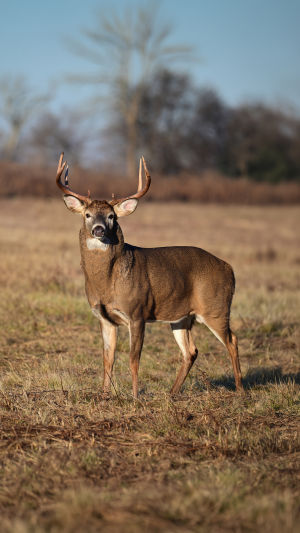
Countershading is another common strategy. Many animals — deer, sharks, penguins — are darker on their upper sides and lighter underneath. Natural sunlight hits from above, casting shadows on the lower body. This coloring reverses that effect, flattening the animal's three-dimensional appearance and making it harder to detect.
Then there are animals that change their camouflage entirely with the seasons. The arctic fox and snowshoe hare grow brown-gray coats in summer and pure white coats in winter — not by changing pigment, but by regrowing fur without melanin altogether. This transformation is triggered by changes in daylight length, which sets off hormonal shifts affecting hair growth. Climate change is now disrupting this system, leaving animals that turn white stranded against increasingly snowless winter landscapes.
<h3>Mimicry, Masquerade, and Behavioral Tricks</h3>
Some animals go beyond blending in and impersonate something else entirely. Stick insects look like twigs. Leaf-tailed geckos pass for decaying leaves. A predator might look directly at them and not register a living creature at all — because the brain categorizes them as non-living objects.
Behavior rounds out the picture. The most perfect coloring fails if the animal moves at the wrong moment or rests on the wrong background. Ground-nesting birds actively choose gravel and leaf litter that matches their plumage.
Decorator marine creatures go further— they physically attach seaweed, sponges, and other debris to their shells, constructing their own disguise from available materials.
Camouflage is ultimately a conversation between an animal and its environment, shaped by every predator that has ever come close to catching it.


