

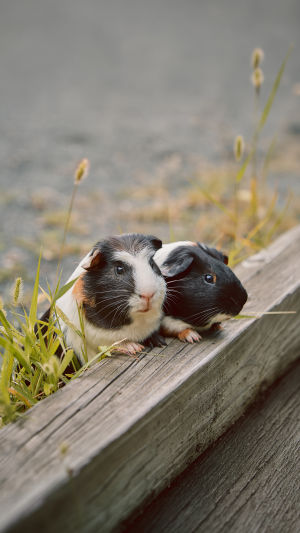
A quiet cage can sometimes feel louder than a busy one. In that silence, a small cavy may subtly change its behavior—moving less, appearing more alert, or emitting soft calls that seem to search for something unseen.
This is not mere restlessness. It reflects an animal designed for constant companionship, where solitude interrupts the natural rhythm of life rather than offering comfort.
<h3>Evolutionary Roots: A Species Built for Social Living</h3>
Cavies, domesticated from wild populations in the Andean regions of South America, evolved in environments with open terrain and limited hiding places. Staying close to others was a survival necessity, reducing the risk of predators and enabling early detection of danger.
As a result, cavies developed a nervous system tuned to expect constant social interaction—nearby movement, shared alert signals, and ongoing social awareness. Even after domestication, this instinct remains. A cavy alone does not experience isolation as freedom; it perceives it as a disruption of critical safety cues relied upon for thousands of years.
<h3>The Importance of Communication</h3>
Cavies use vocalizations as structured communication. Soft squeaks often indicate anticipation, such as around food, while low rumbles convey social comfort or familiarity.
These vocal signals only function effectively when another animal responds. In isolation, a cavy’s calls may go unanswered, creating stress over time. The animal does not call casually—it seeks a social response that never comes, which can heighten caution and withdrawal.
<h3>Recognizing Subtle Signs of Stress</h3>
Loneliness rarely manifests as panic. Instead, behavioral changes occur gradually:
- Reduced activity and preference for sheltered areas
- Inconsistent or selective eating habits
- Excessive grooming or chewing of enclosure materials
- A noticeable decline in “popcorning”, the spontaneous jumping behavior associated with excitement
These behaviors indicate internal tension rather than mere boredom or fatigue.
<h3>Health Implications of Isolation</h3>
Cavies’ physical health is closely linked to their social wellbeing. Stress can disrupt appetite and, consequently, the digestive system. Chronic isolation may also weaken immune function, increasing susceptibility to respiratory infections and skin issues.
Unlike some species that adapt to solitude, cavies maintain a baseline level of stress when isolated. It may not appear dramatic, but it is persistent and biologically significant.
<h3>Restoring Balance Through Companionship</h3>
For cavies, social interaction is a biological requirement—not optional enrichment. Appropriate companionship allows natural behaviors to resume:
- Mutual grooming
- Synchronized resting patterns
- Shared vocal exchanges
Human interaction, while valuable, cannot replace another cavy. Their communication is species-specific and requires behavioral feedback only another cavy can provide. Once a compatible companion is introduced, improvements in movement, curiosity, and vocal activity are often rapid and noticeable.
Isolation is not a matter of preference or mood; it is a challenge to a cavy’s biological design for connection.
Cavies are inherently social animals whose wellbeing depends on companionship. Observing their subtle behaviors and ensuring appropriate social interaction supports both their physical health and emotional balance. Silence in a cage is rarely peaceful for a cavy—it reflects the absence of the social bonds they are biologically wired to maintain.


