

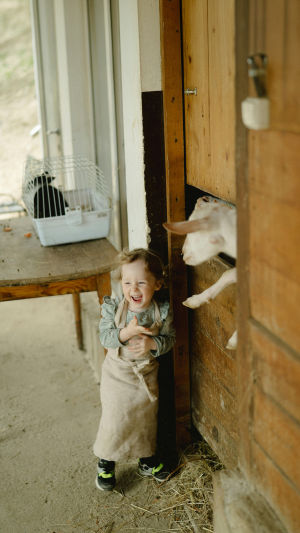
Hello Lykkers, have you noticed how young children often light up the moment they see animals? They wave, smile, and sometimes even try to “talk” to them as if meeting old friends.
These small moments during weekends or outings often become the most memorable parts of a day.
The strong interest children aged 3–6 show toward animals is not random. It connects closely with how they grow, feel, and understand the world around them. By looking deeper, we can better support their natural development in a gentle and meaningful way.
<h3>Building Early Understanding of the World</h3>
At this stage of life, children rely heavily on real and concrete experiences. Abstract ideas are still difficult, so living animals become powerful “learning partners.”
Animals help children notice differences in a very direct way. A tiger’s stripes support visual recognition, while a rabbit’s long ears introduce shape awareness. Birds stretching their wings help children understand movement in a simple and clear form.
When children observe a dog running, a fish gliding, or a bird flying, they easily grasp the difference between motion and stillness. Even animal sounds become a playful learning tool. Compared with static images, real animals offer movement, sound, and interaction, making learning more natural and engaging.
<h3>Emotional Connection Through Gentle Companionship</h3>
Children at this age express emotions openly and sincerely. They naturally feel drawn to living beings that seem soft, friendly, and calm. Animals often meet this emotional need in a simple way.
A cat resting quietly or a dog wagging its tail can create a strong sense of comfort for a child. Without words, a feeling of connection is formed. Animals become companions in their eyes rather than distant creatures.
Many children enjoy sitting beside animals, watching them closely, or “sharing” small thoughts in their own way. These moments help emotions flow naturally. Compared with toys, animals bring a sense of life and response that feels more real and meaningful.
<h3>Natural Curiosity Driving Exploration</h3>
Curiosity is a key part of early childhood. Children are drawn to movement, change, and anything unfamiliar. Animals provide endless opportunities for exploration.
Questions often arise naturally: How do ants carry food? Why do peacocks open their feathers? What do small animals like to eat? These questions show a growing desire to understand how the world works.
Each interaction brings something new. Unlike static objects, animals behave differently each time they are observed. This constant change keeps interest alive and encourages continuous discovery. It also builds a strong foundation for later learning habits.
<h3>Growth Through Gentle Interaction</h3>
Contact with animals also supports emotional and behavioral growth. Simple actions like feeding animals teach children to move carefully and gently. This builds awareness of kindness in daily behavior.
Observing animals quietly helps children develop patience and focus. They learn to wait, watch, and notice details that might otherwise be missed. These small practices slowly strengthen attention skills.
Seeing young animals follow their parents helps children understand care and connection. Over time, empathy begins to grow naturally, shaping how they understand others’ feelings and needs.
<h3>Shared Learning Between Adults and Children</h3>
Children’s interest in animals is more than simple excitement. It is part of a broader learning journey that involves thinking, feeling, and growing.
When adults join children in exploring animal environments, both sides share meaningful experiences. These moments build stronger emotional bonds and create lasting memories.
We can see each visit, each observation, and each small question as part of a shared learning process.
<h3>Final Reflection: Growing Together Through Simple Moments</h3>
The affection children aged 3–6 show toward animals reflects their natural way of understanding the world. Through observation, emotion, and interaction, they develop thinking skills, emotional awareness, and character.
As we accompany them in these experiences, we also rediscover simple joy and curiosity. These shared moments remind us that learning and warmth often come from the most natural connections in life.


