

Pick up any automotive industry report on what buyers pay attention to and color sits near the top of the list, consistently.
It affects the first impression a car makes in a showroom, influences how drivers perceive their own vehicle's personality, and has measurable effects on resale value. None of this is accidental.
Automakers, paint suppliers, and designers study color psychology carefully — and they use it deliberately.
<h3>What Each Color Is Actually Communicating</h3>
White is the most popular car color globally, and its dominance isn't random. White reads as clean, modern, and minimal. It projects care and precision — the kind of qualities buyers want associated with a well-maintained machine. In markets like Japan and parts of Northern Europe, white has additional connotations of purity and simplicity that reinforce its appeal.
Black is the default color of power and authority in most Western markets. Luxury vehicles are disproportionately sold in black because the color communicates seriousness, exclusivity, and control. The trade-off is maintenance — black shows dust and scratches more readily than almost any other color, which is why it also signals something about willingness to invest in upkeep.
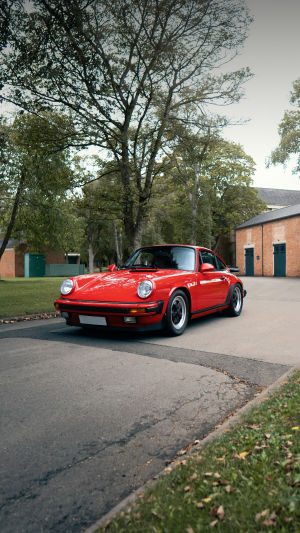
Red is one of the more psychologically loaded choices. Studies have found that drivers of red cars are more likely to be perceived as confident, assertive, or even aggressive. Red is associated with energy, speed, and passion — which is why it dominates sports car marketing. The perception of a car as faster or more performance-oriented can actually intensify for the same vehicle in red versus silver, even when the mechanical specifications are identical.
Blue occupies the calmer end of the spectrum: trustworthy, stable, and dependable. It's popular across a wide demographic range precisely because it doesn't demand attention the way red does while still expressing personality more distinctly than white or silver.
<h3>The Resale Value Consequence</h3>
Color choices have financial consequences that many buyers underestimate. Neutral colors — white, black, silver, and grey — consistently hold resale value better than unusual or trend-driven shades. The reason is simple: broader market appeal. A potential buyer five years from now has to want this color too, and the pool of buyers for a matte orange SUV is smaller than the pool for the same vehicle in white.
This doesn't mean vibrant colors are always a financial liability. A color that's popular at the moment a car enters the used market can command a premium — but if it's peaked and is on the way out, the same color can hurt the asking price. Neutral colors sidestep this timing risk entirely.
The degree to which resale matters varies by buyer. Someone who plans to keep a car for ten years has a different calculation than a lessee who'll turn it in after three. But the principle is consistent: unusual colors narrow your future buyer pool.
<h3>How Finish Affects Perceived Quality</h3>
Beyond hue, the finish of a car's exterior communicates its own set of signals. Research in industrial design consistently identifies color, material, and finishing — the CMF framework — as the primary drivers of perceived quality. A gloss finish on an SUV increases perceived quality and purchase intent, while the same finish on a compact car may feel mismatched with consumer expectations for the segment.
Matte finishes have moved from exotic to increasingly mainstream over the past decade. They communicate a different kind of sophistication — quieter, less obvious, almost anti-status — which appeals to buyers who find glossy luxury cars too conspicuous. Paint-protection film applied over matte paint has become a significant aftermarket category as owners invest in preserving finishes that are harder to repair than standard gloss.
Metallic and pearlescent finishes add depth and light-shifting properties that plain solid colors don't have. They photograph well, catch light at different angles, and create a perception of premium quality that flat solid colors struggle to match at the same price point.
<h3>Cultural Context Changes Everything</h3>
Color associations aren't universal. Black is strongly linked to luxury in Western markets, but bright colors — gold, red — carry different prestige associations in parts of Asia, where red signals good fortune. Automakers selling globally have to navigate these differences, which is why some color names and options change by market, even within the same model line.
The demographic dimension matters too. Younger buyers in many markets are showing more interest in distinctive, non-neutral colors — vibrant blues, greens, and earth tones — than previous generations did. This is partly a reaction against the sea of white, grey, and silver that dominates roads in most countries.
Manufacturers are responding with richer, more saturated palettes in model refreshes, balancing the conservative commercial instinct toward resale-safe colors against the creative instinct toward differentiation.


