

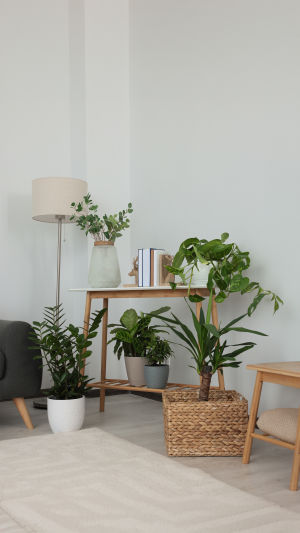
Starting your plant journey at home from scratch, and honestly no one tells you how quickly it can go sideways if you skip the basics.
The good news? Plants aren't actually hard to keep alive. Most of the time, they die because of a few simple things nobody explained upfront.
Get those right, and you're already ahead of most beginners.
<h3>Pick the Plant That Fits Your Space, Not Just Your Pinterest Board</h3>
Before anything, look at your windows. A dim north-facing room and a sun-drenched south-facing one are two completely different environments. Buying a Fiddle Leaf Fig for a dark corner is setting yourself up for frustration.
If your space gets limited natural light, go with snake plants, ZZ plants, or pothos. These three are genuinely hard to mess up, and they look great without needing constant sunlight. If you've got a bright spot, succulents and Bird of Paradise will thank you for it. Matching light to plant is honestly 80% of the whole thing.
<h3>Stop Watering on a Schedule</h3>
Calendars don't work for plants. The finger test does. Push your finger two inches into the soil. If it still feels a little damp, leave it alone. If it's dry and crumbly, it's time to water.
When you do water, go slowly and thoroughly until it drains out the bottom of the container. That signals the whole root system got a drink, not just the surface layer. Always use pots with drainage holes. If your pretty decorative container doesn't have one, keep the plant in its plastic nursery container and just drop it inside the decorative one. Lift it out to water, let it drain, then put it back.
<h3>Light Isn't Just "Sunlight or No Sunlight"</h3>
There are three types worth knowing. Direct light means the sun actually hits the leaves, which most tropicals hate. Bright indirect light means a very bright room where the sun doesn't touch the plant directly. Low light is a spot where you could read comfortably during the day without a lamp, but there's no view of the sun.
If your plant starts leaning hard toward the window, it's asking for more light. Rotate it 90 degrees every week so all sides grow evenly.
<h3>Humidity Matters More Than People Think</h3>
Most popular houseplants are originally from humid tropical areas. Your heated or air-conditioned home is nothing like that. In winter, especially, the air gets very dry, and plants feel it — leaves start curling, turning crispy at the edges, or just looking sad.
Simple fixes: group a few plants together so they share the moisture they release, or sit them on a shallow tray of pebbles and water. Keep them away from heating vents and cold drafts, both of which can shock a plant overnight.
<h3>Humidity Matters More Than People Think</h3>
Most popular houseplants are originally from humid tropical areas. Your heated or air-conditioned home is nothing like that. In winter, especially, the air gets very dry, and plants feel it — leaves start curling, turning crispy at the edges, or just looking sad.
Simple fixes: group a few plants together so they share the moisture they release, or sit them on a shallow tray of pebbles and water. Keep them away from heating vents and cold drafts, both of which can shock a plant overnight.


