

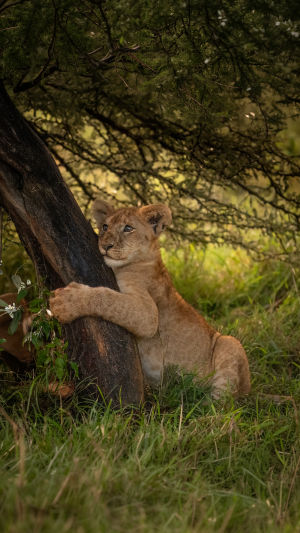
Today we explore a fascinating journey in nature—how a young lion grows step by step into a confident and capable member of its group. This journey is full of learning moments, gentle care, and steady change.
At birth, a lion cub enters a safe and protected environment within its pride. The mother provides warmth, care, and nourishment. During these early weeks, the cub spends most of its time resting, feeding, and staying close to its mother.
Its eyes gradually open to the world, and its tiny steps begin to shape its early awareness of surroundings. Siblings often stay together, forming playful bonds that help build early coordination and social understanding.
<h3>Early Discovery and Playful Learning</h3>
As weeks pass, the cub becomes more active. It starts walking more steadily, exploring nearby areas under the watchful eye of the mother. Play becomes an important part of daily life. Through gentle wrestling and chasing games with siblings, the cub develops strength, balance, and coordination.
These playful moments are not random. They are early lessons that help build essential skills for later life. The cub learns how to react quickly, how to judge distance, and how to communicate with others through body movements and sounds. Every small interaction contributes to shaping its confidence and awareness.
<h3>Learning Through Observation and Practice</h3>
When the cub grows stronger, usually after several months, it begins to observe more carefully what the pride does. The mother and other females often bring back food for the group, and the young ones watch closely.
At this stage, learning becomes more structured. The cub starts joining short trips with the mother, observing how the group works together in the wild environment. It begins to understand timing, patience, and coordination. While it is not yet responsible for providing food, it practices chasing small moving objects and reacting to sudden changes in direction during play. These experiences slowly shape its instincts.
<h3>Building Strength and Social Bonds</h3>
As time continues, the young lion grows into a more independent and confident member of the group. Social interaction becomes even more important. It spends more time with other young lions, strengthening friendships through shared activities and cooperative play.
Within the pride, relationships are key. The young lion learns how to behave respectfully within the group structure. It observes signals from older members and adapts its actions accordingly. This helps it understand how to live harmoniously within a complex social system.
Physical development also becomes noticeable. The body becomes stronger, movements more controlled, and reactions quicker. This stage is crucial because it prepares the young lion for more demanding responsibilities ahead.
<h3>Stepping Into Independence and Responsibility</h3>
As maturity approaches, the young lion begins to take on a more independent role. It gradually participates in more advanced group activities and starts exploring wider areas with greater confidence.
During this stage, decision-making becomes important. The lion learns when to move, where to stay, and how to respond to different situations in the environment. Cooperation with other members of the pride remains essential, but personal awareness grows stronger.
Over time, the lion develops the ability to manage its own path within the group or eventually form its own direction. This transformation does not happen suddenly—it is the result of continuous learning, observation, and adaptation.
<h3>A Journey of Continuous Growth</h3>
The growth of a young lion is not a simple change from small to strong. It is a layered journey filled with exploration, practice, and social learning. Every stage contributes something meaningful—early care builds safety, play builds skill, observation builds understanding, and independence builds confidence.
Through this process, we can see how nature carefully shapes each step of development. Nothing is rushed, and every experience plays a role in forming a balanced and capable individual.
Lykkers, after exploring this journey, we can reflect on how growth often comes through steady learning and shared experiences. Each stage of development carries its own value, and progress is built through time and interaction.
What part of this journey do you find most interesting—the playful early days, the learning through observation, or the step toward independence? Feel free to share your thoughts and continue exploring the wonders of the natural world with us.


