

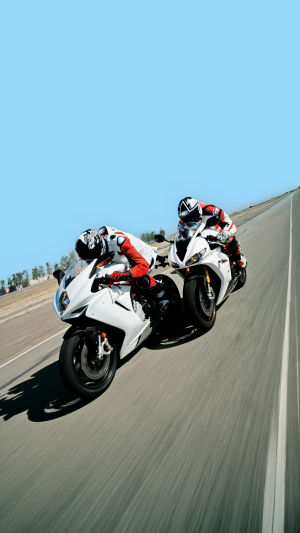
Ever watched a motorcycle race and admired the precision and speed of the riders? Beyond the excitement, motorcycle racing plays a significant role in advancing safety technology.
What happens on the track does not remain there—it often influences the motorcycles used on public roads. As competition intensifies, engineers and manufacturers continuously develop new technologies aimed at improving rider protection.
Over time, many of these innovations transition from high-performance environments to everyday riding. This article explores how motorcycle racing contributes to the evolution of modern motorcycle safety.
<h3>Racing’s Role in Safety Advancements</h3>
Motorcycle racing serves as a high-demand testing environment for advanced engineering and safety development. In conditions where speed, control, and precision are critical, even minor design weaknesses become evident. This environment encourages continuous innovation, with improvements often extending beyond the track to benefit everyday riders.
Many safety features now common in consumer motorcycles were refined through high-performance testing environments before wider adoption.
Real-World Testing: Racing conditions expose motorcycles to extreme stress, helping identify performance limitations and safety risks. This process supports the development of improved protective gear, stronger helmets, and more reliable mechanical components.
Track to Road Technology Transfer: Systems such as advanced braking mechanisms, reinforced frame structures, and improved impact management technologies have been influenced by racing development. Anti-lock braking systems (ABS), for example, were developed through broader automotive engineering and later refined through performance testing in demanding riding conditions. ABS helps reduce wheel lock during sudden braking, particularly on low-traction surfaces.
Protective Gear Development: Racing has significantly influenced the design of rider safety equipment. Modern helmets, gloves, boots, and protective suits are designed using materials and construction methods tested under high-impact conditions, improving both protection and comfort.
<h3>Key Safety Technologies Influenced by Racing</h3>
<b>Anti-lock Braking Systems (ABS):</b>
ABS prevents wheel lock during braking, helping maintain stability and steering control. It is especially effective in emergency braking situations and on slippery surfaces.
<b>Traction Control Systems (TCS):</b>
TCS helps manage rear-wheel traction during acceleration. It reduces the likelihood of wheel slip, particularly during cornering or rapid throttle input.
<b>Carbon Fiber Materials:</b>
Carbon fiber is widely used in motorcycle components due to its high strength-to-weight ratio. It contributes to improved structural integrity while keeping overall weight low, enhancing both performance and safety.
These technologies enhance not only performance but also rider safety by improving control and stability under various riding conditions.
<h3>Evolution of Protective Gear</h3>
Advancements in racing environments have contributed to significant improvements in rider protective equipment.
<b>Protective Riding Suits:</b>
Modern riding suits are designed with reinforced materials and impact-resistant padding to reduce injury risk during collisions or falls.
<b>Airbag Systems:</b>
Airbag-equipped riding jackets and suits deploy upon impact to provide additional protection for the chest, back, and neck areas. These systems are increasingly used in both professional and recreational riding.
<b>Gloves and Boots:</b>
Protective gloves and boots now include reinforced knuckle protection, ankle support, and impact-absorbing materials designed to reduce injury severity in accidents.
<h3>Influence on Motorcycle Design</h3>
Motorcycle racing also shapes the overall design and engineering of production motorcycles.
<b>Aerodynamic Design:</b>
Streamlined bodywork reduces air resistance and improves stability at higher speeds.
<b>Frame Engineering:</b>
Modern motorcycle frames are designed to balance strength and flexibility, improving crash resistance and handling performance.
<b>Suspension Systems:</b>
Advanced suspension technology enhances stability, comfort, and control across varying road conditions.
Through continuous refinement in high-performance environments, these design improvements contribute to safer and more predictable riding experiences.
<h3>Final Thoughts</h3>
Motorcycle racing continues to play an important role in the development of safety technologies. Innovations tested in high-performance environments often contribute to safer, more stable, and more efficient motorcycles for everyday use. From braking systems to protective gear, the influence of racing is evident in many aspects of modern motorcycle design and rider safety.


