

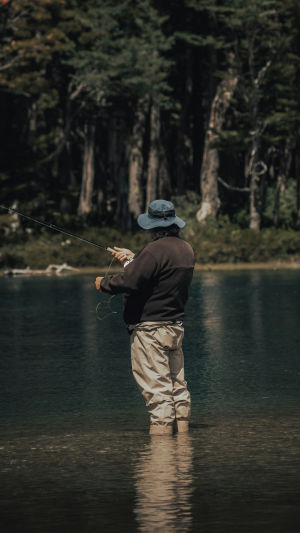
Lykkers, when we stand beside a quiet river or a still lake, there is often a moment where everything feels calm and focused.
Fly fishing is built on that feeling. It is not only about catching fish, but also about understanding how water moves and how life beneath the surface responds.
In this method, we use lightweight artificial flies that imitate insects and small aquatic creatures. Instead of relying on weight, we rely on skill, timing, and observation. Every cast becomes a small interaction with the environment, where patience plays an important role.
<h3>Understanding Artificial Flies</h3>
At the heart of fly fishing is the artificial fly. These small imitations are designed to resemble natural food sources that fish recognize.
- Surface flies float gently and imitate insects resting on the water. They are effective when fish are feeding near the top layer.
- Subsurface patterns drift just below the surface, matching the movement of small organisms carried by the current.
- Deep-water patterns imitate larvae and small creatures found near the riverbed, where many fish feed throughout the day.
- Active patterns are designed to attract attention through motion, imitating small moving creatures in the water.
Matching the right fly to water conditions helps create a more natural presentation and increases the chances of interaction with fish.
<h3>Basic Fly Casting Techniques</h3>
Fly fishing is unique because the line carries the energy, not the lure. This requires controlled movement and rhythm.
- Overhead casting is the most common technique. The line is lifted behind and then brought forward smoothly, forming a controlled loop that lands gently on the target area.
- Side casting is useful in tight spaces where branches or obstacles limit movement.
- Rolling casts are effective in narrow streams, using a smooth forward motion without a full back cast.
Consistency and rhythm are more important than force. A smooth motion helps maintain accuracy and prevents disturbing the water surface.
<h3>Presenting the Fly Naturally</h3>
Once the fly lands, its movement on the water becomes just as important as the cast itself.
- A natural drift allows the fly to move freely with the current, creating a realistic presentation.
- Gentle pulling motions can imitate small creatures trying to escape underwater.
- Light rod-tip twitches can simulate insects struggling on the surface, attracting attention from nearby fish.
The goal is to make the fly appear as natural and unplanned as possible.
<h3>Choosing the Right Fishing Spot</h3>
Location plays a key role in fly fishing success. Fish often gather where food and shelter are naturally available.
- Shallow areas near faster currents are common feeding zones.
- Shaded riverbanks with overhanging vegetation often attract insects, drawing fish closer.
- Rock edges and plant-covered areas provide shelter and feeding opportunities.
Observing ripples, shadows, and water flow helps identify the most active areas.
<h3>Essential Equipment for Beginners</h3>
Simple and balanced equipment makes learning easier and more enjoyable.
- A medium-weight rod provides good control and flexibility.
- A weight-forward line supports smoother and more accurate casting.
- A leader line helps the fly move naturally in the water.
- A compact fly box keeps different patterns organized and ready for changing conditions.
With basic gear, beginners can focus more on technique and observation.
<h3>Final Reflection for Lykkers</h3>
Fly fishing is more than a technique—it is a practice of patience, awareness, and connection with nature. Each cast offers an opportunity to understand water movement and natural behavior more deeply.
For Lykkers who enjoy calm outdoor moments, fly fishing can be a meaningful way to slow down and observe the environment. Even small details on the water surface can reveal what is happening beneath.


