

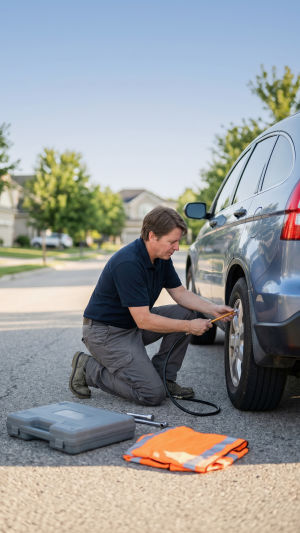
You might not think about your tires often, but they are the only part of your vehicle that actually touches the road.
That makes them extremely important. Regular tire checks are not just a suggestion; they are a simple habit that can improve safety, save money, and extend tire life.
Let’s look at why this matters and how to do it correctly.
<h3>Safety Starts with the Contact Patch</h3>
Your tires’ contact with the road is surprisingly small. Each tire has a contact patch roughly the size of your hand. When that area is affected by low pressure, uneven wear, or damage, your vehicle’s handling, braking, and stability can be reduced.
Properly inflated tires help maintain control and reduce the risk of tire failure. Underinflated tires generate excess heat, especially at higher speeds, which can increase the risk of damage. Overinflated tires reduce grip and create a harsher ride.
Checking tire pressure regularly is one of the most effective safety habits for any driver.
<h3>Fuel Efficiency and Tire Wear</h3>
Underinflated tires increase rolling resistance, meaning the engine must work harder to move the vehicle. This leads to higher fuel consumption.
Proper tire inflation can improve fuel efficiency by up to approximately 3%. While this may seem small, it becomes meaningful over time.
Tire wear is also affected by pressure levels. Driving consistently with low pressure can significantly shorten tire lifespan, leading to earlier replacement. Regular checks help ensure even wear and longer-lasting tires.
<h3>What to Check and How Often</h3>
Start with tire pressure. Use a reliable tire gauge and check when tires are cold, before driving long distances. The correct pressure is listed on the label inside the driver-side door or in the vehicle manual. Do not use the number printed on the tire sidewall, as that represents the maximum pressure, not the recommended level.
Next, inspect tread depth. A simple tread check can be done using a coin placed into the grooves. If the tread appears too shallow, the tire may need replacement.
Also look for uneven wear. Wear on the inner or outer edges may indicate alignment or inflation issues. Finally, check for visible damage such as cuts, bulges, or embedded objects.
These checks should be done monthly and before long trips.
<h3>Seasonal Considerations</h3>
Temperature changes can affect tire pressure. For every 10°F change in temperature, tire pressure may change by about 1–2 PSI. Cold weather can cause underinflation, while warmer weather can increase pressure.
In colder climates, winter tires are designed to maintain flexibility in low temperatures, improving grip compared to standard all-season tires.
Regular tire rotation every 5,000 to 8,000 miles helps promote even wear and extends tire life.
<h3>Don’t Forget the Spare Tire</h3>
The spare tire is often overlooked until it is needed. It should be checked at least twice a year for proper inflation and signs of wear or cracking.
Keeping a tire inflator and basic tools in the vehicle adds extra safety and convenience in case of emergencies.
Regular tire inspections require only a few minutes but provide significant benefits in safety, efficiency, and cost savings. Building this habit helps prevent unexpected issues and keeps your vehicle performing reliably.
A quick tire check before driving can make a meaningful difference over time.


