

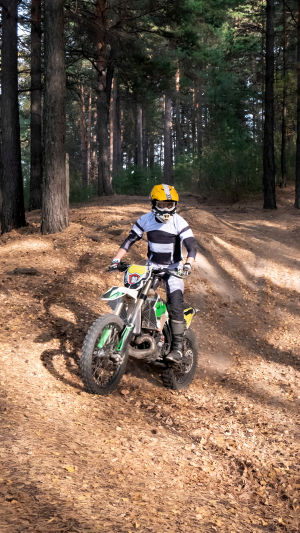
If you have ever experienced the movement of a dirt bike on a forest trail, you understand the combination of adrenaline, control, and freedom that off-road riding offers.
This activity blends technical skill with constant awareness of changing terrain, making every ride unique.
The scent of natural terrain, the sound of knobby tires on gravel, and the need to continuously read the environment create a demanding but rewarding experience. However, off-road riding is not only about speed and performance; it also requires strong attention to safety and preparation.
<h3>What Makes Dirt Biking Engaging</h3>
Off-road motorcycling requires full-body coordination and active control. Riders continuously adjust their body position, use their legs to stabilize the bike, and apply precise steering input to navigate uneven surfaces such as ruts, rocks, and logs.
A smooth riding rhythm over uneven terrain creates a strong sense of flow and control that many riders find highly rewarding. Group riding also adds a social dimension, where riders support one another by sharing techniques, assisting in difficult sections, and offering mechanical help when needed.
<h3>Key Risks in Off-Road Riding</h3>
Despite proper preparation, off-road riding carries inherent risks. Common injuries typically involve the wrists, collarbones, and ankles, often caused by sudden impacts or loss of balance.
Unexpected terrain changes such as hidden roots, steep drops, or loose sand can lead to loss of control. Mechanical issues, including chain failure or tire punctures, may also increase the risk of accidents.
Environmental factors are equally important. Long rides in warm conditions can lead to dehydration or heat-related fatigue, especially when wearing protective equipment. Mental fatigue can also reduce reaction speed after extended periods of concentration.
<h3>Essential Gear and Preparation</h3>
Proper protective equipment is essential for safe riding. This includes a full-face helmet, goggles, gloves, chest protection, knee and elbow guards, and durable off-road boots.
Before riding, the motorcycle should be inspected carefully. Key checks include tire pressure, chain condition, brake performance, and fluid levels. Riders should also carry basic repair tools, a tire inflation device, and a first-aid kit.
A navigation device or a securely mounted mobile device can help with route tracking in unfamiliar areas.
<h3>Riding Locations and General Costs</h3>
Off-road riding areas and designated riding parks often require entry fees, typically ranging from low daily charges depending on the location and facility type. Some areas may also require membership or safety certification.
Motorcycle rentals are commonly available for riders who do not own a bike. Rental options vary based on engine size and condition. Beginner-friendly motorcycles are generally in the 125cc to 250cc range, offering manageable power and control.
Guided riding experiences are also available in certain natural terrain regions, often including equipment, instruction, and support services.
<h3>Safety Practices for Riders</h3>
Riding with at least one other person is strongly recommended. Sharing a route plan with someone not on the ride improves safety in case of emergencies.
Maintaining a controlled pace, especially within mixed-experience groups, helps reduce risk. Proper use of both brakes is essential, with smooth application required on loose or uneven terrain.
Beginners are encouraged to undergo basic training to develop core skills such as balance, throttle control, and obstacle navigation. Regular hydration and scheduled rest breaks are important to maintain focus and physical performance throughout the ride.
Off-road riding offers a unique combination of challenge, skill, and enjoyment. The experience becomes more rewarding when balanced with proper preparation, safety awareness, and respect for personal limits. Maintaining equipment, using appropriate protective gear, and riding responsibly all contribute to a safer and more enjoyable experience on the trail.


