

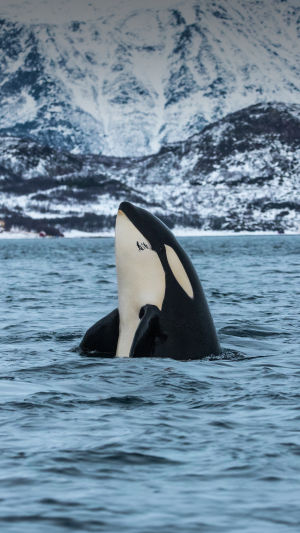
Hi, Friends! If you've ever felt like your voice just doesn't carry far enough in a crowded room, wait until you hear about humpback whales.
These massive, magnificent creatures are out here producing some of the most complex, haunting, and downright mind-blowing sounds on the planet, and those sounds travel across entire ocean basins.
Like, we're talking thousands of miles. Your Bluetooth speaker wishes it had that kind of range.
<h3>What Exactly Is a Whale Song?</h3>
Whale songs are sequences of sounds that male humpback whales produce, and calling them "songs" isn't just poetic flattery. They genuinely follow a structured pattern, with repeating themes and phrases, much like a chorus in your favorite track.
Scientists have noted that these songs can last anywhere from a few minutes to several hours. And yes, the whales do repeat them. Over and over. With commitment. If dedication to a hobby were an Olympic sport, humpback whales would take the podium every single time.
The sounds themselves range from deep, rumbling moans to high-pitched squeals and everything in between. It's like the whale decided to cover every musical genre in one sitting. Low-frequency sounds, in particular, are the real long-distance travelers. They move efficiently through water because water is much denser than air, and sound loves that. It's basically the whale equivalent of having a really good Wi-Fi signal in the middle of nowhere.
<h3>How Far Can These Songs Actually Travel?</h3>
Here's where things get genuinely jaw-dropping. Low-frequency whale calls can travel up to 10,000 miles under the right ocean conditions. There's even a natural phenomenon called the SOFAR channel, which stands for Sound Fixing and Ranging channel.
It's a layer of water in the ocean where temperature and pressure conditions allow sound to travel with minimal loss. Think of it as the ocean's own dedicated highway for sound, and whales figured out how to use it long before humans even knew it existed.
Researchers have recorded whale songs produced in one ocean being detected in another. That's not a metaphor. That's an actual whale in one part of the world essentially sending a voice message to the rest of the ocean.
<h3>Why Do Whales Sing?</h3>
The leading theory is that male humpbacks sing to attract mates. So basically, whales are out here serenading potential partners across thousands of miles of open ocean. That's either incredibly romantic or the world's most ambitious dating strategy, depending on how you look at it.
But there's more to it than just romance. Songs may also serve as a way to communicate with other males, establish presence in a territory, or coordinate with others in ways scientists are still working to understand. Whale communication is complex enough that researchers have dedicated entire careers to decoding it, and they're still finding new layers.
<h3>The Copycat Phenomenon</h3>
One of the most fascinating discoveries is that whale songs change over time, and those changes spread across populations like a hit song going viral. A new phrase or pattern might appear in one group of whales, and within a few years, whales on the other side of the ocean are singing the same thing. Scientists call this cultural transmission, and it means whales aren't just communicating—they're actually sharing culture. Your favorite artist dropping a new album has nothing on a humpback whale dropping a new vocal pattern that sweeps across the Pacific.
<h3>Why This Matters Beyond Being Cool</h3>
Understanding whale songs has real conservation value. Researchers use underwater microphones called hydrophones to track whale populations, monitor migration routes, and assess how human-made ocean noise, like shipping traffic and sonar, is affecting these animals. Noise pollution in the ocean is a growing concern because it essentially jams the communication channels whales depend on. When their songs get drowned out, it's not just an inconvenience—it can disrupt feeding, mating, and navigation.
Efforts to reduce underwater noise pollution are gaining traction globally, with shipping companies and researchers working together to find solutions that give these incredible singers their acoustic space back.
So next time you feel like nobody's listening, just remember there's a humpback whale out there singing its heart out across an entire ocean, and someone on the other side is absolutely picking it up. Nature really does have a way of making us feel both tiny and completely amazed at the same time.


