

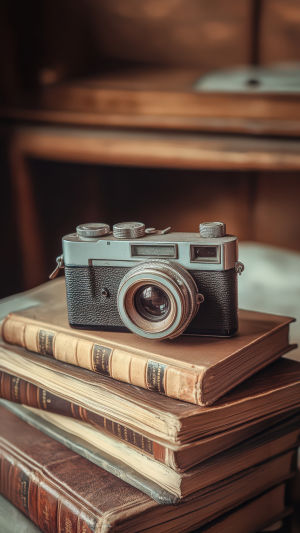
Ever scroll through your phone and wonder whether all those photos are truly helping you remember your life, or subtly changing the way your memories form?
This is becoming an increasingly common question as personal photo collections grow larger than ever.
Today, billions of photos are taken worldwide every year, capturing everyday experiences at an unprecedented scale. With so many moments stored digitally, it is natural to reflect on how this affects human memory and recall.
<h3>The Double-Edged Nature of Photography</h3>
Photography offers a powerful way to preserve moments in time. However, its relationship with memory is more complex than simple preservation. While photos help store experiences, they can also influence how those experiences are remembered later.
Research in cognitive psychology suggests that taking photos may sometimes reduce how strongly details are stored in memory. This happens because attention is partially shifted toward the device, while the mind relies on the camera to record the moment instead of fully processing it internally.
<h3>When Photography Strengthens Memory</h3>
Despite this, photography can also enhance memory when used with intention. Actively choosing what to capture encourages closer observation and deeper attention to detail. This more engaged form of viewing can strengthen how experiences are encoded in the mind.
Focusing on composition, zooming in on details, and consciously observing surroundings can all contribute to stronger and more lasting memories. In these cases, the camera becomes a tool that supports attention rather than replaces it.
<h3>The Shift in Attention</h3>
One important effect of photography is the shift in attention. While visual details often become sharper and more memorable, other sensory elements—such as sounds, conversations, or environmental context—may receive less focus.
This shift can change how an experience is remembered overall, emphasizing what is seen while reducing recall of other surrounding elements.
<h3>Revisiting Memories Through Photos</h3>
Looking back at personal photos can help bring past experiences back to mind. Images often act as powerful cues that reactivate emotions, thoughts, and details that may have faded over time.
Photographs from meaningful moments can also support emotional reflection and help maintain a sense of personal identity. However, the impact of photos depends on how they are used. Passive collection without reflection may have a weaker effect on long-term memory compared to thoughtful engagement.
Photography is neither purely beneficial nor harmful to memory. Instead, its effect depends on how it is used. When approached mindfully, it can deepen awareness and preserve meaningful experiences. When used passively, it may reduce the depth of attention given to lived moments.
The key lies in balance—capturing memories while still fully experiencing them in real time.


