

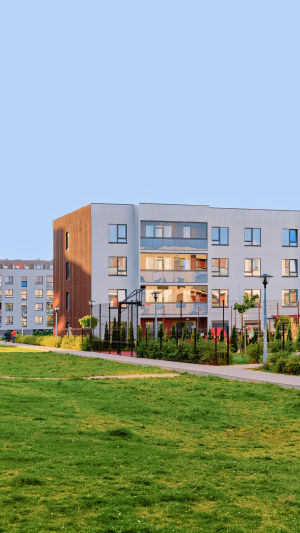
Hello, Lykkers!
The way we think about city living is shifting in ways that are hard to ignore.
Walk through any new development these days and you'll notice something different: more greenery spilling over balconies, open layouts that shift with your needs, and technology quietly working behind the scenes to keep things running smoothly.
Urban housing design is undergoing a significant transformation driven by evolving environmental imperatives, technological advancements, and shifting social expectations. It's not just about cramming more people into smaller spaces anymore.
As cities contend with rising populations and climate challenges, new development approaches prioritize not only the efficient use of space but also the integration of resilient materials, energy-efficient systems, and community-focused infrastructure.
<h3>Green Features Everywhere</h3>
More urban projects are including green features like planted terraces, living walls, and rooftop gardens to help cool cities, manage stormwater, and support local ecosystems. These aren't just decorative add-ons anymore. New buildings are blending housing with productive landscapes, such as shared gardens and small orchards for growing food.
These green areas are planned from the start, with built-in irrigation systems and structural designs that can support the added weight.
Walking into a building where tomatoes grow on the rooftop and neighbors gather around shared garden plots creates a completely different atmosphere. It's practical, yes, but it also brings people together in ways that traditional apartment lobbies never could.
<h3>Flexibility Built In</h3>
Base building systems are increasingly being designed for flexibility, with conduits and risers sized to allow future upgrades without invasive retrofit. Think about how much technology has changed in just the past decade. Buildings designed today need to anticipate changes we haven't even thought of yet.
Underground parking can be designed to accommodate EV charging bays and future vehicle-to-grid architecture. What seems cutting-edge now will be standard soon enough, and smart developers are planning for that reality from day one.
<h3>Wellness and Community Focus</h3>
Today's residents want spaces that are flexible, wellness-focused, tech-savvy, and community-oriented. This isn't a trend that's going away. Using non-toxic, environmentally friendly building materials and installing advanced air-filtration systems that improve indoor air quality are becoming baseline expectations rather than luxury features.
There's a growing trend toward communal and co-living spaces. Future residential architecture will adapt by designing homes that encourage community while providing privacy. Shared green spaces, communal kitchens, and co-working areas will become more common, especially in urban developments. It's about finding that balance between having your own space and feeling connected to something larger.
<h3>Sustainability as Standard</h3>
Modern housing design emphasizes sustainability. Eco-friendly homes prioritize lowering environmental effects through energy efficiency, sustainable materials, and water conservation. Developers are moving beyond seeing these features as optional extras that justify higher prices. They're recognizing that sustainability makes financial sense in the long run, both for residents dealing with utility bills and for cities managing infrastructure strain.
Future houses will follow a "less is more" approach, with minimalist designs focusing on quality over quantity. High-quality, sustainable materials with simple, elegant forms will be emphasized, giving homes a luxurious yet natural feel.
Urban housing is evolving into something more thoughtful and responsive. The best new developments feel less like cookie-cutter apartments and more like carefully planned ecosystems where people can actually build lives, not just store their belongings between workdays. It's an exciting time to watch how architects and planners are reimagining what city living can be.


