

Small spaces get a bad reputation that they don't entirely deserve. The challenge isn't the size — it's knowing which decisions to make and, just as importantly, which ones to avoid.
A few well-chosen moves can genuinely transform how a room reads, making it feel lighter, taller, and more open than its actual dimensions suggest.
<h3>Start with Color</h3>
Color is the single most powerful tool available for changing how large a room feels, and it costs nothing more than a can of paint. Light, warm neutrals — soft whites, pale beiges, warm grays — reflect natural and artificial light into the room, visually pushing the walls outward. Cool-toned walls can also work, but the key in either case is consistency.
Painting walls, trim, and ceiling in the same color or very close tonal shades eliminates the visual interruptions that mark where one surface ends and another begins. Those hard contrasts are what make a room feel smaller. Without them, the eye reads the space as more continuous and therefore more expansive.
<h3>Use Mirrors Strategically</h3>
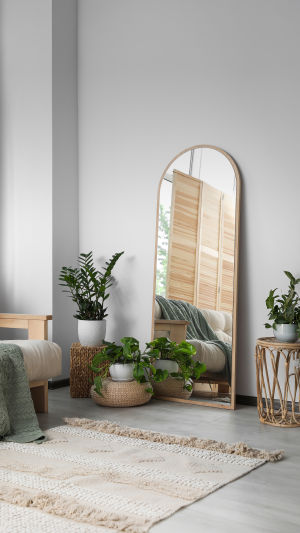
Mirrors are the classic small-space trick for good reason — they bounce light and create the visual impression of depth where none exists. A large mirror hung opposite a window effectively doubles the perceived size of the room by reflecting both the natural light and the view behind you. In a dark corner, a wall mirror catches and redistributes whatever light is present, eliminating the sense of compression that shadowed corners create.
A large framed mirror above a console or dresser is both practical and visually transformative. If a single large mirror feels too formal, a cluster of smaller mirrors in varied shapes and frames achieves a similar effect with more personality.
<h3>Go Vertical</h3>
Drawing the eye upward makes any room feel taller and, by extension, larger. Hang curtains as close to the ceiling as possible — two to three inches below the ceiling line — and let them fall all the way to the floor. Even if the window is small, full-length curtains signal generosity of space.
Use vertical design elements: narrow bookcases that reach the ceiling, floor lamps, tall plants, or artwork hung in a vertical arrangement. These elements create a visual lift that changes the perceived proportions of the room.
<h3>Edit What's in the Room</h3>
The fastest way to make a small room feel smaller is to fill it completely. Every unnecessary object competes for visual space and creates the mental impression of clutter and constriction. Remove anything that doesn't serve a clear purpose or bring genuine pleasure.
Then, instead of many small decorative objects scattered across surfaces, choose one or two things per surface that are worth looking at. Small rooms benefit from fewer, more deliberate choices rather than lots of small ones.
<h3>Choose Furniture with Legs</h3>
Furniture that shows space beneath it — pieces with visible legs rather than closed bases that touch the floor — creates a sense of airiness and movement. Sofas, chairs, and coffee tables with slim, angled legs allow the eye to see the floor underneath, which makes the room feel more open. Bulky, dark furniture with solid bases absorbs both light and visual space.
Opt for pieces in lighter tones, with profiles that feel scaled correctly to the room rather than oversized. A round coffee table instead of a rectangular one removes sharp corners from the visual field and makes circulation feel easier.
<h3>Add Color Through Accessories, Not Walls</h3>
If the walls stay light and neutral, there's plenty of room to introduce color through cushions, artwork, a rug, or a single statement chair. This approach lets the room breathe while still having visual interest and personality. The accent color then becomes a focal point that draws the eye rather than a field of color that closes in the room.
Repeat the accent color in two or three spots so the eye can travel around the space without stopping — which creates a sense of flow and openness that static, solid-painted rooms can't achieve.


