

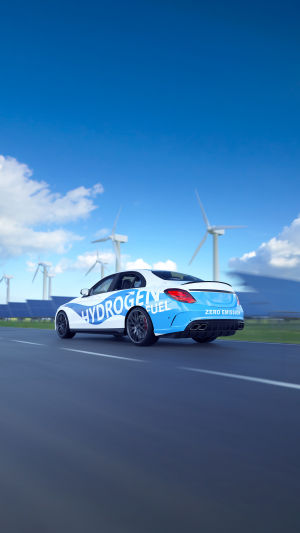
Imagine getting into a car, pressing a button, and driving off without worrying about fuel running out for hours. This is the idea behind hydrogen fuel cell vehicles (FCVs).
These vehicles use hydrogen to generate electricity, which powers an electric motor, offering a different approach to clean transportation.
Hydrogen fuel cells produce electricity through an electrochemical process, with water vapor as the only byproduct. This makes them an interesting alternative in the development of more sustainable mobility solutions.
<h3>How Hydrogen Fuel Cells Work</h3>
At the core of a hydrogen vehicle is a fuel cell stack made up of multiple individual fuel cells. Each fuel cell converts hydrogen into electricity through a chemical reaction with oxygen from the air.
The process works as follows:
- Hydrogen gas is stored in high-pressure tanks within the vehicle
- Hydrogen is supplied to the fuel cell stack
- Inside the fuel cell, hydrogen is separated into protons and electrons
- Electrons flow through an external circuit, generating electricity
- Protons pass through a special membrane and combine with oxygen
- The final byproduct is water vapor
The electricity produced is used to power an electric motor, enabling vehicle movement. Since the system has fewer moving parts than traditional engines, it operates with high mechanical simplicity and allows for quick refueling.
<h3>Energy Efficiency Comparison</h3>
Hydrogen fuel cell vehicles are generally more efficient than conventional gasoline-powered vehicles.
- Hydrogen fuel cells typically achieve around 50–60% efficiency in converting energy into motion
- Traditional gasoline engines operate at approximately 20–25% efficiency
- Battery electric vehicles are generally more efficient, often reaching 80–90% efficiency, due to direct use of electricity
While hydrogen systems are less efficient than battery electric systems, they offer advantages in refueling speed and longer driving range potential. Overall efficiency also depends on how hydrogen is produced.
<h3>Environmental Impact</h3>
Hydrogen fuel cell vehicles produce only water vapor during operation, making them clean at the point of use.
However, environmental performance depends on hydrogen production methods:
- Hydrogen can be produced using processes that involve natural gas, which may generate emissions
- A cleaner method is water electrolysis, which splits water into hydrogen and oxygen using electricity
- When renewable energy is used for electrolysis, hydrogen production becomes significantly more sustainable
This means the overall environmental impact depends on the energy source used in hydrogen production.
<h3>Fueling Infrastructure</h3>
One of the main challenges for hydrogen vehicles is limited fueling infrastructure. Hydrogen refueling stations are not yet widely available in many regions, making accessibility a key factor in adoption.
As interest in hydrogen technology grows, infrastructure development is expected to expand. This includes the construction of additional refueling stations and improvements in distribution systems to support wider use.
<h3>Future Outlook</h3>
Hydrogen fuel cell vehicles represent a promising direction in clean transportation. They offer benefits such as fast refueling times and long driving range, making them suitable for specific transportation needs.
However, broader adoption depends on continued improvements in hydrogen production efficiency, cost reduction, and infrastructure expansion. As technology develops, hydrogen vehicles may become an important part of a diversified sustainable transport system alongside other clean energy solutions.
Hydrogen fuel cell vehicles provide an innovative approach to reducing environmental impact in transportation. While challenges remain, particularly in infrastructure and production methods, ongoing advancements in technology continue to strengthen their potential role in future mobility systems.


