
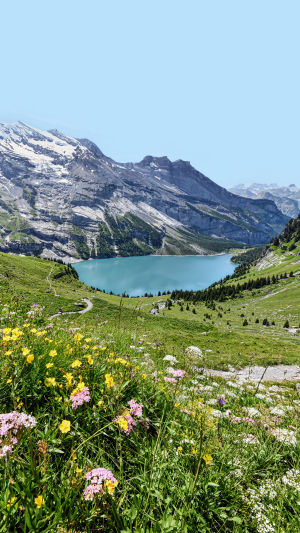
Lykkers, Lake Oeschinensee is one of the easiest high-impact Alpine day trips to misunderstand.
The lake sits above Kandersteg, and you cannot simply drive to the shore. Most visitors take the gondola, then walk about 20 minutes from the mountain station to the water.
Strong hikers may choose the elevated Heuberg route instead, but that is a genuine mountain hike rather than a casual extension of the lakeside walk.
For most Lykkers, the strongest plan is 1 night in Kandersteg and 1 complete lake day. A day trip is possible, especially from nearby Swiss destinations, but sleeping locally makes an early gondola reservation easier and gives you more protection against changing mountain weather. In 2026, the most important detail is the ascent reservation system, especially during the busiest summer period.
Oeschinen Lake
<h3>Get Up the Mountain Early</h3>
Your first decision is whether you want an easy lake day or a serious hiking day. Both begin in Kandersteg, but the timing, footwear, water supply, and amount of energy required are very different.
<b>Stay One Night or Day Trip</b>
Day trip if you want the gondola, easy shore access, lunch, and lake time—plan 5–7 hours in the Oeschinensee area (excluding long-distance travel).
Overnight if you want the panorama hike, quieter mornings, and weather flexibility—especially recommended for first-timers visiting Oeschinensee as a main destination, not a casual add-on.
Arrival: Kandersteg station is your base. Walk or take local transport to the gondola lower station. Don't schedule so tightly that a small train delay ruins your ascent window.
A useful structure is simple:
• 7:00 a.m. — breakfast in Kandersteg.
• 7:45 a.m. — leave accommodation.
• 8:15 a.m. — reach the gondola area and prepare.
• 8:30 to 9:00 a.m. — ascend according to the reserved window.
• 9:00 a.m. onward — begin either the easy lake plan or mountain hiking plan.
This timing puts your main outdoor activity in the first half of the day and leaves a generous buffer before the final descent.
<b>Understand the 2026 Reservation Rule</b>
• Peak season alert: Don't expect walk-up flexibility.
• For 2026 (June 20 – Sept 20): An ascent time reservation is required if you're using a public transport pass (Swiss Travel Pass, Half Fare Card, etc.). Even with the 50% gondola discount, you must book an ascent time window in advance.
• 2026 fares: ~CHF 36 (low season) / ~CHF 40 (high season) for standard return. Verify exact price in the booking system before paying.
• Budget estimate (2 adults, high season): ~CHF 80 for gondola return (food & extras extra).
<b>Choose the Best Month</b>
Best hiking window: Late June – September, but trail conditions depend on snow, rain, maintenance, and hazards—not the calendar.
July–August = warmest but most crowded. Late June & September = better balance, but don't assume trails are open just because the gondola runs.
Always check live trail and operating status on the morning of your visit. Official guidance: review difficulty, equipment, weather, and current hazards before heading out.
<h3>Choose the Right Lake Day</h3>
Once you reach the mountain station, you have a clear choice. You can walk directly to the shore for a relaxed experience, or take on a higher mountain route for panoramic views. Your fitness level should decide the route, not social media photographs.
<b>Easy Plan for Most Visitors</b>
The official direct walking route from the mountain station to the lake takes approximately 20 minutes. It follows a broad gravel and partly paved path and is described as suitable for general visitors, including those with strollers.
For this plan, allow 4 to 6 hours after reaching the mountain station. Walk to the lake, explore the accessible shore area, have lunch, and leave enough time for a relaxed return.
A practical schedule is:
• 9:00 to 9:30 a.m. — walk toward the lake.
• 9:30 to 11:30 a.m. — explore the shore and nearby walking routes.
• 11:30 a.m. to 12:30 p.m. — lunch.
• 12:30 to 2:30 p.m. — rowing activity, additional walking, or quiet lake time.
• 2:30 to 3:00 p.m. — begin moving toward the gondola station.
This plan suits families, casual walkers, and travelers who do not enjoy exposed mountain paths.
In summer, rowboat rental is another practical option. Official seasonal information lists rowing boats as operating daily from 10:00 a.m. to 5:30 p.m. when conditions and seasonal operations allow. Check availability on the day because weather can affect lake activities.
<b>Panorama Plan for Strong Hikers</b>
Heuberg route is best for the elevated lake view—but it's a narrow mountain path for experienced, sure-footed hikers with good endurance and comfort with heights.
• Time & effort: ~3–4 hours, ~400–450m elevation gain. Treat as estimates, not guarantees.
• Skip it if: anyone fears narrow paths, steep terrain, or poor visibility ruins the view.
• Plan: start before 10 a.m., carry 1.5–2L water per person (warm weather = more), lunch + 2 snacks, waterproof + warm layers, sun protection, and grippy hiking shoes.
• Rules: stay on marked trails, respect protected areas. No bikes or e-bikes allowed on lake routes.
<b>Set a Realistic Budget</b>
Day budget (after reaching Kandersteg):
• 1 person: ~CHF 70–130
(Lower = gondola + supermarket food + free walking. Higher = restaurant meal + extra activity.)
• 2 people: ~CHF 140–260
(Save by packing lunch and using transport discounts.)
Accommodation: Prices vary wildly by season. Compare overnight costs against the value of an early start. If lodging is too pricey, a day trip works—but book your gondola ascent time before finalizing train plans.
The best Oeschinensee day is not the one with the longest route. It is the one where your reservation, weather, fitness, and timing match. Arrive early, choose the correct difficulty, keep several hours free at the lake, and return with enough time that the final descent never becomes a race.


