

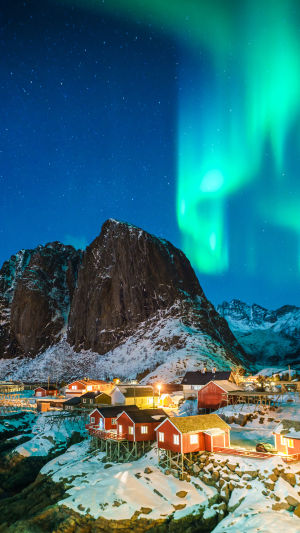
Hi, Readers! There is something instantly unforgettable about a Nordic fishing village filled with red wooden cabins, icy-blue water, and steep peaks rising almost straight from the sea.
Reine, in Norway’s Lofoten archipelago, has become one of those places photographers dream about for years, then finally stand in and wonder if it can really be that beautiful. The answer, very gently, is yes.
This little village has all the ingredients that make images feel alive: strong color contrast, shifting light, mirror-like bays, and a layout that looks lovely from almost every angle.
<h3>A rare mix of color and landscape</h3>
Reine is especially loved for its traditional fishermen’s cabins, often painted a deep red that stands out against snowy slopes, dark rock, and clear water. That color contrast is a huge reason photographers return again and again. The cabins, known as rorbuer, are not placed in isolation either.
They sit right at the edge of the water, often backed by sharp mountain walls, so one frame can hold architecture, landscape, and reflection all at once. Few places offer such a clean and balanced composition without needing much setup.
<h3>Light that keeps changing</h3>
Another reason this village feels so magnetic is the light. In northern Norway, the atmosphere changes quickly. Soft morning glow, silvery cloud cover, and low-angle sunlight can completely transform the same scene within a short time. For photographers, that means one location can give many very different images.
In colder months, snow adds brightness and texture. In warmer periods, the sea and hills bring gentler tones. Even on overcast days, Reine often looks dramatic rather than dull, which is a gift for anyone with a camera.
Reine
<h3>The view everyone talks about</h3>
One of the most famous perspectives over the village comes from Reinebringen, the mountain viewpoint above Reine. The hike is steep, but the reward is a sweeping look across the fjords, cabins, bridges, and jagged peaks. It is one of the images most closely tied to the village’s global reputation.
For many photographers, this viewpoint captures exactly why the area feels so special: the settlement looks tiny and human, while the surrounding landscape feels vast and almost unreal.
<h3>Easy access to iconic scenes</h3>
Part of Reine’s appeal is that memorable views are not locked away in distant corners. Many of the best scenes are visible from roadsides, bridges, waterfront paths, and nearby villages. Reine is connected by road through the Lofoten Islands, and many travelers reach the area from Leknes Airport by car in about 1.5 hours, or from Svolvær in roughly 2.5 hours depending on conditions.
This relative ease makes it possible for photographers to move between viewpoints and return when the weather shifts. Boat trips also reveal the village from the water, which adds another layer to the experience.
<h3>Staying in the scene</h3>
Accommodation is part of the charm here because many visitors choose to stay in restored rorbuer. These traditional cabins let people sleep right beside the harbor they came to photograph. Prices vary with season and comfort level, but many stays in the Reine area commonly begin around $150 per night and can rise well above $300 for larger or more scenic units. There are also guesthouses and small hotels in and around the village.
This closeness matters because photographers often head out very early or wait for evening light, and being nearby makes that rhythm much easier.
<h3>What to know before going</h3>
Reine itself is always open as a living village, so there is no entry fee to walk around and enjoy the harbor views. Costs usually come from transport, lodging, meals, guided excursions, or parking in some areas. The Reinebringen trail is a popular activity, though conditions can change, so sturdy footwear and care are important.
If you want quieter moments, early morning or later evening can be especially rewarding. And if clouds move in, it may still be worth staying out, because this village often looks most moving when the weather adds a little mystery.
In the end, Reine became a global favorite not through hype alone, but because it offers photographers something deeply satisfying and surprisingly complete in one small place. Color, texture, scale, weather, and human warmth all meet here. If this village has been resting in your daydreams, maybe it is worth keeping on your list, and if you ever go, take your time, breathe deeply, and let the changing light tell its own quiet story.


