

The universe may appear quiet and empty when viewed from Earth, but deep space is filled with enormous regions of activity and transformation.
Among the most fascinating of these regions are nebulae — vast clouds of gas and dust where new stars are formed over millions of years.
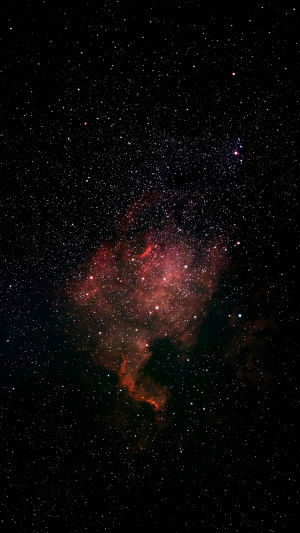
This image captures the beauty of a glowing nebula surrounded by countless stars, offering a glimpse into one of the most important processes in cosmic evolution.
<h3>Cosmic Nurseries Where Stars Are Born</h3>
Nebulae are immense regions of gas and dust scattered throughout space. Within these clouds, gravity slowly pulls material together, creating areas with increasing density and temperature. Over time, these concentrated regions can collapse further, forming young stars as conditions become suitable for nuclear fusion to begin.
The glowing appearance of many nebulae comes from interactions between gas, dust, and nearby sources of light. Some gases emit their own light after becoming energized, while other regions reflect light from surrounding stars. These cosmic formations provide valuable opportunities for astronomers to study how stars and planetary systems develop.
<h3>A Universe Filled With Stellar Wonders</h3>
The countless points of light visible across a star-filled sky represent only a small portion of the universe’s vast collection of stars. Each galaxy contains enormous populations of stars, ranging from millions to billions or more, depending on its size and structure.
Although humans cannot count every star individually, scientists estimate the number of stars in the observable universe by studying galaxies, measuring their properties, and applying mathematical models. These methods help researchers understand the immense scale and complexity of the cosmos.
<h3>Exploring the Hidden Details of Space</h3>
Astronomers study nebulae and other distant objects using advanced telescopes that collect light across different wavelengths. This information allows researchers to investigate the temperature, chemical composition, movement, and development of cosmic structures.
By analyzing light traveling across space, scientists can uncover the history of stars and learn how the universe has changed over billions of years. Every observation adds to our understanding of the processes that shape galaxies and create new celestial objects.
<h3>Why Stars Matter to the Universe</h3>
Stars play a central role in the evolution of the cosmos. They release energy, influence their surrounding environments, and produce many of the elements that later become part of planets and other astronomical structures.
A nebula filled with young stars represents a moment of transformation, where simple cosmic materials are gathered and shaped into complex systems. These regions demonstrate that the universe is not static but continuously evolving through powerful natural processes.
A glowing nebula surrounded by countless stars reveals the extraordinary scale and creativity of the universe. These clouds of gas and dust are more than beautiful patterns in space; they are active environments where new stars emerge and cosmic history continues to unfold. By studying these distant regions, scientists gain a deeper understanding of how the universe grows, changes, and creates the structures that fill the night sky.


