

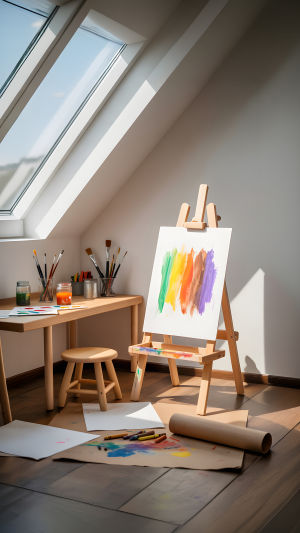
Creating a dedicated art studio at home can make a significant difference in both productivity and enjoyment.
A thoughtfully arranged workspace encourages regular practice, keeps supplies within easy reach, and provides an environment where ideas can develop without unnecessary distractions.
Whether you have an entire room or just a small corner, careful planning can transform almost any space into a functional and inspiring studio.
<h3>Choose the Right Location</h3>
The first step is selecting a space that suits your artistic needs. A quiet area with enough room for an easel, table, and storage allows you to work comfortably. Even a compact workspace can become highly effective when organized efficiently.
If possible, choose a location with good ventilation, especially if you use paints, adhesives, or other art materials. A comfortable temperature and minimal distractions also help maintain focus during longer painting sessions.
<h3>Take Advantage of Natural Light</h3>
Lighting is one of the most important elements of an art studio. Natural daylight provides balanced illumination that helps artists judge colors, values, and subtle details more accurately.
Position your easel or worktable where daylight reaches your artwork without creating excessive glare. When natural light is limited, supplement it with bright, even artificial lighting that provides consistent illumination across your workspace.
<h3>Invest in Essential Equipment</h3>
A well-equipped studio does not require expensive furniture. Start with a sturdy easel, a comfortable chair or stool, a durable worktable, and basic storage for art materials.
Essential painting supplies may include brushes, paints, palettes, drawing paper or canvas, pencils, erasers, and cleaning materials. Choosing reliable tools that match your preferred medium helps create a smoother and more enjoyable creative process.
<h3>Keep Your Studio Organized</h3>
An organized workspace allows you to spend more time creating and less time searching for supplies. Store brushes, paints, pencils, and other materials in labeled containers or drawers so they remain clean and easily accessible.
Keeping frequently used tools within arm's reach improves workflow, while regularly cleaning your workspace helps preserve materials and creates a pleasant environment for future projects.
<h3>Create an Inspiring Environment</h3>
Your studio should encourage creativity while remaining functional. Display finished artwork, color studies, sketches, or reference images that motivate you without overcrowding the space.
A clean, uncluttered environment often makes it easier to concentrate on your current project while leaving room for experimentation and new ideas.
<h3>Protect Your Workspace</h3>
Painting can involve paint splatters, dust, and spills, so protecting your workspace is essential. Cover tables and floors with protective materials that are easy to clean, and dedicate separate areas for painting, drying artwork, and storing finished pieces.
Proper organization not only extends the life of your equipment but also makes studio maintenance much simpler.
<h3>Develop a Comfortable Routine</h3>
A studio becomes more valuable when it supports consistent creative habits. Keeping supplies ready to use reduces preparation time and makes it easier to begin each painting session.
Setting aside regular time for sketching, experimenting with techniques, or completing larger projects helps build confidence and steadily improves artistic skills through ongoing practice.
A home art studio does not need to be large or elaborate to be effective. By choosing a suitable location, maximizing natural light, organizing essential supplies, and creating a comfortable environment, you can build a workspace that encourages creativity and supports long-term artistic growth. With thoughtful planning and consistent practice, your studio can become a place where inspiration and artistic skills continue to grow.


