

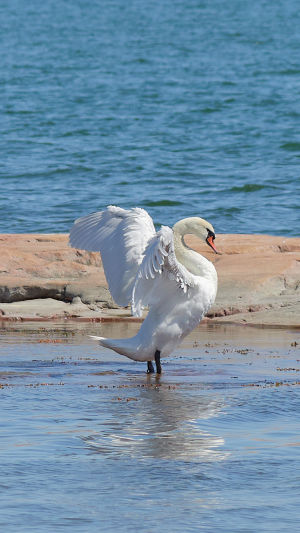
Lykkers, the mute swan is one of the most recognizable waterbirds, admired for its elegant white plumage and graceful movements.
Despite its name, it is not completely silent. It earned the name “mute” because it lacks the powerful, trumpet-like calls produced by many other swan species.
Compared with relatives such as the whooper swan and trumpeter swan, the mute swan is generally quieter, relying on subtle sounds rather than loud vocal displays. This gentle communication style has become one of its most recognizable characteristics.
<h3>A Bird That Communicates Softly</h3>
Although mute swans are not voiceless, their vocalizations are gentle and often heard only at close range. Instead of loud calls, they communicate through low grunts, soft whistles, snorts, and other quiet sounds. Pairs often exchange these sounds while swimming together, helping maintain contact between mates. Parents also use gentle calls to guide and reassure their young, known as cygnets.
Their subtle communication allows them to stay connected while moving through their surroundings.
<h3>Why Are Mute Swans So Quiet?</h3>
Scientists continue to study why mute swans communicate differently from some other swan species. One possible explanation is their lifestyle. Unlike some migratory swans that use louder calls to maintain contact across long distances, mute swans often stay within familiar areas for much of the year. Because of this, they may have less need for powerful long-range communication.
<h3>Sounds You May Hear From a Mute Swan</h3>
Although they are known for being quiet, mute swans produce several different sounds that serve important purposes.
<b>Soft Grunts and Snorts</b>
Gentle grunts and snorts are commonly exchanged between family members at close range. These sounds help maintain contact while feeding, resting, or swimming together.
<b>Hissing</b>
One of the most familiar sounds made by a mute swan is its defensive hiss. When another animal approaches too closely, especially near a nest, the swan may stretch its neck, spread its wings, and release a strong hiss as a warning.
<b>Gentle Whistles</b>
Cygnets often produce soft whistles to communicate with their parents. Adults may also make quiet whistling sounds during close interactions with their mate.
<b>Wing Sounds During Flight</b>
One of the most distinctive sounds produced by mute swans does not come from their voice. Their broad wings create a rhythmic humming or throbbing sound while flying. Birdwatchers can often recognize a flying mute swan before seeing it by listening to the steady rhythm of its wingbeats.
<h3>When Are Mute Swans Most Vocal?</h3>
Although usually quiet, mute swans become more expressive during important periods of their lives. During the breeding season, pairs communicate more frequently while establishing territories and preparing nests. Adults also produce more sounds while caring for their young and guiding cygnets across the water.
Defensive situations may trigger hissing, while close interactions with other birds can lead to additional sounds and displays. During flight, the sound of their wingbeats becomes one of their most noticeable features.
<h3>Can Mute Swans Ever Be Loud?</h3>
Despite their reputation for being quiet, mute swans can produce stronger sounds in certain situations. They may make louder warning sounds when they feel threatened or during interactions with other birds. Some displays between breeding pairs can also include splashing, wing movements, and increased vocal activity.
<h3>The Quiet Beauty of the Mute Swan</h3>
The mute swan’s name reflects its unusually soft voice rather than complete silence. Instead of relying on loud calls, it communicates through quiet whistles, gentle grunts, defensive hissing, and the distinctive sound of its wings in flight.
These subtle sounds match its calm lifestyle and help distinguish it from more vocal members of the swan family. With its elegant appearance and unique communication style, the mute swan remains one of nature’s most fascinating waterbirds.


