

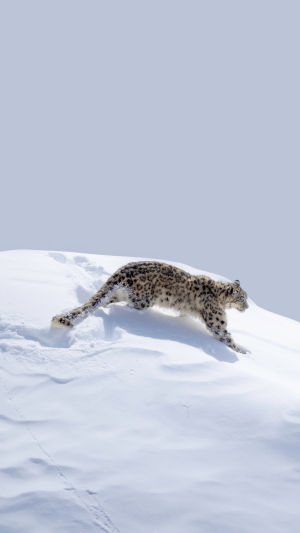
Hi, Readers! High mountain landscapes may look remote and untouched, but for snow leopards, daily survival depends heavily on what happens in nearby villages and grazing areas.
Habitat protection is not only about setting aside land on a map. It also depends on how local communities use pasture, manage livestock, respond to predator losses, and take part in conservation planning.
Snow leopards live across rugged alpine and subalpine regions, where steep slopes, rocky terrain, and sparse vegetation shape both wildlife movement and human livelihoods.
Snow leopards rely on large, connected habitats. They move across cliffs, ridgelines, and open mountain ground while following prey such as wild sheep and wild goats. When grazing pressure rises too much, native vegetation can decline, and competition between domestic animals and wild prey can increase.
That matters because habitat quality is tied not only to land cover but also to prey availability. If wild prey numbers fall, snow leopards may turn more often to livestock, which can create tension with herding families and reduce local support for conservation.
<h3>Why communities matter</h3>
People living in snow leopard range are often the first to notice shifts in pasture condition, prey presence, and predator movement. Their knowledge of seasonal grazing routes, water sources, and mountain passes can be highly valuable for habitat management.
Community participation helps conservation move from a top-down model to a shared approach. Instead of treating residents as separate from wildlife protection, effective programs involve them as decision-makers, monitors, and long-term partners.
This approach can reduce conflict in practical ways. When herders have stronger animal enclosures, better herding practices, and support after livestock losses, they are less likely to view snow leopards only as a threat.
<h3>What habitat protection looks like</h3>
Protecting snow leopard habitat usually means more than creating formally protected areas. It can include community-managed grazing zones, restoration of degraded pasture, limits on excessive resource extraction, and efforts to maintain corridors between mountain areas.
Because snow leopards range widely, isolated habitat patches are often not enough. Movement routes must remain open so animals can reach prey, find mates, and maintain viable populations across broad landscapes.
This kind of local involvement often strengthens trust because conservation is no longer something imposed from outside. It becomes a shared effort built on local experience and visible results.
<h3>Balancing livelihoods and conservation</h3>
For many mountain households, livestock grazing is central to daily life. That means habitat rules must be realistic. If conservation plans ignore local economic needs, they are unlikely to last. Community participation works best when it includes fair discussion of trade-offs, clear benefits, and practical alternatives.
Rotational grazing, improved pasture planning, and support for diversified income can ease pressure on fragile mountain ecosystems while helping families remain secure.
Education also plays an important role, especially when it is two-way. Conservation groups may share information about predator behavior, ecosystem balance, and habitat restoration, while communities contribute local ecological knowledge built over generations.
This exchange can improve planning and avoid simplistic solutions. Snow leopard landscapes are complex social and ecological systems, so management must be flexible and locally grounded. In the end, protecting snow leopard habitat is strongest when communities are not treated as bystanders but as central partners.
The mountains these cats depend on are also working landscapes shaped by human decisions every season. When local people have a real voice, practical support, and a fair share in conservation outcomes, habitat protection becomes more durable.
If we want snow leopards to keep moving across these high ridges, community participation has to stay at the heart of the effort.


