

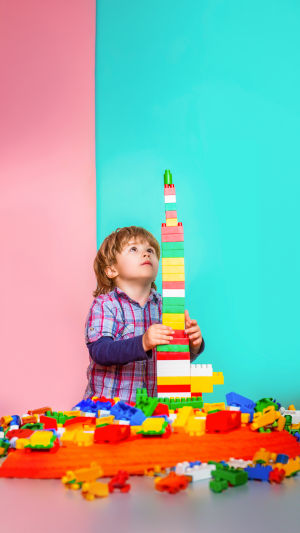
Lykkers, have you ever watched a child sit beside a pile of building blocks and become completely focused on creating something? At first, we may see only a simple game.
However, building can give children many valuable learning experiences. When they pick up, connect, move, and rebuild each piece, they are using their hands, eyes, memory, imagination, and thinking skills together.
The best part is that there is no single right answer. We can give children a group of pieces, while they decide whether to create a house, tower, bridge, vehicle, or imaginary town. This freedom allows play to become a natural way to explore ideas.
<h3>Improving Hand And Eye Coordination</h3>
Building blocks give children regular practice in controlling their hands. They need to pick up a piece, place it in the right position, and connect it with another part. Their eyes guide each movement, while their hands make small adjustments.
For younger children, stacking a few pieces can already be useful practice. As they become more skilled, we can offer larger structures that require greater control. Through repeated play, children gradually become more comfortable handling small objects and completing simple tasks.
<h3>Strengthening Observation Skills</h3>
A large pile of pieces can become a small puzzle. Children need to look carefully at different shapes, sizes, and colors before choosing what they need. They may also study a model and try to understand how its sections fit together.
For example, when creating a house, they may notice that several short pieces work well for a wall while longer pieces can create a wider base. This process encourages children to notice details and understand how small parts can form a complete structure.
<h3>Developing Imagination And Creativity</h3>
Building gives children a chance to turn an idea in their minds into something they can see. We might ask, "What would you like to build today?" One child may create a tall tower, while another may design a garden, bridge, or small town.
There is no need for every creation to look perfect. Children can try an idea, discover that it does not work, take it apart, and create something different. This simple cycle teaches them that changing a plan is part of creating something new.
<h3>Encouraging Independent Play</h3>
Building blocks can also help children become more comfortable playing on their own. Once they understand how pieces connect, they can spend considerable time designing and rebuilding without constant instructions.
We can stay nearby and provide help when needed, but giving children room to make choices is equally valuable. They can decide what to create, which pieces to use, and when to change their design. This freedom can make play more engaging while helping children develop confidence.
<h3>Bringing Parents And Children Closer</h3>
Building can become a wonderful family activity. We can sit beside a child and create something together instead of simply telling them what to do. One person can build a wall while another adds a roof or creates a small garden.
During this shared time, we can also learn more about a child's interests. Their designs may reveal what they enjoy, what they imagine, and how they solve simple problems. A few minutes of building together can create natural opportunities for conversation and connection.
<h3>Building Communication And Cooperation</h3>
When children build together, they need to share ideas and make decisions. Two children creating one structure may discuss which piece belongs where or decide who will work on each section.
They also learn to listen, explain their thoughts, and adjust their plans. If their ideas are different, they can practice finding a solution that works for everyone. These experiences support communication, cooperation, and teamwork in a natural way.
<h3>Developing Spatial And Logical Thinking</h3>
As children grow, building projects can become more detailed. A simple tower may develop into a house with several sections, requiring children to consider height, width, balance, and available space.
When we build a house, the lower section needs to provide a stable base for the upper sections. Children begin to understand that changing one part can affect the whole structure. Older children can also plan larger designs before starting, which gives them more practice with logical thinking and spatial awareness.
<h3>Letting Children Build Their Own World</h3>
Lykkers, the next time we see a child playing with building blocks, we can look beyond the finished creation. The real value is often found in the process: choosing pieces, testing ideas, solving small problems, changing plans, and sharing thoughts with others.
Building blocks may look simple, but they can support many areas of development through enjoyable play. When we give children time, space, and encouragement, we allow them to explore their ideas in their own way. So, what would your child build if we placed a pile of blocks in front of them and simply asked, "What shall we create today?"
Kids playing with blocks building | Having fun playing with mega bloks
Video by Hudson's Playground


