

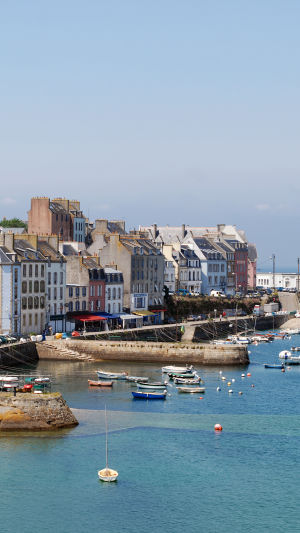
Running south from Calais towards Le Touquet, the Côte d’Opale combines chalk cliffs, dunes, old seaside resorts and working fishing ports.
Boulogne-sur-Mer remains the region’s culinary heart, while Audresselles, Wimereux, Étaples-sur-Mer and Le Touquet make natural stops for a short coastal itinerary.
<h3>Boulogne-sur-Mer: Start at the Fish Market</h3>
Boulogne-sur-Mer is France’s largest fishing port, and its harbour market is one of the best places to understand the local food culture. Stalls on Quai Gambetta sell catches according to the boats, tides and season, so the selection changes from one morning to the next.
Expect sole, crab, monkfish, prawns and other North Sea and Channel species. The market itself is simple rather than polished, which is part of its appeal.
Afterwards, walk through the old town before booking a seafood-focused dinner near the harbour.
<b>Prices:</b> market prices vary by catch; in the source visit, some prepared dogfish fillets were €2 each. For a restaurant meal, allow roughly €30–€60 per person depending on the menu.
<h3>Audresselles: A Small Fishing Village</h3>
Audresselles offers a quieter contrast. This traditional coastal village is a good place for shellfish, crab and generous seafood platters.
Razor clams with garlic and parsley are worth looking for when available, alongside oysters, prawns and whelks.
The real attraction is the atmosphere: a simple meal close to the shore feels much more connected to the working coast than a formal city restaurant.
<b>Prices:</b> plan around €25–€45 for a seafood lunch, with larger shellfish platters costing more.
<h3>Wimereux: Seafood with a Sea View</h3>
Wimereux combines colourful late-19th-century architecture with a long beachfront and a lively centre. The local tourism office also highlights water activities including paddleboarding, kayaking and sand yachting.
This is a good stop for a more refined dinner: cod, prawns and seasonal fish often appear in contemporary preparations rather than traditional platters.
<b>Prices:</b> casual seafood lunches generally fall around €20–€35, while an evening at a more polished restaurant can easily reach €45–€70 per person.
<h3>Étaples-sur-Mer: Learn Where the Catch Comes From</h3>
Before reaching Le Touquet, stop in Étaples-sur-Mer for Maréis, a centre devoted to fishing in the North Sea and English Channel.
Interactive exhibitions explain how local fleets work and what species are caught, while aquariums make this more than a conventional museum visit.
<b>Prices:</b> allow roughly €10–€15 for an attraction of this type, plus €15–€25 for a casual lunch nearby.
<h3>Le Touquet: Market Morning and Beach Evening</h3>
Le Touquet offers the most resort-like atmosphere on the route, with a broad beach, pine forests and an impressive covered market.
The main market runs on Thursday and Saturday mornings, while the fish section also operates on Friday and Sunday mornings and more frequently during school holidays.
This is a good place to try grilled sea bream, mussels or a mixed seafood plate before walking down to the beach for sunset.
<b>Prices:</b> a simple seafood lunch is around €20–€30; a fuller dinner can reach €35–€60.
<h3>How to Plan the Route</h3>
Two or three days are enough for the main stops. Start in Boulogne-sur-Mer, continue north briefly to Audresselles and Wimereux, then head south through Étaples-sur-Mer to Le Touquet.
Summer 2026 has brought especially strong demand to the Opal Coast, with Wimereux among the busiest towns, so accommodation is worth reserving early.
<b>The charm of this route lies in how closely food and landscape are connected: morning markets beside working boats, seafood served within sight of the water, and enough beaches and old coastal streets between meals to make the journey feel like much more than a restaurant tour.</b>


