

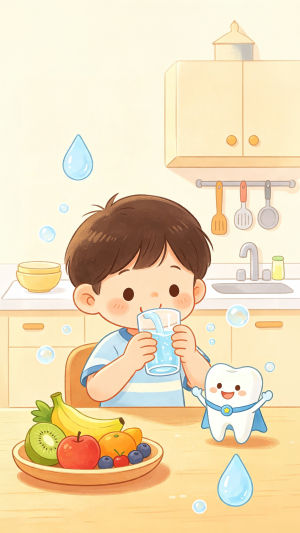
For children, water is an important part of healthy hydration. Parents may wonder whether cold, room-temperature, or warm water is the best choice for their child’s teeth.
For most children, temperature is mainly a matter of comfort; the type of beverage and daily dental-care habits have a much greater influence on dental health.
<h3>Is Cold Water Safe for Children?</h3>
Cold water is generally safe for children and does not damage healthy tooth enamel. Some children may find very cold water uncomfortable, particularly if they have sensitive teeth or an existing dental concern.
If cold water causes discomfort, room-temperature water may be easier to drink. Persistent or repeated sensitivity should be discussed with a dentist rather than attributed to water temperature alone.
<h3>Is Room-Temperature Water Better?</h3>
Room-temperature water is a practical choice for everyday drinking. It is generally comfortable and does not have a special dental advantage over other safe drinking-water temperatures.
For dental health, the important considerations are that the water is safe, plain, and, where appropriate, provides fluoride.
<h3>Can Children Drink Warm Water?</h3>
Comfortably warm water is also suitable for children. There is no established evidence that warm water is better than cold or room-temperature water for preventing tooth decay.
Water should never be hot enough to burn a child's mouth. For young children, parents should check the temperature before offering warm beverages.
<h3>What Matters Most for Healthy Teeth?</h3>
What children drink and how they care for their teeth matter more than water temperature.
Plain water is a good everyday choice because it does not contain the added sugars found in sugar-sweetened beverages. Frequent exposure to sugary drinks and foods can increase the risk of tooth decay.
Fluoride is another important factor. Appropriate fluoride exposure helps protect teeth against decay by supporting enamel and helping repair early mineral loss.
“Fluoride helps both children and adults prevent cavities.” — Centers for Disease Control and Prevention.
Fluoride may be present in drinking water, toothpaste, or other dental products, depending on a child's individual needs and local water supply.
<h3>Healthy Dental Habits for Children</h3>
Parents can support children's dental health with a consistent daily routine:
- Offer plain water regularly, particularly between meals.
- Limit sugary drinks and frequent sugary foods.
- Brush teeth twice daily with fluoride toothpaste.
- Use an age-appropriate amount of toothpaste.
- Supervise brushing for young children to help them brush effectively and use toothpaste appropriately.
- Schedule regular dental checkups according to professional recommendations.
- Ask a dental professional about fluoride needs if a child's drinking water is bottled, filtered, or otherwise contains little fluoride.
For children younger than 3 years, a smear or rice-sized amount of fluoride toothpaste is generally recommended. Children ages 3 to 6 years generally use a pea-sized amount.
<h3>When Should Parents Seek Dental Advice?</h3>
A child who occasionally prefers a particular water temperature usually does not need dental evaluation. Repeated sensitivity or pain when drinking cold or warm water, however, should be assessed by a dental professional.
Parents should also seek advice if a child has persistent tooth pain, pain while chewing, visible changes to a tooth, or recurring discomfort during eating or drinking. Early evaluation can help identify the cause and support appropriate care.
<h3>The Bottom Line</h3>
Cold, room-temperature, and comfortably warm water can all be appropriate for children. There is no established evidence that one temperature is universally better for healthy teeth.
The most important priorities are plain water, limited sugary drinks and foods, regular brushing with fluoride toothpaste, and appropriate fluoride exposure. For most children, the best water temperature is simply the one they find comfortable enough to drink regularly.


