

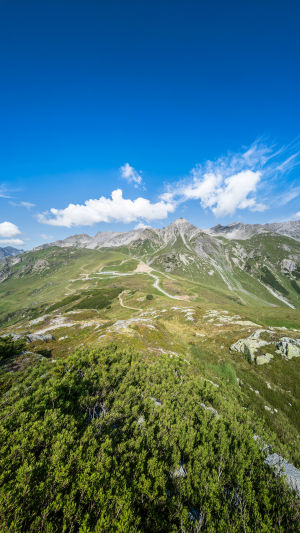
Autumn can be one of the most rewarding seasons for hiking in Europe. Summer crowds thin out, temperatures become easier for long days on foot and forests begin shifting into gold, copper and red.
Three routes stand out for very different reasons: Croatia’s extraordinary Premužić Trail, England’s legendary Coast to Coast and the historic Via Francigena through the Alps and northern Italy. Each can be tackled as a longer journey or sampled through shorter sections.
<h3>Premužić Trail, Croatia</h3>
<b>Best time: September | Difficulty: Moderate to challenging</b>
The Premužić Trail cuts through the dramatic limestone landscapes of Velebit, with sections passing through Northern Velebit National Park and opening towards wide views of the Adriatic.
Built between 1930 and 1933 using traditional dry-stone techniques, the historic route was designed to make some of Velebit’s most rugged terrain accessible to hikers. The broader trail extends for 57 km, while the well-known ridge section between Zavižan and Baške Oštarije covers about 46 km. Around 16 km lies inside the national park.
Despite its wild surroundings, the main path avoids many steep climbs, making sections surprisingly approachable. Side trails lead towards summits such as Gromovača and Šatorina for walkers wanting something more demanding.
September is particularly appealing. The intense summer heat begins to ease while the mountains are normally still free of winter conditions. Northern Velebit’s regular visitor season typically lasts from early May until late November, depending on snow.
For a shorter outing, routes from Alan mountain hut towards Buljma or Alančić can be completed in roughly two hours and still deliver expansive views towards the coast.
<b>Budget:</b> Around €35–€55 per person per day excluding accommodation for food, local transport and basic park-related expenses.
Premužić Trail, Croatia
<h3>Coast to Coast, England</h3>
<b>Best time: October | Difficulty: Moderate to challenging</b>
England’s Coast to Coast route stretches from St Bees on the Irish Sea to Robin Hood’s Bay on the North Sea, linking some of northern England’s most varied landscapes.
Created by celebrated walker Alfred Wainwright, the route crosses the Lake District, Yorkshire Dales and North York Moors before finishing above the sea at Robin Hood’s Bay. The endpoint connects with existing National Trail routes along the Yorkshire coast.
October brings a completely different character from summer. Woodland sections become colourful, moorland feels more atmospheric and popular villages are generally calmer.
The trade-off is less predictable weather. Rain, wind and poor visibility can arrive quickly, particularly on higher ground and exposed moors, so waterproof layers and reliable footwear are essential. Official guidance for nearby North York Moors routes warns that conditions can change rapidly even outside autumn.
Walking the entire route requires a serious commitment, usually spread across multiple days. But there is no need to complete everything at once. A shorter coastal section around Robin Hood’s Bay and Whitby gives a taste of the final landscape without turning the trip into an expedition.
<b>Budget:</b> Allow roughly €55–€85 per person per day excluding accommodation, including meals, local buses and everyday trail expenses.
<h3>Via Francigena, Alps and Italy</h3>
<b>Best time: September–October | Difficulty: Moderate</b>
For travellers who prefer history mixed with mountains, the Via Francigena offers something very different.
This ancient pilgrimage route ultimately leads towards Rome, but one of its most dramatic sections crosses from Switzerland into Italy through the Alps before descending into the Aosta Valley.
Rather than being purely a wilderness trek, the journey alternates between mountain scenery, old villages, historic places and agricultural landscapes. In autumn, the lower valleys gain warm seasonal colours while temperatures become more comfortable for long walking days.
The Aosta Valley is particularly suited to slow travel. Paths pass through terraces, woodland and small settlements beneath Alpine ridges, offering frequent opportunities to stop rather than demanding continuous high-altitude trekking.
For most travellers, the best approach is to select several stages rather than attempting the enormous complete pilgrimage. This also makes it easier to combine hiking with local towns and cultural sights.
Autumn conditions become more important at higher elevations, especially later in the season. Anyone planning Alpine stages should check local weather and trail conditions before setting out, while lower sections provide more flexibility.
<b>Budget:</b> Around €50–€80 per person per day excluding accommodation should cover simple meals, local transport and routine hiking expenses.
<h3>Which Route Should You Choose?</h3>
Choose Croatia for rugged scenery and Adriatic views, England for a classic multi-day challenge, or the Via Francigena for a slower combination of hiking, history and village life.
<b>What connects all three is autumn itself: cooler air, quieter paths and landscapes that feel completely different once the busiest summer season has passed.</b>


