

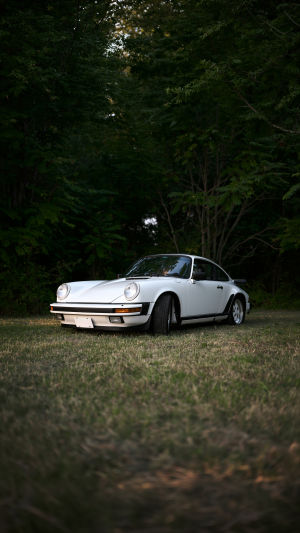
Welcome, everyone. Today we examine the evolution of the Porsche 911 and how its engineering choices impact both the driving experience and the collector market. The original Porsche 911 models relied on air-cooled flat-six engines for thermal management.
This engineering method defined the vehicle for decades. The 964 generation, produced from 1989 to 1994, introduced modern features such as power steering and anti-lock brakes while retaining the classic upright headlights and air-cooled engine. The subsequent 993 generation, sold from 1994 to 1998, represents the final iteration of the air-cooled design.
Air-cooled engines operate with distinct mechanical sounds and specific heat management requirements. As emissions and noise regulations tightened in the late 1990s, the air-cooled format reached its functional limits. The 993 generation holds a specific status in the collector market because it marks the end of this original engineering philosophy. Prices for well-maintained 993 and 964 models frequently reach six-figure sums due to limited supply and demand from enthusiasts who prefer the vintage mechanical response.
<h3>The Shift to Water-Cooled Systems</h3>
The introduction of the 996 generation in 1998 brought the first water-cooled flat-six engine to the 911 lineup. Liquid cooling provided consistent engine temperature control. This change allowed engineers to use four-valve cylinder heads and achieve higher power outputs while meeting stricter environmental regulations. The 996 also introduced a completely redesigned chassis and a more aerodynamic exterior profile, moving away from the traditional round headlights.
The 997 generation, produced from 2004 to 2012, refined the water-cooled platform and returned to the classic round headlight design. These water-cooled generations serve as accessible entry points into 911 ownership, providing enhanced daily-driving comfort, improved climate control, and modern safety features. The market value for 996 and early 997 models remains generally lower than their air-cooled predecessors. Buyers select these models when they prioritize daily usability and modern track performance over vintage collector status.
<h3>Modern Engineering in the 992 Generation</h3>
The current 992 generation continues the 60-year tradition of placing a flat-six engine behind the rear axle. Modern iterations utilize advanced turbocharging and sophisticated active suspension management systems to maximize traction. The rear-engine layout provides distinct driving characteristics, pressing the rear tires into the pavement during acceleration.
The 992 integrates current automotive technology, including high-resolution digital displays and advanced driver assistance systems. When operating models equipped with Level 2 driving assistance, drivers must maintain focus on the road and keep their hands on the steering wheel, as the vehicle does not operate autonomously. The chassis utilizes extensive aluminum construction to offset the weight of additional technology and larger dimensions.
<h3>Driving Characteristics and Market Value</h3>
Over more than 60 years, the fundamental silhouette and rear-engine layout of the 911 have remained constant. The driving dynamics require the operator to manage weight transfer carefully, particularly during cornering. Early air-cooled models exhibit pronounced rear-weight bias, demanding specific driving techniques to prevent oversteer. Modern water-cooled models use wider tracks, rear-wheel steering, and electronic stability control to neutralize these handling traits.
The collector market divides clearly between the two cooling eras. Air-cooled 911s have stabilized at high valuation levels, attracting buyers who want historical purity and direct mechanical engagement. Water-cooled variants appeal to consumers who want reliable performance and contemporary features.
The Porsche 911 has changed a lot over the years, but it has never lost the character that made it special in the first place. Air-cooled models attract collectors who love their classic feel, while newer generations offer more power, comfort, and technology for everyday driving.
That may be the real secret behind the 911’s staying power. It keeps moving forward without forgetting where it came from. Whether you dream of owning a classic 993 or prefer the technology of a modern 992, the 911 still delivers the same unmistakable feeling: this is a sports car that has truly stood the test of time.


