

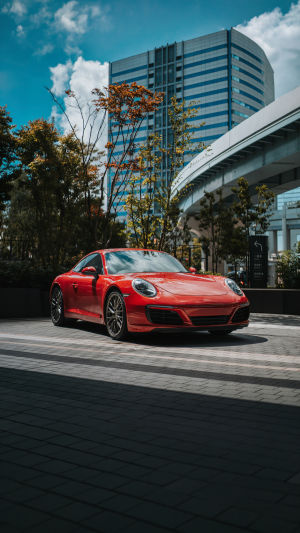
Hello, everyone. A fast car sounds fun for the daily drive, but city commuting asks for very different things.
You do not just need speed, you need easy parking, decent visibility, low-stress stop-and-go movement, and enough ground clearance for ramps and rough pavement. That gap is exactly why a supercar can feel exciting on a quiet road yet tiring in downtown traffic.
If you are thinking about using one every day, the real question is not top speed. It is what happens at 8 a.m., in a parking garage, with a backpack on the passenger seat and a line of cars ahead of you.
<h3>Traffic makes speed irrelevant</h3>
In theory, a supercar gives you huge performance. In practice, city streets rarely let you use it. A model with a very low seat, a stiff setup, and a heavy steering feel can turn a short trip into work when you are creeping block by block. The issue is not power, it is the mismatch between the machine and the setting. On a crowded commute, you are dealing with red lights, lane squeezes, delivery vans, and repeated stops.
In that environment, quick acceleration matters far less than smooth low-speed behavior and clear outward sightlines. Cars built mainly for high-speed driving often give you the opposite, especially once traffic removes the one big advantage you paid for.
<h3>Ground clearance becomes daily stress</h3>
People often expect fuel cost or attention from others to be the main problem, but clearance is usually the thing that follows you every day. City driving is full of steep garage entrances, speed bumps, broken pavement, and sharp driveway angles. In a low exotic car, those simple obstacles can force you to slow to a crawl, take an awkward diagonal line, or skip certain routes entirely.
That changes your routine fast. A normal office garage can become a planning problem. Even a coffee stop can involve checking the entrance before you commit. If your commute includes underground parking or older streets with uneven patches, that low front end is not a small detail, it shapes the whole drive.
<h3>Cabin comfort matters more</h3>
A dramatic cabin can feel special at first, but commuting exposes every compromise. Seats that hold you tightly during spirited driving can feel restrictive in traffic. Wide sills and low roofs can make getting in and out annoying, especially if you are dressed for work or carrying a laptop bag.
Storage is another weak point. Many high-performance cars give you very little room for everyday things, so even a small grocery stop or gym bag can become a puzzle. Then there is noise. A loud cabin may sound exciting for twenty minutes, but after repeated trips through tunnels, side streets, and crowded intersections, constant engine and road noise can wear you down. For daily use, these practical details matter more than how dramatic the cabin looks.
<h3>Attention is part of the cost</h3>
Driving effort is not the only issue. Public attention can add another layer of hassle. A bright or expensive-looking car gets noticed at traffic lights, parking lots, and busy streets.
Some people enjoy that attention. Others find it tiring after a week of errands and office runs. You may start choosing where to park more carefully, not because the car cannot make the trip, but because you want to avoid the extra attention.
That can affect simple routines, from using valet parking to leaving the car on a street during dinner. The supercar is no longer just transportation. It becomes something you have to think about and manage.
A supercar can work as a daily driver, but city use comes with compromises. Low clearance, tight cabins, limited storage, traffic, and constant attention can make ordinary trips more demanding than expected.
If you want a car for everyday city use, think about parking ramps, traffic lights, bags, and rough pavement before horsepower. A supercar can be an amazing daily driver, but only if its compromises fit your routine.


