

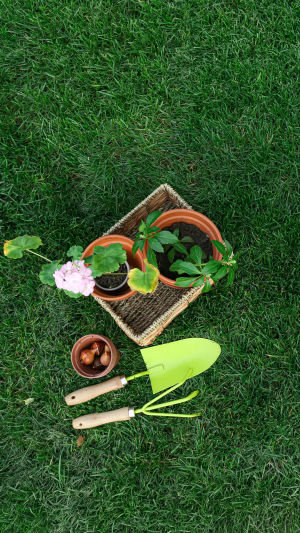
Lykkers, gardening becomes much easier when we have the right tools within reach. We do not need a crowded storage shelf filled with specialized equipment.
A small collection of practical items can help us repot plants, loosen growing material, water with better control, trim damaged leaves, and keep our workspace clean.
Whether we care for a few indoor plants or maintain a larger garden, choosing useful tools can save time and make routine tasks more comfortable.
<h3>1. Start With Suitable Containers</h3>
A good container does more than display a plant. It gives roots room to develop and helps excess water leave the growing material. For most plants, we should choose a container with one or more drainage holes at the bottom. This reduces the chance of water remaining around the roots for too long.
Containers come in many materials, including clay, ceramic, plastic, resin, and metal. Each option has different weight, appearance, moisture retention, and airflow characteristics. We can also place a growing container inside a decorative outer container. This gives us more flexibility while keeping the display attractive.
<h3>2. Keep a Hand Trowel Nearby</h3>
A small garden trowel is one of the most useful tools for everyday plant care. We can use it to move growing material, fill containers, create planting spaces, or assist with repotting.
For smaller indoor plants, a narrow trowel can offer better control. For larger containers, a wider tool may move material more efficiently. We should also look for a comfortable handle because simple gardening jobs can become tiring when a tool is difficult to grip.
<h3>3. Use Gardening Gloves</h3>
Gardening gloves help keep our hands cleaner while we work with growing material, containers, and plant debris. They can also provide useful protection when we handle plants with sharp edges or rough surfaces.
Some plants can release sap that may irritate sensitive skin, so gloves are a sensible choice for unfamiliar plants. After gardening, we should wash our hands thoroughly and clean reusable gloves according to their material and care instructions.
<h3>4. Choose a Reliable Pruning Tool</h3>
A small pair of garden shears can help us remove dry leaves, damaged sections, and unwanted growth. A sharp cutting edge generally allows more controlled work than a dull one.
Cleanliness is also important. When we move from one plant to another, cleaning the cutting surfaces can help reduce the chance of transferring unwanted organisms. After use, we can wipe the tool clean, dry it properly, and store it in a dry place.
<h3>5. Have a Sprayer and Watering Can</h3>
A fine-mist sprayer and a narrow-spout watering can provide different types of control. A sprayer can gently moisten seedlings or increase humidity around plants when conditions call for it.
A narrow spout allows us to direct water toward the growing material instead of wetting the leaves unnecessarily. This can be especially useful for plants with delicate or textured foliage.
We should also pay attention to ventilation. When an area has limited airflow, moisture may remain on surfaces for longer. Instead of spraying automatically, we can consider the plant's needs, room conditions, and current moisture level.
<h3>6. Add a Small Hand Rake</h3>
A compact hand rake is useful when the upper layer of growing material becomes hard or compacted. We can gently loosen the surface to improve its texture without disturbing the entire container.
This tool can also be helpful during repotting. If roots have become tightly arranged, gentle work around the surrounding material may make the process easier. We should avoid pulling or scraping aggressively because delicate roots can be damaged.
<h3>7. Use a Gardening Mat</h3>
A reusable gardening mat can make indoor plant care much less messy. We can place it under a plant before repotting, adding growing material, or trimming leaves.
After finishing, we can collect loose material, wipe the surface, and fold the mat away for storage. This simple tool is particularly useful when we do not have a dedicated outdoor workspace.
<h3>Choose Tools Based on Our Needs</h3>
We do not need to purchase everything at once. If we care for only a few houseplants, a trowel, gloves, shears, watering can, and mat may cover most routine tasks. If we grow seedlings or maintain many containers, a sprayer and hand rake can become useful additions.
Storage should also influence our choices. Compact tools that are comfortable to use and easy to clean are often more practical than collecting equipment we rarely touch.
<h3>Final Thoughts</h3>
The best gardening setup is not necessarily the largest one. A few dependable tools can help us complete common plant-care tasks with greater control and less mess. By starting with the equipment we genuinely need, we can build a practical collection without filling our space with unnecessary items.
For us, gardening is easier when every tool has a clear purpose. Which of these seven tools do you already use, Lykkers, and which one would make your plant-care routine easier?


